
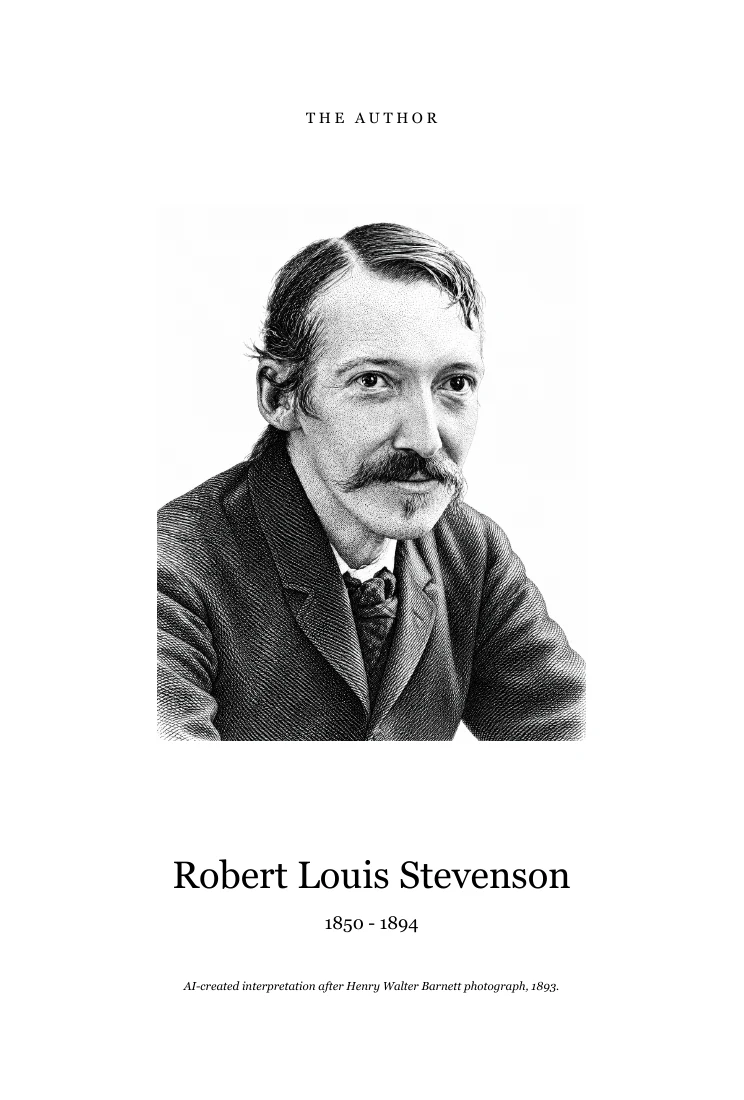
When Stevenson finally came back to his hero, he opened the new book with an apology. Writing from Samoa in 1892 to his old Edinburgh friend Charles Baxter, he admitted that readers who had waited for a sequel were likely to be disappointed, and joked about the state in which he had left the boy.
It is the fate of sequels to disappoint those who have waited for them; and my David, having been left to kick his heels for more than a lustre in the British Linen Company’s office, must expect his late re-appearance to be greeted with hoots, if not with missiles.
Robert Louis Stevenson, dedication to Catriona (1893)
A lustre is a period of five years, and Stevenson was being modest: Kidnapped appeared in 1886, and its sequel, Catriona, ran in the magazine Atalanta from December 1892 and came out as a book in 1893. In America it was published as David Balfour, which is the same novel under its hero’s name. Either way, it is the answer to anyone who has closed Kidnapped and wondered what David did once he got through those doors.
Where does Kidnapped leave off?
Kidnapped ran in the boys’ paper Young Folks in the summer of 1886, and it ends abruptly. David has crossed the Highlands with Alan Breck Stewart, outwitted his miserly uncle and come into his inheritance. But Alan is still in hiding, wanted for the Appin murder, a real killing for which another real man, James Stewart of the Glens, is about to be tried. The last line delivers David to “the very doors of the British Linen Company’s bank”, and stops.
Catriona opens at precisely that moment. David walks out of the bank at two in the afternoon on 25 August 1751, a porter carrying his gold behind him, and within a page he is turning his mind to the business Kidnapped left unfinished: he saw the murder, he knows James is innocent, and he means to say so in court.
That is the hook that makes the sequel worth reading. In Kidnapped, David was a witness who ran. In Catriona he has money, a name and a lawyer’s letter in his pocket, and he discovers that standing still and telling the truth can be more dangerous than any flight through the heather.
What happens in Catriona?
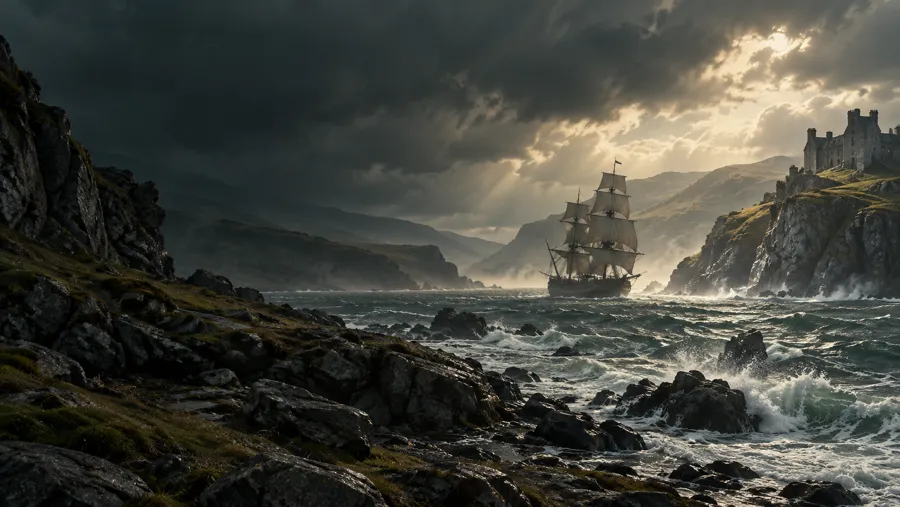
The first part, “The Lord Advocate”, is a political thriller in an Edinburgh of lawyers, spies and Campbell interests. David presses his evidence on Prestongrange, the Lord Advocate, who has every reason to keep him quiet, and he finds himself kidnapped all over again, this time held on the Bass Rock in the Firth of Forth until the trial is safely out of the way.
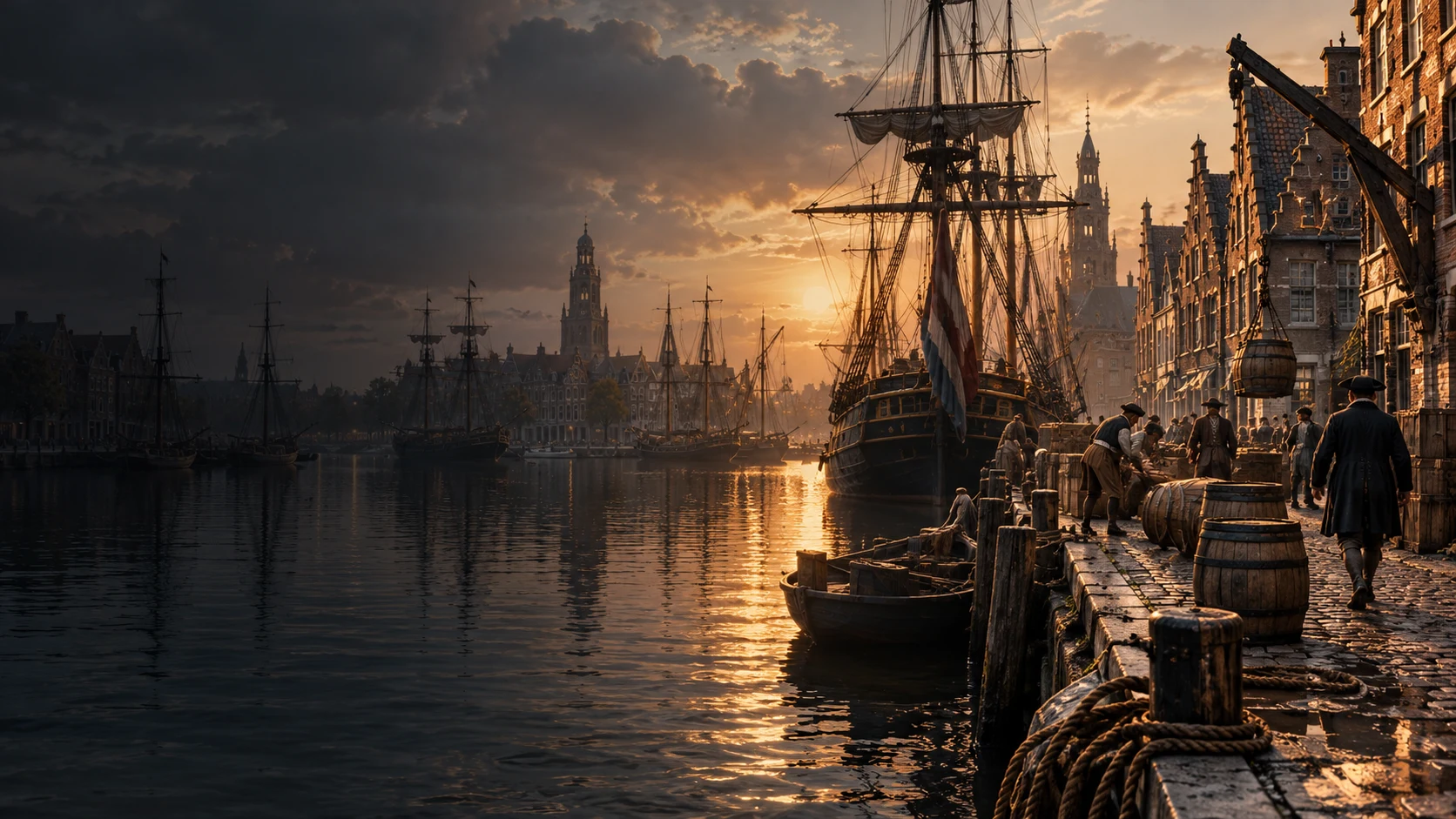
Along the way he falls for Catriona Drummond, the proud, penniless daughter of James More, Rob Roy MacGregor’s eldest son and a man of very uncertain loyalties. The second part, “Father and Daughter”, moves to Holland, where David studies law at Leyden and finds that a girl is harder to understand than a Highland ambush. Alan Breck arrives in time to offer advice in his own words.
It’s this way about a man and a woman, ye see, Davie: The weemenfolk have got no kind of reason to them.
Alan Breck, in Robert Louis Stevenson’s Catriona (1893)
Is Catriona as good as Kidnapped?
It is a different kind of book, and that is the honest answer. Kidnapped is a chase across moor and heather; Catriona is slower, talkier and more grown-up, a novel of courtrooms and conscience with a love story at its centre. Alan is offstage for long stretches. In return you get a David who is older and more stubborn, a gallery of real eighteenth-century figures, and some of Stevenson’s best writing about Edinburgh, the city he had left for good.
Kidnapped and Catriona in order
- $16.99
Kidnapped
1886. A Lowland boy, a ship, a wreck and a fugitive Jacobite, and a walk across the Highlands with the law at their heels. The friendship of David and Alan is the whole engine of the book.
- $15.99
Catriona
1893. The same David, now rich and in love, trying to save an innocent man with the truth and learning how little the powerful want it. Edinburgh, the Bass Rock, then Holland.


Read them one after the other if you can; the sequel was built to follow straight on. The 1971 film of Kidnapped, directed by Delbert Mann with Michael Caine as Alan Breck, did exactly that, folding the first half of Catriona into the story.
For the rest of Stevenson’s shelf, see Where to start with Robert Louis Stevenson, and for the Scottish historical novel he inherited from Walter Scott, Did you know Walter Scott is credited with inventing the historical novel? Both books also belong on any list of Scottish classics.
If you finished Kidnapped years ago, you need not start again. Open Catriona, step out of the bank with David and his porter, and see how long his luck lasts.
Questions readers ask
Is there a sequel to Kidnapped?
Yes. Robert Louis Stevenson’s Catriona (1893) continues David Balfour’s story from the exact moment Kidnapped ends, outside the British Linen Company’s bank in Edinburgh.
Are Catriona and David Balfour the same book?
Yes. Catriona is the British title. The American publisher Scribner’s issued it in 1893 as David Balfour.
Do you need to read Kidnapped before Catriona?
It helps a great deal. Catriona assumes you know David, Alan Breck and the Appin murder, and its whole plot grows out of what David witnessed in Kidnapped.
Who is Catriona in Kidnapped?
She does not appear in Kidnapped. Catriona Drummond is the heroine of the sequel, the daughter of James More MacGregor and granddaughter of Rob Roy.
 Treasure Island218 pages · $14.99
 Strange Case of Dr Jekyll and Mr Hyde108 pages · $11.99
 The Black Arrow214 pages · $14.99
 The Master of Ballantrae218 pages · $14.99