
The first rhyme is Elfrida’s, and it is not a good one. The Mouldiwarp, the bad-tempered white mole who is the badge of the house of Arden, has told the children to summon him with “a piece of poetry”, and she runs out of line before she runs out of sentence.
Oh, Mouldiwarp, do please come out / And show us how to set about / It. What I mean is how to find / The treasure, and make Edred brave and wise and kind.
E. Nesbit, The House of Arden (1908)
It works, more or less, and so begins The House of Arden. E. Nesbit followed it a year later with Harding’s Luck (1909), about a poor, lame boy from Deptford named Dickie Harding who turns out to be part of the same family and the same magic. They are a pair, and the order is simple: read The House of Arden first, then Harding’s Luck.
What happens in The House of Arden?
Edred Arden finds himself, at ten, Lord Arden, owner of a crumbling castle by the sea and not much else. The family fortune vanished long ago, and the only way to find the lost treasure of the Ardens is to go back and look for it. With his sister Elfrida, and with the Mouldiwarp’s grudging help, Edred travels into earlier centuries: to the coast during the Napoleonic invasion scare, among the smugglers of a village Nesbit calls Lymchurch; to the reign of Queen Anne; to the time of the Gunpowder Plot and Sir Walter Raleigh in the Tower; and to a May Day with Anne Boleyn and Henry VIII.
In each age they are themselves, yet somehow belong there, and in the Jacobean and Tudor episodes they keep meeting a mysterious cousin, Richard Arden, who seems to know rather more about the twentieth century than he should. He is the thread that leads to the second book.

How does Harding’s Luck connect?
Harding’s Luck starts somewhere else entirely, in the poor streets of Deptford in south-east London. Dickie Harding is lame, walks with a crutch and lives with an unkind aunt. His treasures are a penny packet of “Artistic Bird Seed”, which grows into a giant white moonflower, and an old rattle with little bells that his father gave him in hospital, saying it would bring luck. With the seeds and the rattle, Dickie finds a way into the past, where he is not lame and his name is Arden.
Then Nesbit simply turns to the reader and joins the two books together.
Now if you have read a book called “The House of Arden” you will already know that Dickie’s cousins were called Edred and Elfrida, and that their father, Lord Arden, had a beautiful castle by the sea.
E. Nesbit, Harding’s Luck (1909)
The mysterious cousin of the first book is Dickie, seen from the other side. Much of Harding’s Luck also follows his life in the present, tramping the roads with a vagrant named Beale, who is not above using a small boy to get into a house, and the contrast between the two worlds, the hungry one and the golden one, is the whole point of the book. Nesbit, a committed socialist, writes about poverty with real anger, and the ending asks Dickie to make a choice that readers still argue about. We will not give it away.
The House of Arden and Harding’s Luck in order
- $14.99
The House of Arden: A Story for Children
1908. A brother and sister, a castle with no money, a cross white mole and a treasure hunt through four centuries. Lighter in tone, and the place to start.
- $13.99
Harding's Luck
1909. The cousin’s story: a lame boy from Deptford, a moonflower and a choice between two lives. Deeper and sadder, and to many readers the better book.



Can you read Harding’s Luck first?
You can, and Nesbit allows for it, as the passage above shows. But you lose the pleasure of recognising Richard Arden, and some of the Jacobean scenes in Harding’s Luck only make full sense once you have met Edred and Elfrida. Read them in publication order. Both first appeared with pictures by H. R. Millar, the artist most closely linked with Nesbit’s fiction.
The pair suits readers of about eight to twelve, and both read aloud well, though Harding’s Luck deals with harder things: hunger, theft and a child no one looks after. The Tolkien scholar Virginia Luling has compared Nesbit’s time travel with Tolkien’s unfinished The Lost Road, and noted that Edred and Elfrida carry Old English names much like those of Tolkien’s paired travellers, which is a measure of how far Nesbit’s ideas travelled.
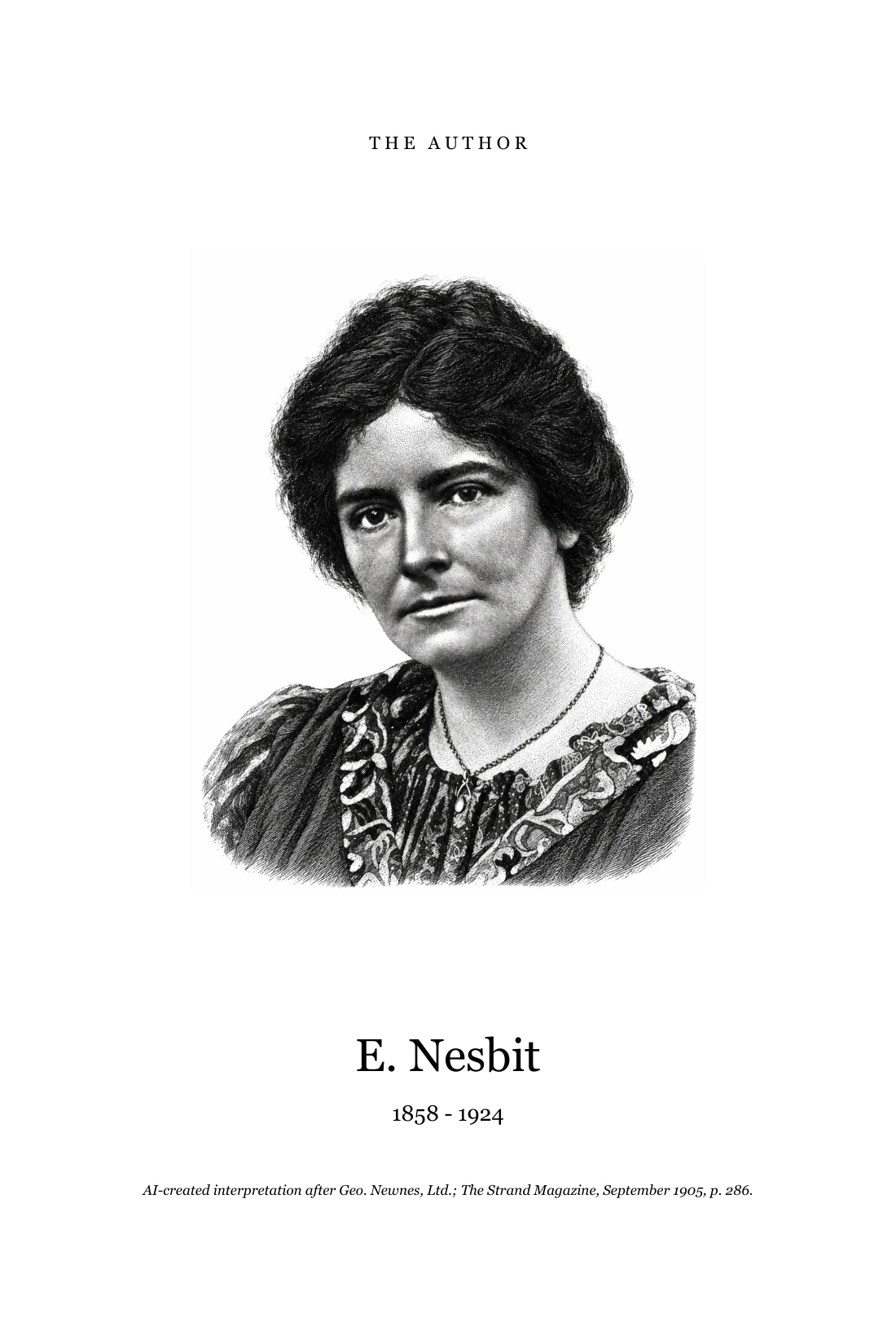
For Nesbit’s other magic, start with Five Children and It has two sequels, and for her life and politics, Did you know E. Nesbit helped found the Fabian Society? Her realistic family stories are in The Bastable children in order.
Somebody has to write a better rhyme than Elfrida’s. Open The House of Arden to see whether Edred can, and when cousin Richard turns up, Harding’s Luck is waiting to tell you who he is.
Questions readers ask
Is Harding’s Luck a sequel to The House of Arden?
Yes, a companion sequel. Harding’s Luck (1909) tells the story of Dickie Harding, the mysterious cousin Richard Arden of The House of Arden (1908), and the two books overlap in their adventures in the past.
What order should I read E. Nesbit’s Arden books in?
Read The House of Arden first and Harding’s Luck second, the order in which they were published.
What is the Mouldiwarp in The House of Arden?
The Mouldiwarp is a magical white mole, the badge of the Arden family, who helps Edred and Elfrida travel through time. It only appears when summoned with a rhyme.
What age is The House of Arden for?
It suits confident readers of about eight to twelve and works well as a family read-aloud. Harding’s Luck is a little darker and suits slightly older children.
 The Railway Children176 pages · $13.99
 Five Children and It168 pages · $13.99
 The Phoenix and the Carpet176 pages · $13.99
 The Enchanted Castle200 pages · $13.99