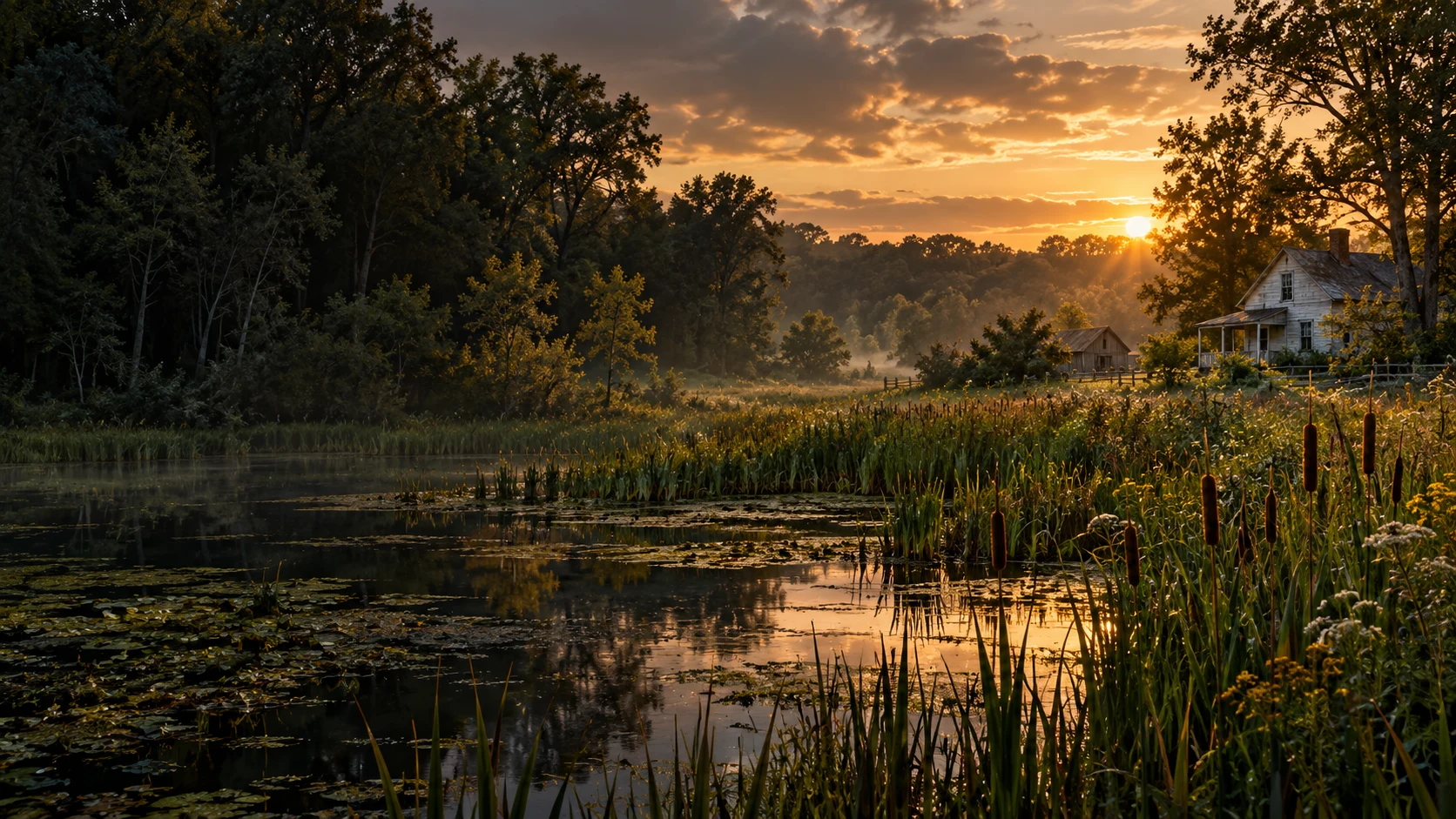
The Limberlost was a great stretch of wetland and forest in north-east Indiana, close to the log house in Geneva where Gene Stratton-Porter lived from 1895 to 1913. She spent years there with a camera and a notebook, photographing nesting birds and studying its moths. Meanwhile the timber was felled, oil wells went in, and the water was drained away to make farmland. By the time she left Geneva, the swamp she wrote about was largely gone.
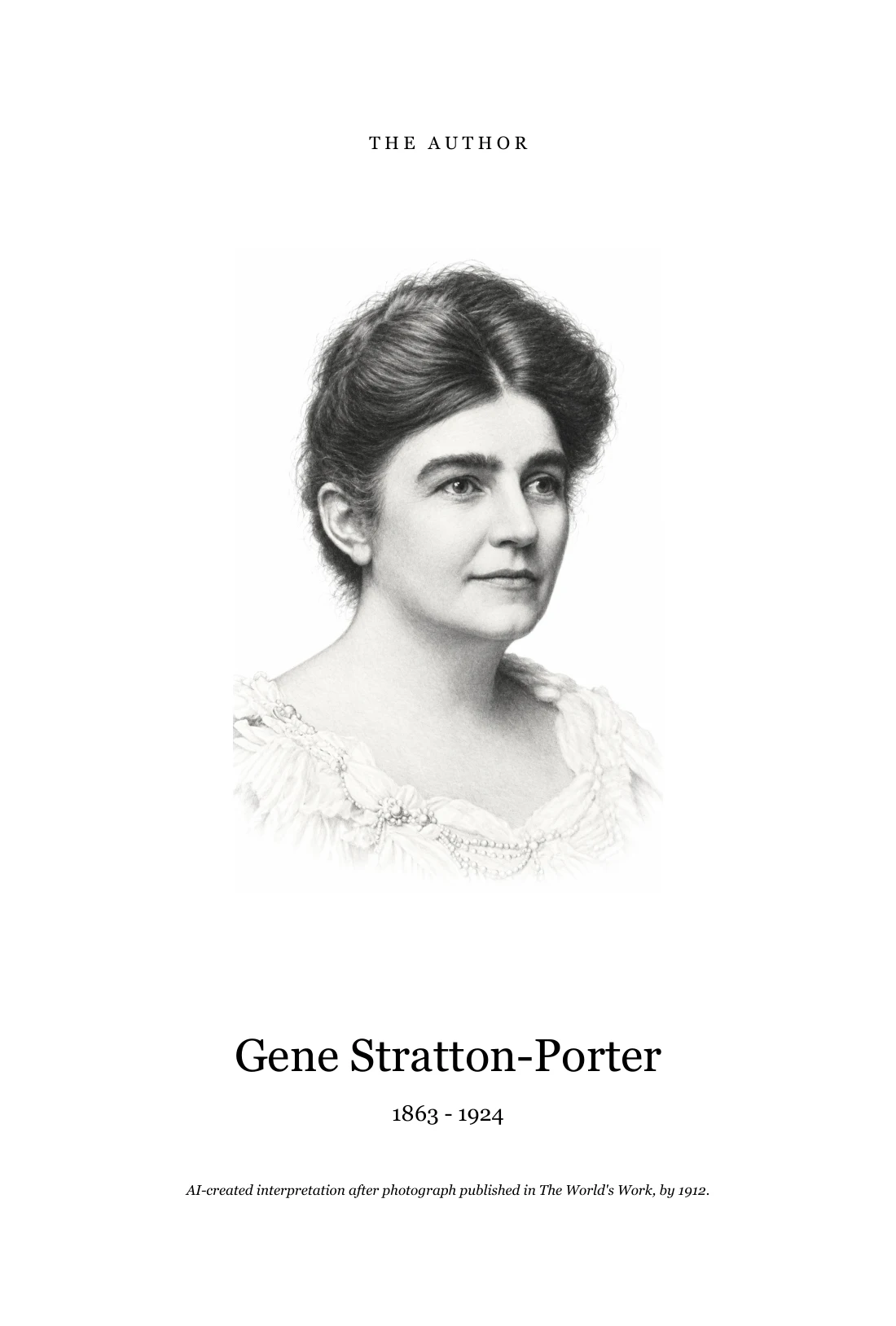
What survived was in her books. Gene Stratton-Porter wrote twelve novels, eight nature books and a good deal more besides, and at the height of her fame in the 1910s her readership was estimated in the tens of millions. The Gene Stratton-Porter books most people still read are the two Limberlost novels, Freckles and A Girl of the Limberlost, and they are the place to start.
A naturalist first
She was born Geneva Grace Stratton, the youngest of twelve children on a farm in Wabash County, and her family called her “Little Bird Woman”. Her husband and daughter gave her a camera for Christmas in 1895, and her first published pieces were about birds and photography. She later worked with heavy glass-plate cameras and developed her plates in a darkroom she set up in the family bathroom.
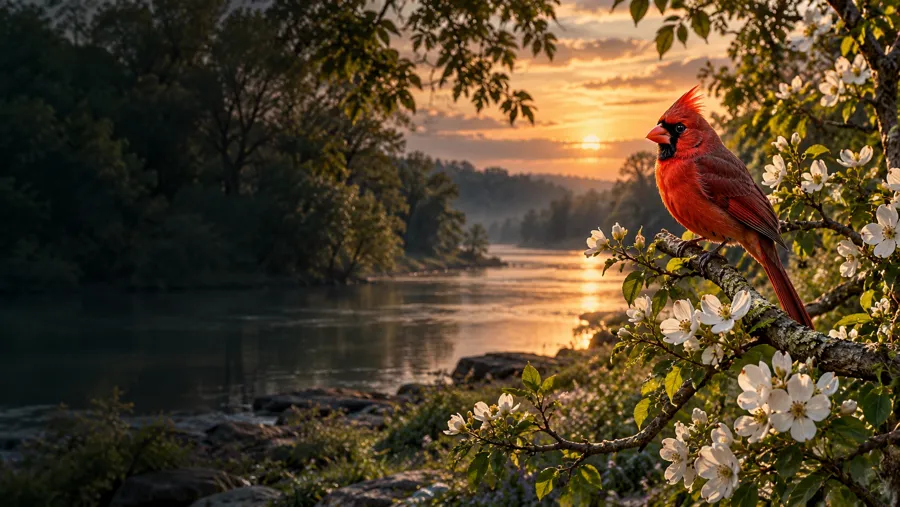
Her first acknowledged novel, The Song of the Cardinal (1903), was a nature story about a single red bird, illustrated with her own photographs. It did modestly well, but her publisher doubted that nature stories alone would ever sell like romance. So for her next book she combined the two. Freckles became a bestseller, and the formula of love story and close observation carried her for the next twenty years.
Last season the Cardinal had pipped his shell, away to the north, in that paradise of the birds, the Limberlost. There thousands of acres of black marsh-muck stretch under summers’ sun and winters’ snows.
Gene Stratton-Porter, The Song of the Cardinal (1903)
Gene Stratton-Porter’s books in order
Read them in the order she wrote them. A Girl of the Limberlost is a sequel of sorts to Freckles, and characters from the first book reappear in the second.
- $9.99
The Song of the Cardinal
1903. A year in the life of a cardinal, from the orange groves of the south back to the Limberlost to find a mate. Short, lyrical and full of real bird behaviour.
- $14.99
Freckles
1904. A one-handed orphan from Chicago takes a job guarding valuable timber in the swamp, and slowly falls in love with the place. A naturalist with a camera, known only as the Bird Woman, helps him along.
- $17.99
A Girl of the Limberlost
1909. Elnora Comstock, poor and resented by her mother, pays her way through high school by collecting moths. Her best-known book, and the one that carried the Limberlost round the world.
- $19.99
The Harvester
1911. David Langston gathers medicinal herbs in his Indiana woods and dreams of the woman he will marry. She dedicated it in the hope that readers would see in its hero a likeness to Thoreau.


Which Gene Stratton-Porter book should you read first?
Start with A Girl of the Limberlost. Elnora is one of the great determined heroines of American fiction, and the novel’s plot, a girl who turns her knowledge of the swamp into money for her education, makes Stratton-Porter’s case better than any essay could: that paying close attention to the natural world is useful, and that it changes you. Her prickly, grieving mother is drawn with real sympathy, too.
If you like it, go back to Freckles, which is gentler and more sentimental but has the best swamp writing of all. Readers have long taken its camera-carrying Bird Woman, who also reappears in the later book, for a portrait of the author herself; it is easy to see why. The Harvester, a number one bestseller in 1912, moves the action to the herb woods and is the most openly romantic of the three.

The rest of her life, and a caution
Stratton-Porter moved to California in 1919 and, unhappy with how studios had filmed her books, set up her own production company in 1924 to make faithful adaptations. That December her car was struck by a streetcar in Los Angeles, and she died of her injuries at sixty-one. Two of her Indiana homes are now state historic sites, and since the 1990s a small part of the Limberlost wetland has been restored.
Her books are of their time. Critics in her own day found them too wholesome, and some of her later novels, Her Father’s Daughter above all, carry the racial prejudices of the period, which modern readers will notice. The four books here are the ones that have lasted, and they belong on the same shelf as L. M. Montgomery’s Anne; we suggest more in Books like Anne of Green Gables.
Elnora is the one to meet first. Spend an evening with A Girl of the Limberlost and a lost Indiana wilderness comes back to life, seen by a writer who knew every moth in it.
Questions readers ask
What is Gene Stratton-Porter’s most famous book?
A Girl of the Limberlost (1909), the story of Elnora Comstock, who pays for her education by collecting moths in the Limberlost Swamp in Indiana.
Should I read Freckles before A Girl of the Limberlost?
It helps but isn’t essential. A Girl of the Limberlost is a loose sequel to Freckles (1904), and some characters from the first book reappear in the second.
Is the Limberlost Swamp real?
Yes. It was a large wetland in north-east Indiana, mostly drained for farming by the 1910s. Stratton-Porter’s home at Geneva is now the Limberlost State Historic Site, and part of the swamp has been restored since the 1990s.