Thirteen years, sixteen years, thirty-nine years. Those are the gaps between magazine and hardback for the three Edgar Rice Burroughs novels in this post. The Outlaw of Torn ran in a magazine in 1914 and became a book in 1927. The Monster Men appeared in 1913 and waited until 1929. Beyond Thirty, now usually called The Lost Continent, was printed in 1916 and reached hard covers only in 1955, five years after its author’s death.
The reason is simple. Tarzan and the Mars books sold so well that the rest of Edgar Rice Burroughs’s early fiction queued up behind them. If you are looking for Edgar Rice Burroughs’s other books, the ones that belong to no series, these three are the place to start: one historical, one scientific and one set in the future, and each shows a side of him the famous books keep hidden.
Edgar Rice Burroughs’s other books: three stand-alones
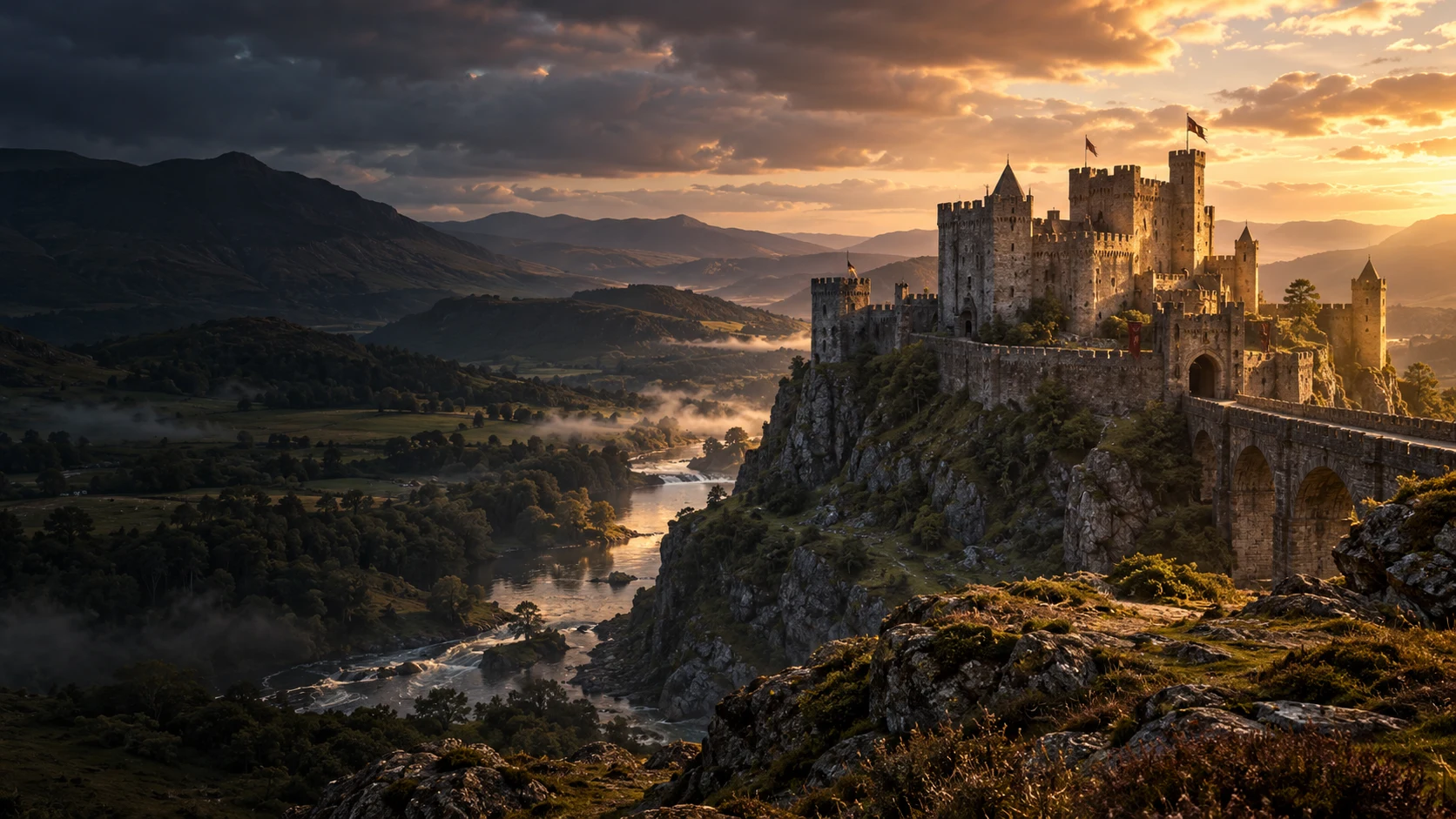
The outlaw of Torn
Serialised 1914, book 1927. A boy raised by a vengeful Frenchman, once the king’s fencing master, to hate everything English grows up to be the most feared outlaw in thirteenth-century England. Burroughs’s second novel, and, by the usual count, one of only two historical ones.
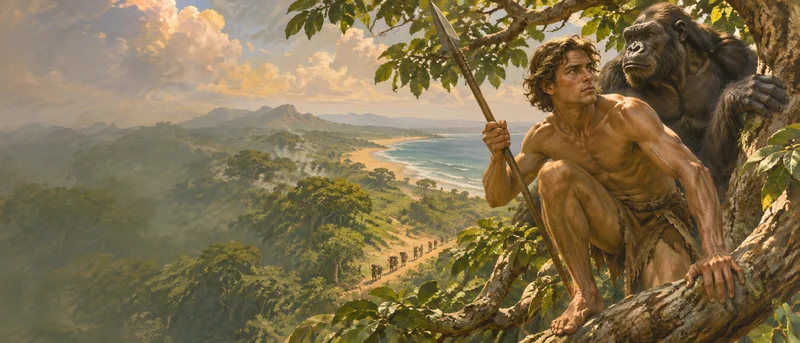
The Monster Men
All-Story, November 1913, as “A Man Without a Soul”; book 1929. A Cornell professor sets up a laboratory on a remote island in the East Indies to grow artificial men in chemical vats. Frankenstein by way of the pulps.
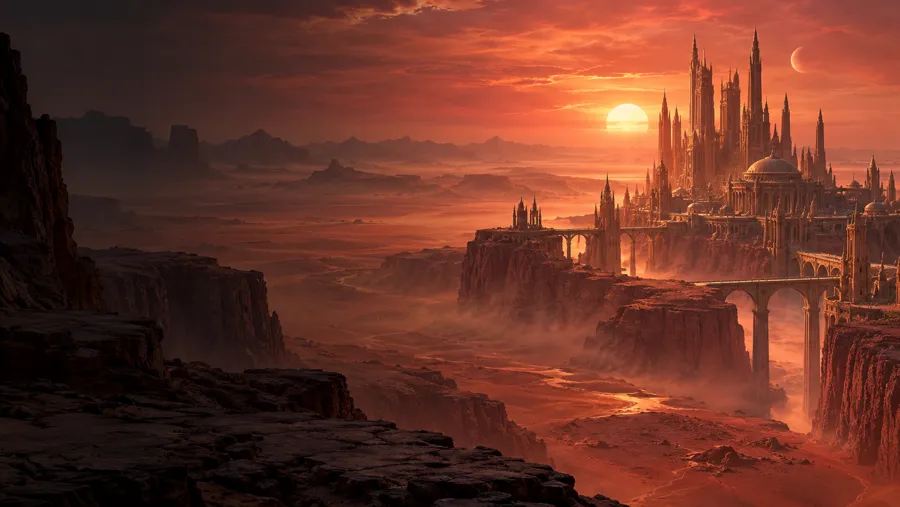
The Lost Continent
Written 1915, All Around Magazine 1916, book 1955. In 2137 a Pan-American naval officer is stranded east of the thirtieth meridian and lands in an England gone back to the wild. A First World War novel disguised as a future one.


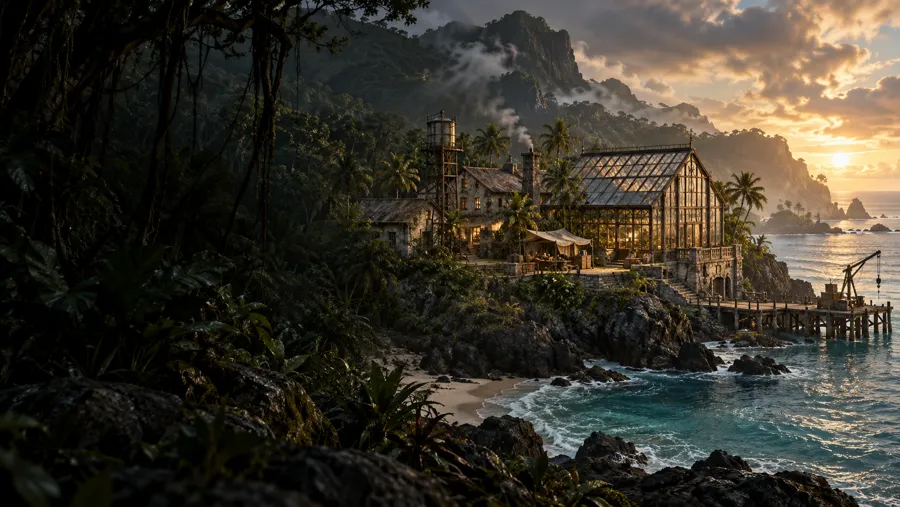
The Outlaw of Torn: the second novel
Burroughs wrote The Outlaw of Torn soon after A Princess of Mars, before Tarzan of the Apes, which makes it his second novel. It is set during the Second Barons’ War of 1264 to 1267, when Simon de Montfort rose against Henry III, and its hero, Norman of Torn, is a swordsman of terrifying skill who leads the largest band of outlaws in England.
There is a secret at the heart of the book, which we will not spoil, and a romance with de Montfort’s daughter Bertrade. The result is a swaggering, old-fashioned costume adventure, quite unlike anything else he wrote. It ran as a five-part serial in New Story Magazine from January to May 1914, but A. C. McClurg did not publish it as a book until 1927.
Leaving aside his westerns, it is usually counted as one of only two historical novels Burroughs wrote. The other, I Am a Barbarian, set in the Rome of Caligula, was not published until 1967, seventeen years after his death.
The Monster Men: Frankenstein in the East Indies
Burroughs’s working title was “Number Thirteen”, and that tells you the plot. Professor Arthur Maxon has been experimenting with the creation of life, and on his island laboratory he and his ambitious assistant, Dr von Horn, grow a series of humanoid creatures, most of them mindless and misshapen. Maxon pins his hopes on the thirteenth, and plans to marry his daughter Virginia to the perfect man he expects it to be.
What follows is pure Burroughs: pirates, a jungle chase, a fort under siege and a hero who has to work out what it means to be human. It is fast and lurid and very much of 1913, including its stereotyped pirates and Chinese cook, but its question about a manufactured man with no soul is the oldest one in science fiction. It is worth reading beside the book that started that tradition; see Did you know Frankenstein was written by an 18-year-old?.
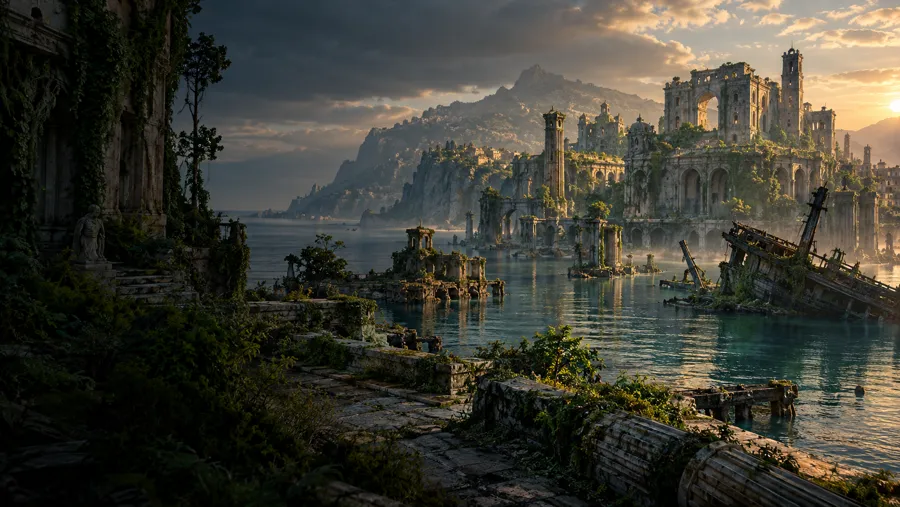
The Lost Continent: Beyond Thirty
The best of the three is also the strangest. Burroughs wrote Beyond Thirty in 1915, while the United States was still neutral and most Americans wanted to stay out of the European war. He imagined that they had got their wish permanently. By 2137 the Western Hemisphere has cut itself off, Pan-America flourishes in peace, and nobody has crossed the thirtieth meridian west for two centuries.
Then the aero-submarine Coldwater breaks down on patrol, and Lieutenant Jefferson Turck and three of his men, left behind in a small boat, are forced ashore in forbidden England. What they find there is a Europe that has fought itself back into barbarism. Read in 1916, it was a warning; read now, it is one of the more haunting future-war stories of its decade.
Should you read them before Tarzan?
Not necessarily. If you have never read Burroughs, the doors into his big worlds are still A Princess of Mars and Tarzan of the Apes, and our guides to the Barsoom books in order and the Tarzan books map what follows. The story of how he started writing at all, while selling pencil sharpeners in Chicago, is in Did you know Edgar Rice Burroughs was selling pencil sharpeners when he wrote his first story?
But if you already know those books, the stand-alones show how much range lay behind the formula. The man who gave the world Tarzan could also write a knightly romance, a laboratory horror and a political fable. For more of his invented geographies, try Pellucidar in order and lost world novels.
Start with the future. The Lost Continent is short, it moves at Burroughs’s usual gallop, and its picture of a world that turned its back on Europe has lost none of its chill.
Questions readers ask
What did Edgar Rice Burroughs write besides Tarzan?
Besides Tarzan he wrote the Mars (Barsoom), Venus and Pellucidar series and many stand-alone novels, including The Outlaw of Torn, The Monster Men, The Lost Continent, The Mucker and several westerns.
Is The Lost Continent the same as Beyond Thirty?
Yes. Burroughs’s 1916 magazine novel Beyond Thirty was retitled The Lost Continent for the Ace paperback of 1963, and it has appeared under both titles since.
What was Edgar Rice Burroughs’s second novel?
The Outlaw of Torn, a historical adventure set in thirteenth-century England. He wrote it after A Princess of Mars and before Tarzan of the Apes, but it was not published as a book until 1927.
 A Princess of Mars186 pages · $13.99
 Tarzan of the Apes256 pages · $15.99
 The Return of Tarzan240 pages · $15.99
 The Gods of Mars228 pages · $14.99