In Japan, the novel’s mysterious benefactor became a symbol of anonymous giving. Daddy-Long-Legs is known there as Ashinaga-ojisan, roughly “Uncle Long-Legs”, and a charity that helps young people who have lost a parent takes its name, Ashinaga, from the book. Its donors are known as Ashinaga-san. Few novels have had an afterlife quite like it.
The book behind all this is Daddy-Long-Legs by Jean Webster, published in 1912. Apart from one short opening chapter, it is told entirely through the letters of a college girl to a man who never answers, and that one-sided correspondence is the whole secret of its charm.
Why does Daddy-Long-Legs begin outside the letters?
The first chapter, “Blue Wednesday”, is ordinary third-person narration. It is the first Wednesday of the month at the John Grier Home, a day of scrubbed floors and starched ginghams, when the trustees come to inspect the ninety-seven orphans. Jerusha Abbott, the oldest of them, catches a glimpse of one departing trustee only as a shadow thrown along the corridor wall by car headlights, all legs and arms, “like a huge, wavering daddy-long-legs”.
That same trustee, she learns, has offered to send her to college to become a writer. The matron sets out his terms. Jerusha will write to him once a month, addressing her letters to “Mr. John Smith”, which is not his name. He will never reply, nor take the slightest notice of what she says. The letters are the only payment he asks for.
From that point on, the book is hers. The chapter heading changes to “The Letters of Miss Jerusha Abbott to Mr. Daddy-Long-Legs Smith”, and the rest of the novel is told in her voice.

How the letters tell the story
Her first letter, written from her college room in September, opens with a joke about what to call him. She rejects “Mr. Girl-Hater” and “Mr. Rich-Man”, decides the one thing she knows for certain is that he is tall, and settles on the shadow she saw on the wall:
So I’ve decided to call you Dear Daddy-Long-Legs. I hope you won’t mind. It’s just a private pet name we won’t tell Mrs. Lippett.
Jean Webster, Daddy-Long-Legs (1912)
Over four years of college the letters change as she does. She renames herself Judy, discovers the books other girls grew up with, makes friends, ends up in the infirmary, announces that she may become a Socialist and sends poems to magazines that all come back. Her letters are full of little stick-figure drawings, which Webster drew herself for the first edition. The form lets the story move briskly, too: weeks can pass between letters, and Judy simply catches her silent reader up on everything he has missed, in whatever order it occurs to her.
The silence on the other end is what gives the book its tension. Judy teases him, confides in him, scolds him and, at one memorable low point, rages at him for being a “Thing” who never answers anything. Because we only ever hear her side, we are always reading between the lines, and the novel’s final letters reward that close attention. We will not say how.
Who was Jean Webster?
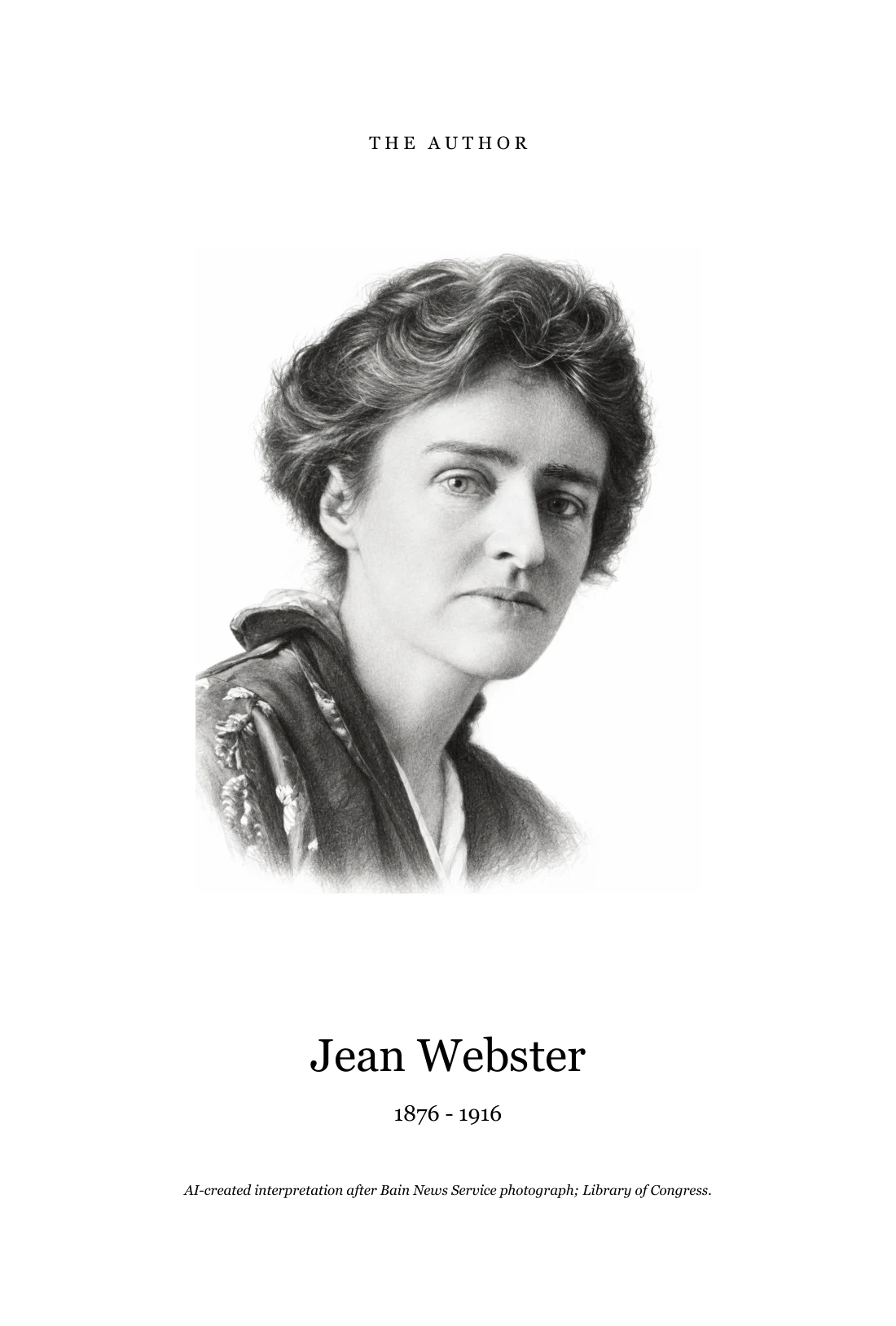
Daddy-Long-Legs became her best-known book by some distance. Alice Jane Chandler Webster was born in 1876 and graduated from Vassar in 1901. She cared about women’s education and social reform, and both shape this book. She turned it into a stage play that opened in New York in 1914, and wrote a sequel in letters, Dear Enemy, published in 1915, in which Judy’s college friend takes charge of the John Grier Home.
Webster married in 1915 and died on 11 June 1916, aged thirty-nine, the day after giving birth to her daughter. She never saw most of the book’s long afterlife on screen: Mary Pickford played Judy in 1919, Janet Gaynor in 1931, and in 1955 a musical version starring Fred Astaire and Leslie Caron strayed a long way from the novel. A Japanese animated series followed in 1990.
Daddy-Long-Legs
1912. An orphan’s four years at college, told in cheeky, heartfelt letters to the benefactor who never writes back. Quick to read and very hard to put down.
Lady Susan
Jane Austen’s short novel in letters, starring a glamorous, scheming widow. The perfect contrast: a letter writer you are meant to see through.


For the wider tradition, read Novels told in letters: the best epistolary classics, and for another story told partly through letters, Did you know Doctor Dolittle began as letters from the trenches?. Teenage readers often take to Judy at once, which is why she appears in Classic books teenagers actually enjoy.
Begin where Judy does, with a shadow on a wall and a promise she cannot quite believe. Daddy-Long-Legs can be read in an afternoon, and by its last letter you will have read every word Mr Smith ever received.
Questions readers ask
Is Daddy-Long-Legs written in letters?
Almost entirely. After a short third-person opening chapter, the novel consists of letters from Jerusha “Judy” Abbott to her anonymous benefactor, who never replies.
Why is it called Daddy-Long-Legs?
Judy only glimpses her benefactor as a long, spindly shadow thrown on a wall by car headlights. It reminds her of a daddy-long-legs, so that is what she calls him in her letters.
Is there a sequel to Daddy-Long-Legs?
Yes. Dear Enemy (1915), also told in letters, follows Judy’s college friend Sallie McBride as she takes over the orphanage where Judy grew up.
What age is Daddy-Long-Legs suitable for?
It is now often shelved as children’s literature and suits confident readers from about eleven or twelve, though its humour and romance appeal just as much to adults.