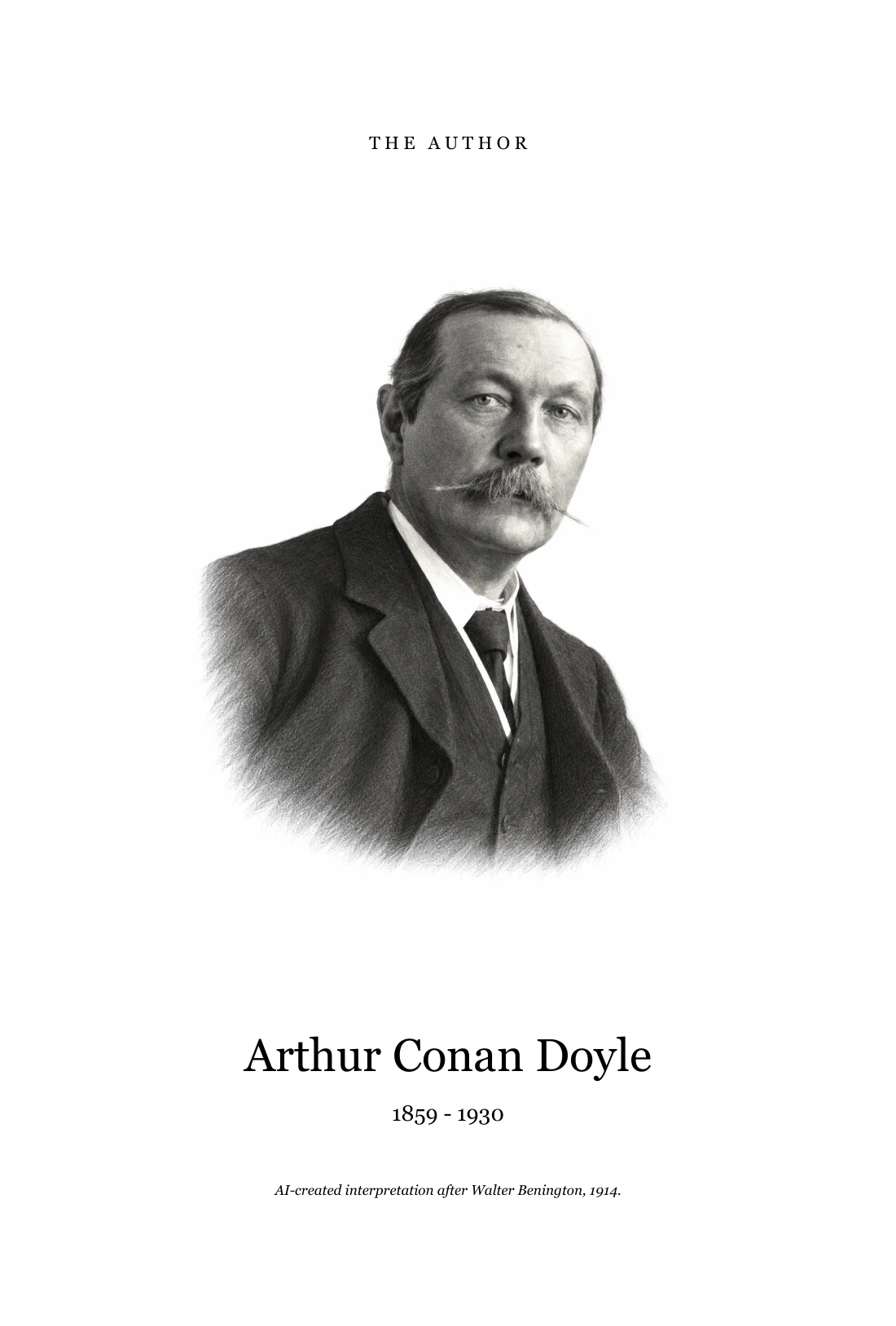
Should you read Conan Doyle’s historical novels in the order he wrote them, or the order in which their history happened? With most authors it would hardly matter. With Arthur Conan Doyle it does, because his two most admired, The White Company (1891) and Sir Nigel (1906), run backwards. The later book is a prequel about the young Nigel Loring, who is already a veteran knight leading the archers in the earlier one.
He wrote these novels in the gaps between Holmes stories, from Micah Clarke in 1889 to Sir Nigel in 1906, and he thought them his more serious work. Below are the five on our shelves in historical order, then a timeline of how they actually appeared.
Conan Doyle’s historical novels in historical order
- $17.99
Sir Nigel
Set 1350–56, published 1906. Nigel Loring, last of a proud, impoverished family near Waverley Abbey, rides out to win honour under Sir John Chandos. Jousts, a sea fight, the Combat of the Thirty and, finally, Poitiers.
- $19.99
The White Company
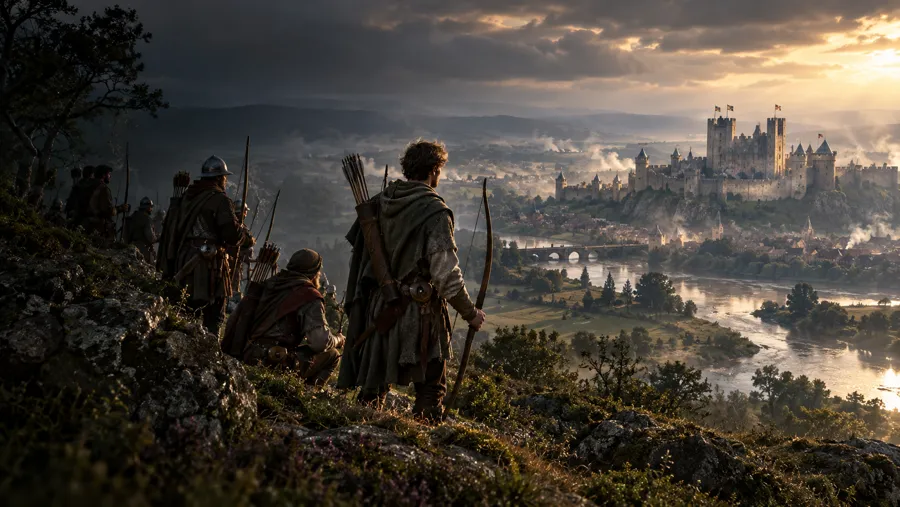
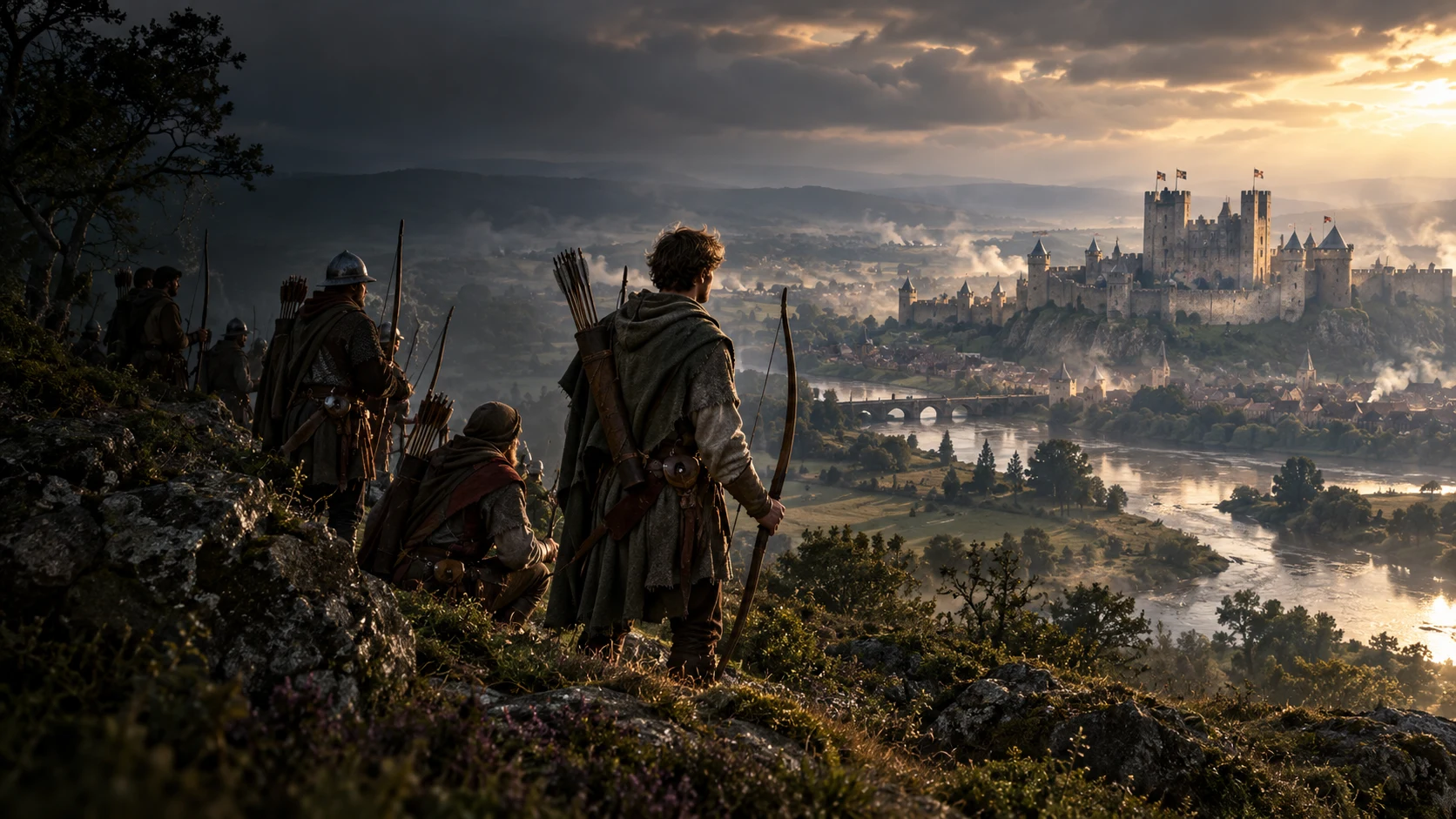
Set 1366–67, published 1891. A young novice raised by monks walks out into the world and joins a company of English bowmen bound for France and Spain under the Black Prince, with the older Sir Nigel at their head.
- $18.99
The Refugees A Tale of Two Continents
Set in the 1680s, published 1893. A Huguenot officer in Louis XIV’s guard and his blunt American friend, first at the court of Versailles and then across the Atlantic in the New World.
- $21.99
Micah Clarke
Set in 1685, published 1889. Micah Clarke, born at Havant to a Puritan father, joins the Duke of Monmouth’s rebellion and marches to Sedgemoor. Told by Micah as an old man to his grandchildren.
- $15.99
Rodney Stone
Set from 1803, published 1896. A naval officer’s son is taken up by his fashionable uncle, a friend of the Prince of Wales, and meets the bare-knuckle prize ring and an old crime. Narrated by its hero, looking back from 1851.


The order they were published
- 1889
Micah Clarke, his first historical novel, set during the Monmouth Rebellion
- 1891
The White Company runs in The Cornhill Magazine from January to December
- 1892
The Great Shadow, a Napoleonic novel that ends at Waterloo
- 1893
The Refugees, subtitled A Tale of Two Continents
- 1896
Rodney Stone, prize-fighters and dandies in 1803
- 1905–06
Sir Nigel is serialised, then published as a book in 1906
Conan Doyle wrote other Napoleonic fiction too, including the novel Uncle Bernac and the comic Brigadier Gerard stories, which are some of the best things he ever did; meet the brigadier in Brigadier Gerard: the funniest hero Conan Doyle ever wrote.
The White Company and its prequel
Conan Doyle was inspired to write The White Company after a lecture on the Middle Ages in 1889 and a visit to the New Forest that April. He researched it at length, finished it in the summer of 1890, and saw it serialised in The Cornhill Magazine through 1891. It is a book of marches, sieges and sea fights, and of loyalty among a band of archers, with a marching song to match:
What of the bow? / The bow was made in England: / Of true wood, of yew wood, / The wood of English bows;
Arthur Conan Doyle, The White Company (1891)
Fifteen years later he went back for Sir Nigel, which begins with a young squire’s family humbled by the monks of Waverley and follows him through the early campaigns of the Hundred Years’ War. It works perfectly well as a first book. Read it first and you meet Nigel young, then watch him in his prime; read The White Company first, as his original readers did, and Sir Nigel plays like a long flashback. We lean towards the order Conan Doyle wrote them, because The White Company has the greater rush, but there is no wrong answer.
Two novels, one year: 1685
Micah Clarke and The Refugees make an unexpected pair. Both turn on 1685: the first on the Duke of Monmouth’s doomed Protestant rising in the West Country, the second on Louis XIV’s revocation of the Edict of Nantes, which drove French Protestants abroad. Between them they show the same year of religious upheaval from both sides of the Channel, and The Refugees follows its Huguenots across the Atlantic.
Micah Clarke also led to a celebrated literary dinner. In 1889, shortly after it appeared, Conan Doyle and Oscar Wilde were invited to dine in London by Joseph Marshall Stoddart of Lippincott’s Monthly Magazine, and both agreed to write for him. Conan Doyle’s contribution was The Sign of the Four; Wilde’s was The Picture of Dorian Gray. Conan Doyle later claimed in his memoirs that Wilde had read Micah Clarke and enjoyed it.
Did Conan Doyle really prefer these to Holmes?
He did. He regarded The White Company and his other historical novels more highly than the Sherlock Holmes stories for which he is remembered, and he grew impatient with the detective who kept pulling him away from them. The story of that impatience is told in Did you know Arthur Conan Doyle didn’t think Sherlock Holmes was his best work? and Did you know Conan Doyle killed off Sherlock Holmes?.
He was writing in a tradition, of course, and his debt to Walter Scott shows on every page; see Did you know Walter Scott is credited with inventing the historical novel?. What he added was pace. These books move like his best Holmes stories, with a cliffhanger never far away.
Start with the archers. Open The White Company, follow Alleyne out of the abbey gate into the New Forest, and you will see why its author thought it would outlast Baker Street.
Questions readers ask
Should I read The White Company or Sir Nigel first?
Either works. The White Company (1891) came first; Sir Nigel (1906) is a prequel about the same hero’s youth. Reading in publication order turns Sir Nigel into a flashback, while reading in historical order follows Nigel Loring from squire to veteran.
What are Conan Doyle’s historical novels?
The main ones are Micah Clarke (1889), The White Company (1891), The Great Shadow (1892), The Refugees (1893), Rodney Stone (1896), Uncle Bernac (1897) and Sir Nigel (1906).
Did Conan Doyle prefer his historical novels to Sherlock Holmes?
Yes. He regarded The White Company and his other historical novels more highly than the Holmes stories, and saw them as his more serious work.
 The Adventures of Sherlock Holmes254 pages · $15.99
 The Hound of the Baskervilles154 pages · $12.99
 A Study in Scarlet112 pages · $11.99
 The Lost World180 pages · $13.99