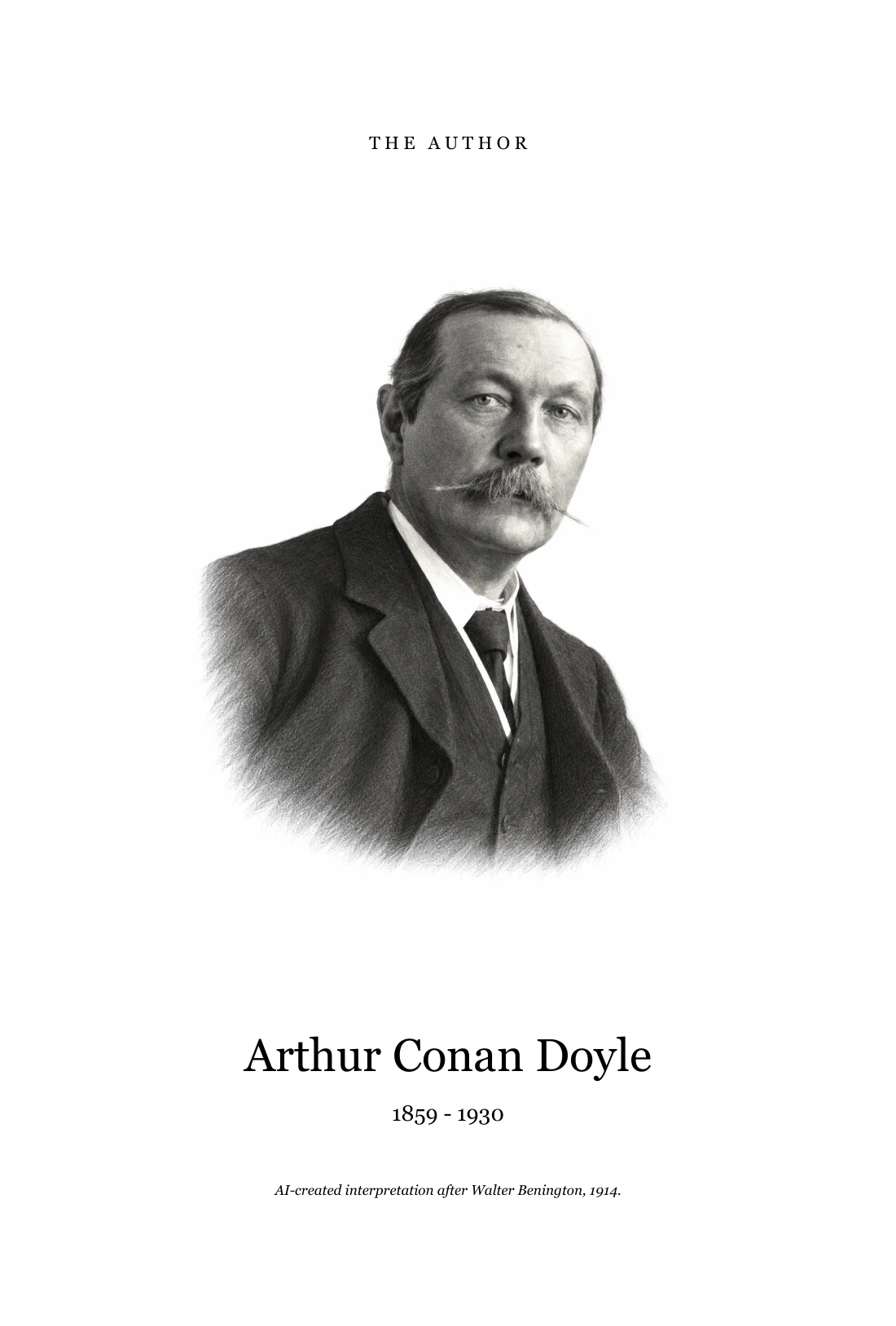
In March 1927 The Strand Magazine set its readers a puzzle worthy of Baker Street: guess which twelve Sherlock Holmes stories Arthur Conan Doyle himself considered the best. Doyle announced his own choices in the June issue, in an article called “How I Made My List”. He confessed that the job had been harder than he expected, that he had had to reread the stories with some care, and that the last place was so close he might as well have drawn a name out of a bag.
His list is still the best place to begin an argument about the best Sherlock Holmes stories, so here it is, followed by our picks from each of the five short-story collections.
Conan Doyle’s twelve best Sherlock Holmes stories
- “The Speckled Band”
- “The Red-Headed League”
- “The Dancing Men”
- “The Final Problem”
- “A Scandal in Bohemia”
- “The Empty House”
- “The Five Orange Pips”
- “The Second Stain”
- “The Devil’s Foot”
- “The Priory School”
- “The Musgrave Ritual”
- “The Reigate Squires”
Doyle left out the newest stories, then still uncollected, because readers could not easily get hold of them, but he said he would otherwise have found room for “The Lion’s Mane” and “The Illustrious Client”. He also explained one notable absence: “Silver Blaze”, he admitted, got its horse-racing details badly wrong, so he ruled it out.
The Adventures of Sherlock Holmes (1892)
The first collection is the strongest from start to finish. All twelve stories ran in the Strand between July 1891 and June 1892, and they made Holmes famous. Read “A Scandal in Bohemia”, which opens with one of the most famous first lines in detective fiction, “To Sherlock Holmes she is always the woman”; “The Red-Headed League”, with its absurd job offer; “The Speckled Band”, in which a frightened young woman remembers her sister’s dying words; and “The Blue Carbuncle”, a Christmas case that begins with a battered hat and a goose.
The Memoirs of Sherlock Holmes (1894)
The second collection is more varied and a little darker. “Silver Blaze”, whatever its author thought of the racing, contains Holmes’s most quoted exchange. “The Musgrave Ritual” goes back to one of his earliest cases, before Watson, and turns a meaningless-seeming family catechism into a puzzle. “The Greek Interpreter” introduces his brother Mycroft. And the book ends with “The Final Problem”, the story Doyle wrote to be the last.
“To the curious incident of the dog in the night-time.” “The dog did nothing in the night-time.” “That was the curious incident,” remarked Sherlock Holmes.
“Silver Blaze”, The Memoirs of Sherlock Holmes (1894)
The Return of Sherlock Holmes (1905)
Holmes came back in “The Empty House” in 1903, and the thirteen stories that followed show Doyle at full confidence. Start with “The Empty House” itself, then “The Dancing Men”, a cipher story built around rows of stick figures; “Charles Augustus Milverton”, in which Holmes and Watson find themselves on the wrong side of the law; “The Six Napoleons”, about someone who keeps smashing plaster busts of the emperor; and “The Second Stain”, which Doyle rated above his other high-diplomacy story, “The Naval Treaty”.
His Last Bow (1917)
The fourth collection is short, and uneven, but its best stories are among the most atmospheric Doyle wrote. “The Bruce-Partington Plans” sends Holmes after missing submarine plans in fog-bound London, with Mycroft as his client. “The Devil’s Foot” takes a convalescent Holmes to Cornwall and into a genuinely frightening case. “The Dying Detective” is a short, sly two-hander. And the title story, set on the eve of the First World War, is told in the third person and ends with Holmes warning Watson that “There’s an east wind coming”.
The Case-Book of Sherlock Holmes (1927)
The final collection is often called the weakest, and some of it deserves the label. But it holds two of the stories Doyle singled out, and it experiments more than the others: “The Lion’s Mane” and “The Blanched Soldier” are told by Holmes himself, and “The Mazarin Stone” is in the third person. Add “Thor Bridge”, a beautifully simple puzzle about a body on a bridge, and “The Illustrious Client”, which pits Holmes against a charming, dangerous aristocrat.
“I fear that Mr. Sherlock Holmes may become like one of those popular tenors who, having outlived their time, are still tempted to make repeated farewell bows to their indulgent audiences.”
Arthur Conan Doyle, preface to The Case-Book of Sherlock Holmes (1927)
Which Sherlock Holmes stories should you read first?
If you want a sampler of the best Sherlock Holmes stories, try these six in order: “A Scandal in Bohemia”, “The Red-Headed League”, “The Speckled Band”, “Silver Blaze”, “The Final Problem” and “The Empty House”. They take you from the first short story to Holmes’s return in a few evenings. For the complete sequence, including the four novels, see the Sherlock Holmes books in order; for the story Doyle wrote to end it all, Did you know Conan Doyle tried to kill off Sherlock Holmes?; and for the screen versions, Sherlock Holmes on screen.
Then begin where Doyle’s readers did in July 1891, with a masked King of Bohemia at the door of 221B and a woman Arthur Conan Doyle’s great detective would never forget. Open The Adventures of Sherlock Holmes.
Questions readers ask
What are the best Sherlock Holmes short stories?
Conan Doyle’s own top three were “The Speckled Band”, “The Red-Headed League” and “The Dancing Men”. Other favourites include “A Scandal in Bohemia”, “Silver Blaze”, “The Final Problem” and “The Empty House”.
Which Sherlock Holmes collection is the best?
The Adventures of Sherlock Holmes (1892) is usually considered the strongest, with four stories from Doyle’s own top twelve. The Return of Sherlock Holmes (1905) is a close second.
What was Arthur Conan Doyle’s favourite Sherlock Holmes story?
He put “The Speckled Band” first on the list of twelve he published in The Strand Magazine in 1927.
 The Hound of the Baskervilles154 pages · $12.99
 A Study in Scarlet112 pages · $11.99
 The Lost World180 pages · $13.99
 The Sign of the Four116 pages · $11.99