An angel with wings of shifting colours, shot down by a country vicar who takes him for a rare bird. A mermaid who comes ashore near Folkestone and asks to be taken in by a respectable family. A genie, released from a bottle bought at auction, determined to reward a young architect whether he likes it or not. An old monk, half blind, who baptises a colony of great auks in the belief that they are people.
Those are the premises of four of the books below, and they share a single joke: the impossible arrives, and polite society tries to carry on. Comic fantasy of this kind flourished from the late Victorian years until 1914, and its best books are satire as much as fairy tale.
Angels and mermaids: H. G. Wells’s comic fantasies
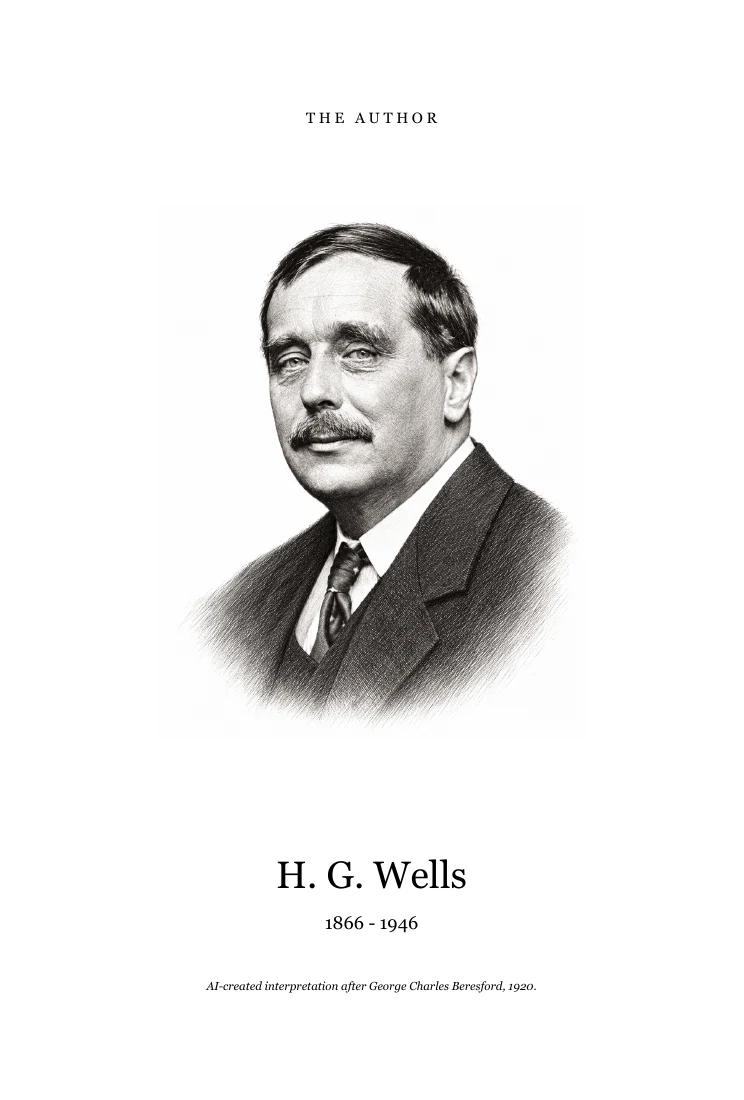
H. G. Wells wrote these two between his scientific romances, and they show a lighter, more mischievous writer than The War of the Worlds suggests.
The Wonderful Visit
1895. The vicar of Siddermorton, an amateur ornithologist, shoots a strange bird and finds he has wounded an angel, “the Angel of Italian art”. The village’s attempts to deal with its guest are a gentle, then not so gentle, satire of Victorian manners.
The Sea Lady
1902. A mermaid comes ashore on the beach near Sandgate in 1899, calls herself Miss Doris Thalassia Waters and sets out to win a promising young Liberal candidate who is already engaged. Light social comedy with a strange, wistful undertow.


The angel’s one gift is the violin, which he plays divinely. It does him no good at all at Lady Hammergallow’s reception, where it emerges that he cannot read music, and polite society is scandalised. Wells is very funny about a society that can accept the miraculous but not bad form.
Wells’s other overlooked books get their own page in H. G. Wells’s forgotten novels: an angel, a mermaid and a comet, and his comic novels of ordinary life in H. G. Wells beyond science fiction.

The genie in the flat: F. Anstey
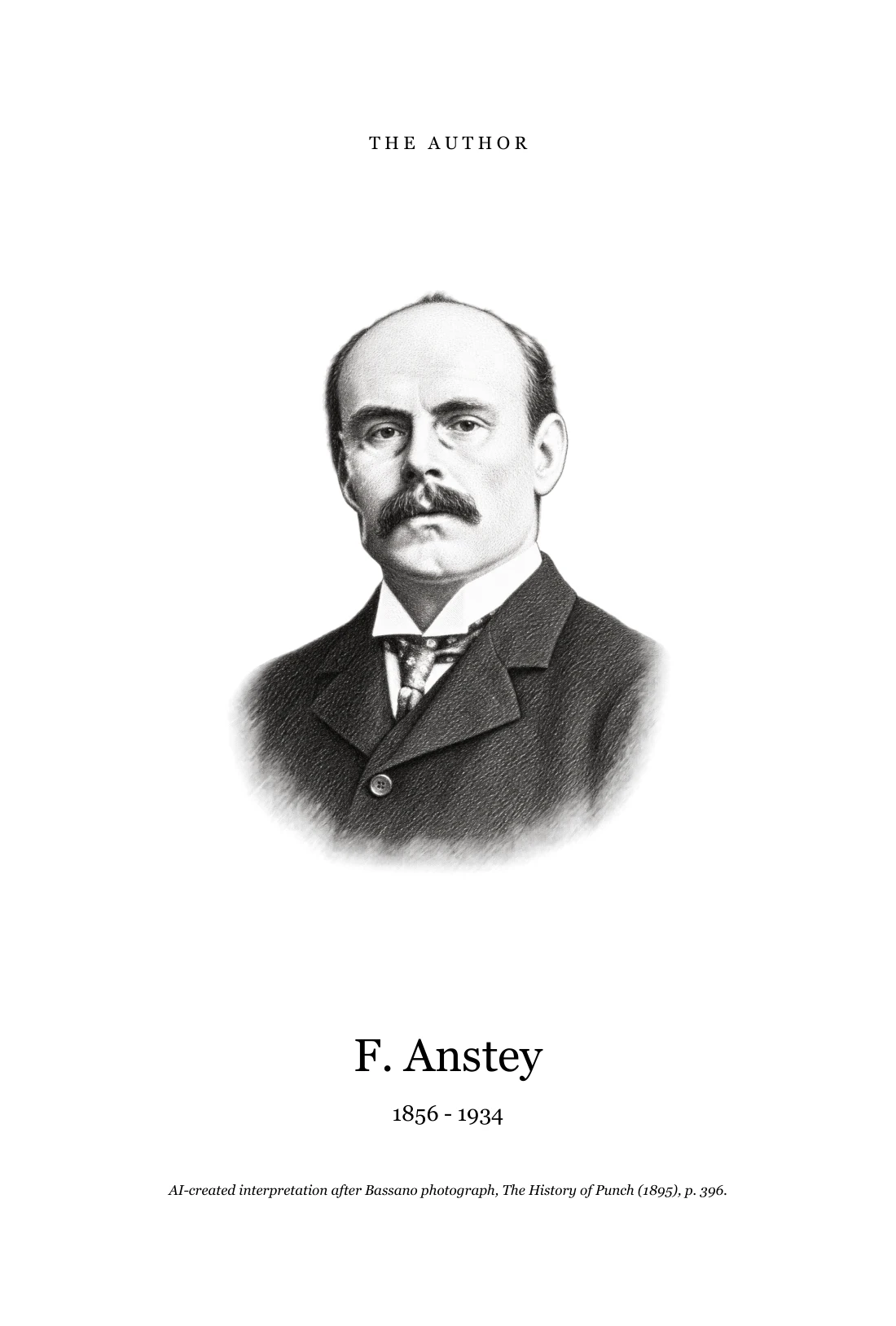
F. Anstey was the pen name of Thomas Anstey Guthrie, already famous for Vice Versa, in which a father and his schoolboy son swap bodies. The Brass Bottle was filmed three times, most recently in 1964, and George Orwell later praised it.
Gods and saints: Garnett, Dunsany and Anatole France
The other three writers went further back, to myth, legend and the history of the Church, and made their comedy out of the gap between the sublime and the absurd.
The Twilight of the Gods, and Other Tales
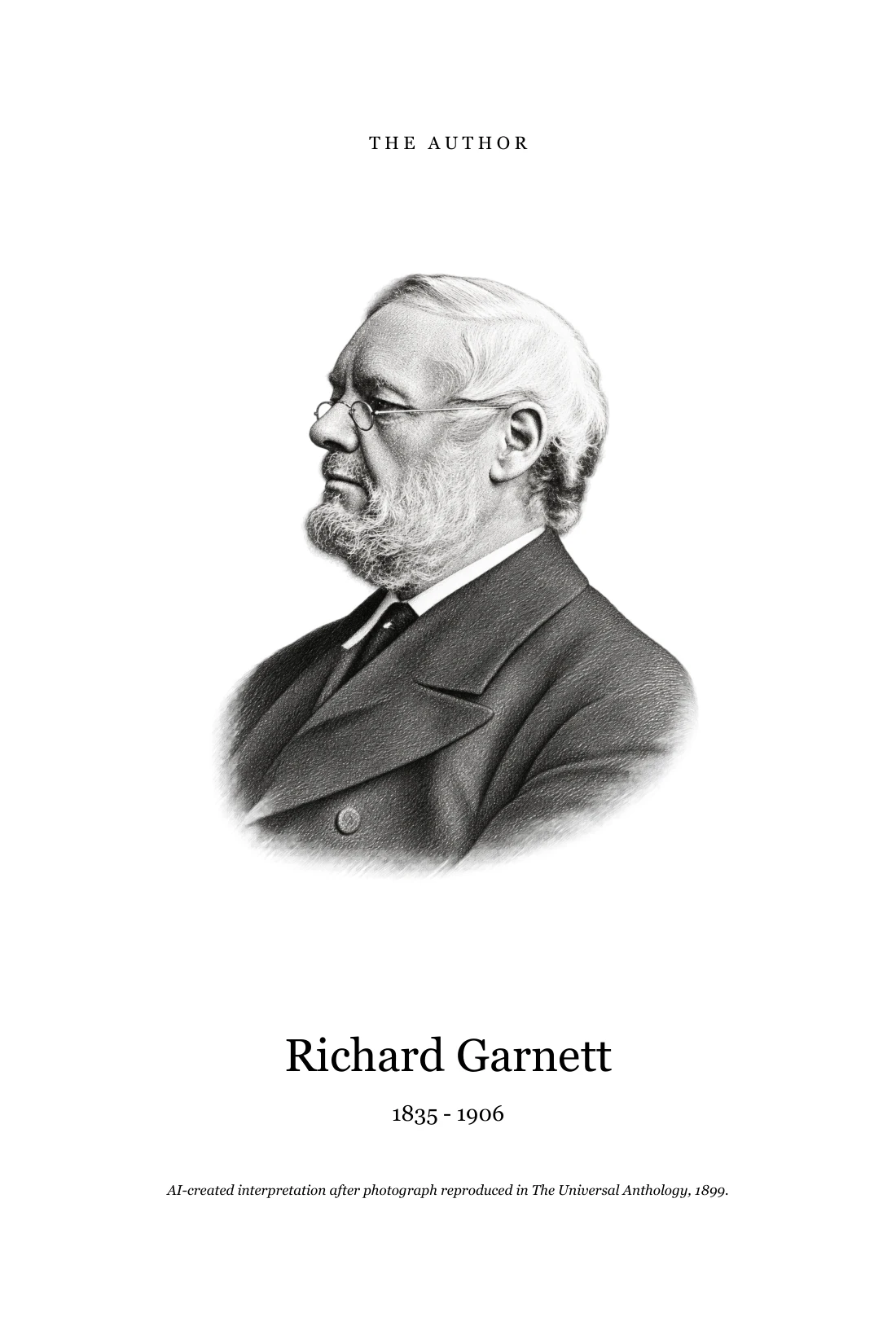
1888. Short tales of gods, poets, philosophers and saints from the late classical world and beyond. In the title story Prometheus is released from his rock at last, as the old gods fade before Christianity. Written by a keeper of printed books at the British Museum, and wickedly dry.
The Book of Wonder
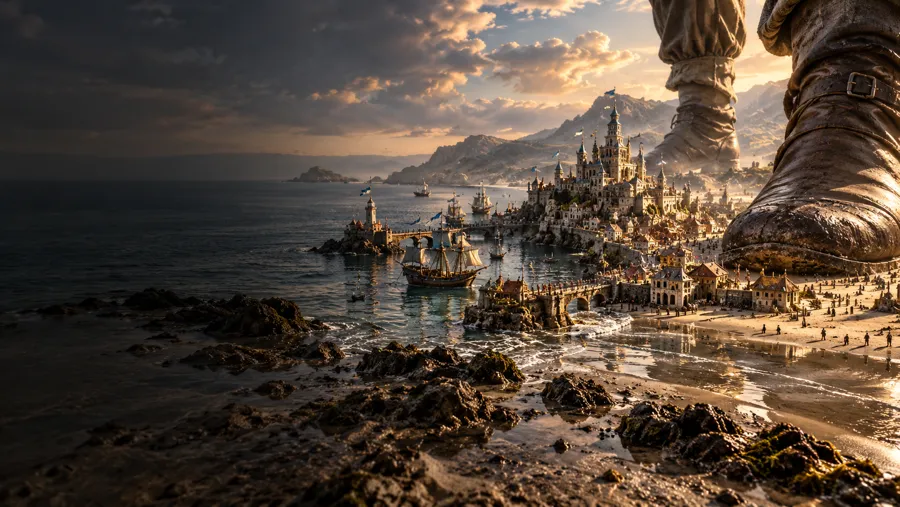
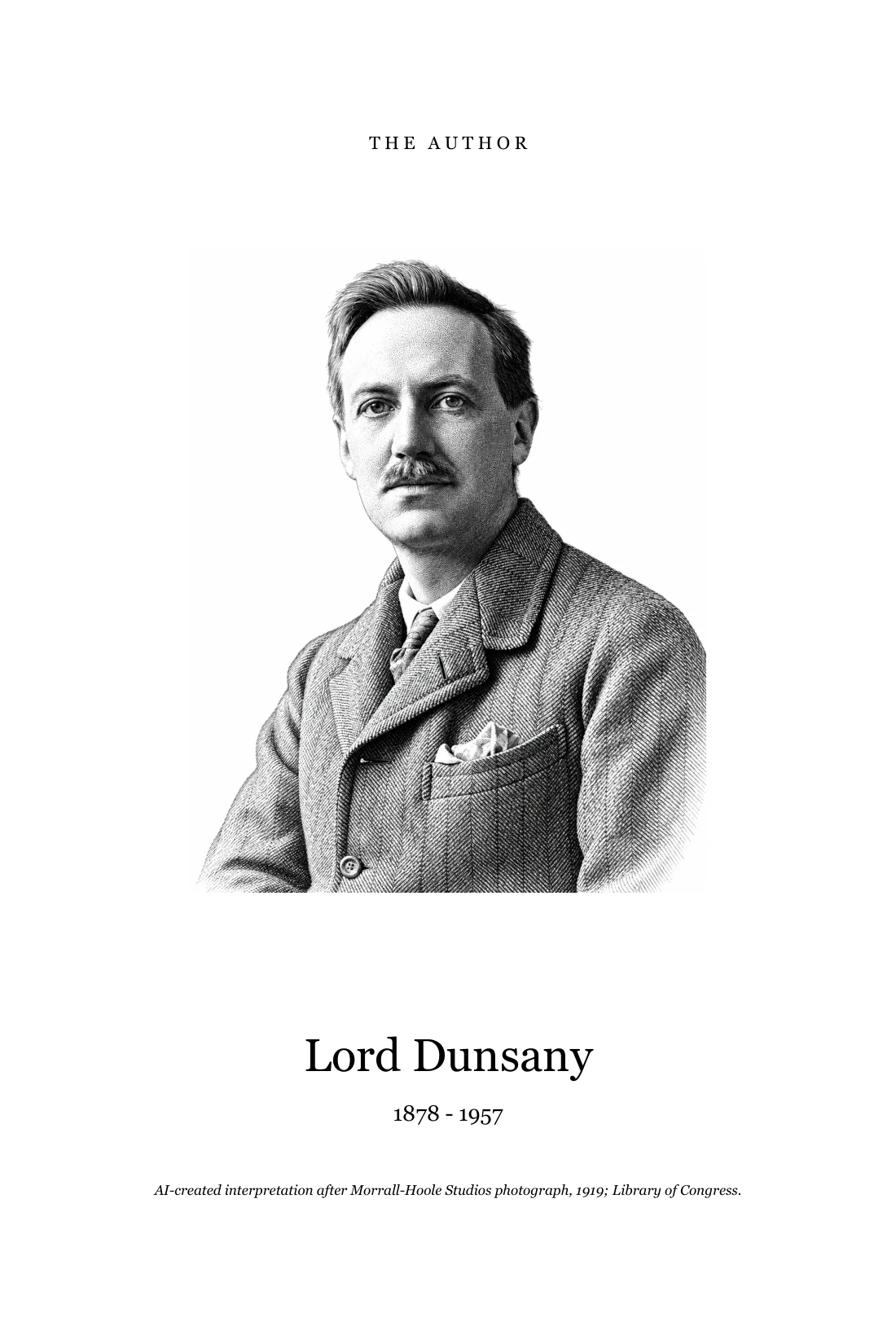
1912. Centaurs, sphinxes, dragons, a jeweller who plans to steal a gem from a spider-idol, and a young lady of Prince of Wales’ Square carried off by the Dragon of Romance. Lord Dunsany at his most playful, and very short.
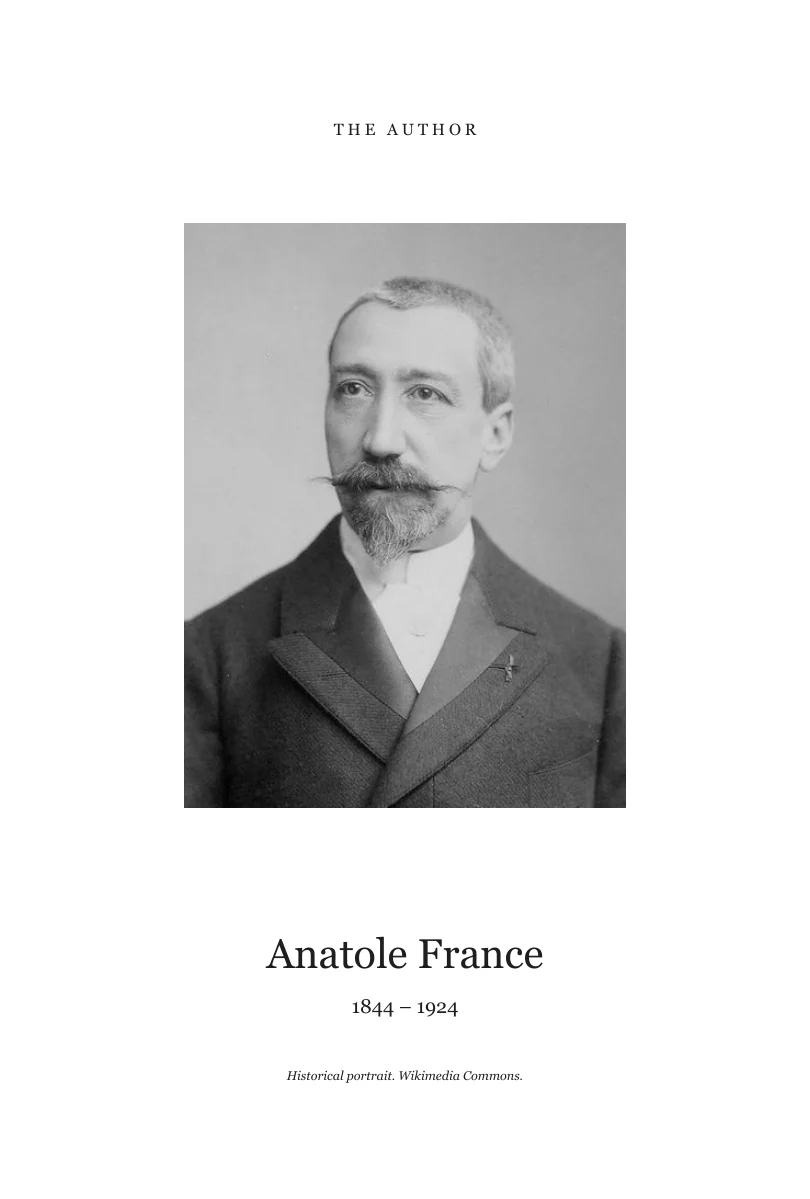
Penguin Island
1908. The monk Maël, half blind and half deaf, baptises the great auks of a northern island, and heaven must decide what to do with them. The penguins’ history then mirrors France’s, from Charlemagne to the Dreyfus affair. Anatole France won the Nobel Prize in 1921.


The Book of Wonder was made backwards. Dunsany later explained that the artist Sidney Sime had complained that editors never gave him the subjects he wanted, so Dunsany told him to draw whatever he liked and promised to write stories to explain the pictures. Its preface is an invitation:
Come with me, ladies and gentlemen who are in any wise weary of London: come with me: and those that tire at all of the world we know: for we have new worlds here.
Lord Dunsany, The Book of Wonder (1912)
Dunsany’s wider influence, on Tolkien, Lovecraft and Le Guin among others, is the subject of Lord Dunsany, the fantasist who shaped Tolkien and Lovecraft.
Which comic fantasy should you read first?
For pure laughter, start with The Brass Bottle; it appears in our list of the funniest classic novels for good reason. For something sweeter and sadder, try The Wonderful Visit. For satire with teeth, Penguin Island is unbeatable, though its jokes about French politics land hardest if you know a little history.
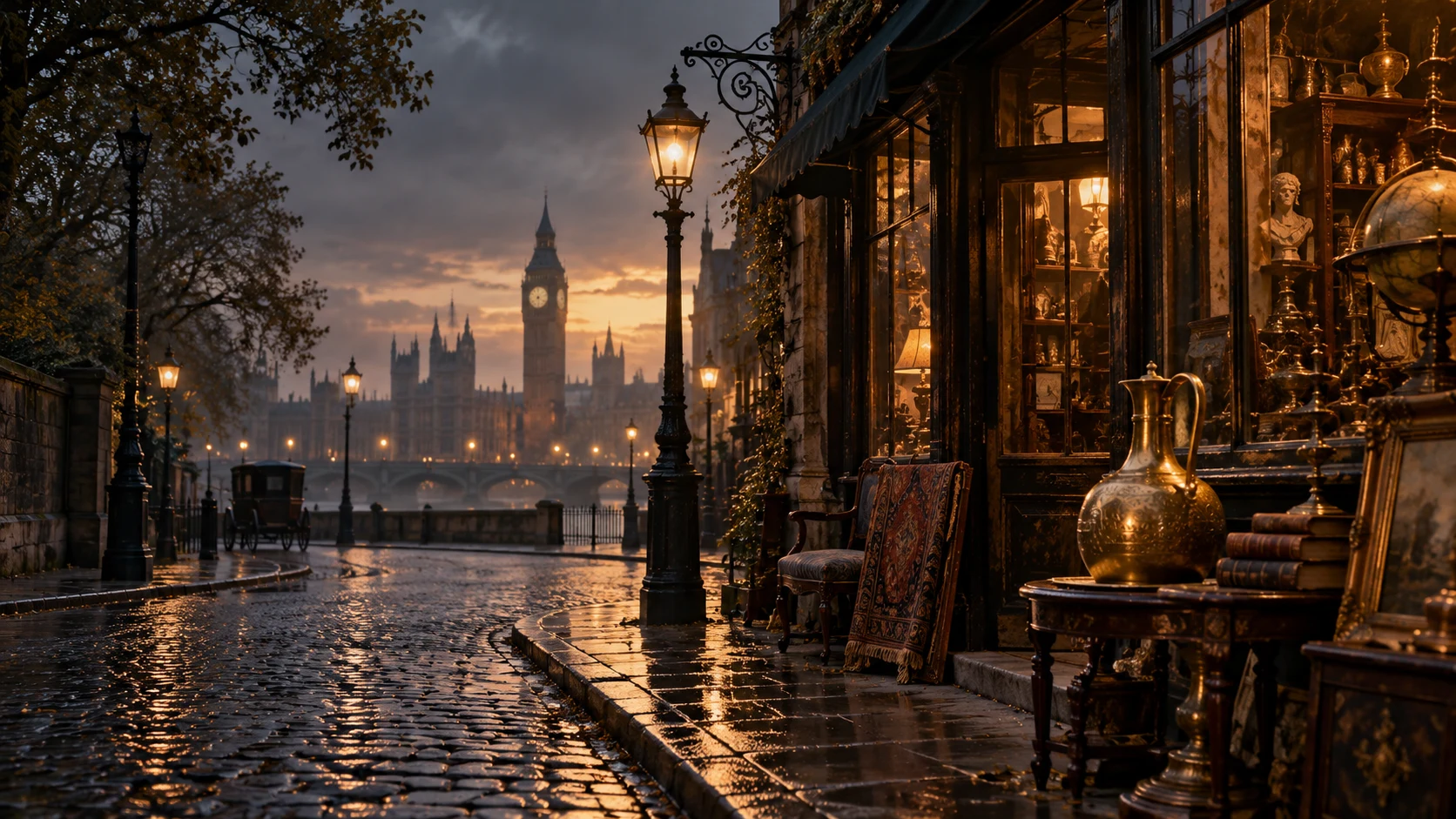
The auction room in Covent Garden is the place to start, where a young man with no money bids on a battered bottle in The Brass Bottle.
Questions readers ask
What are the best classic comic fantasy novels?
Good choices include F. Anstey’s The Brass Bottle (1900), H. G. Wells’s The Wonderful Visit (1895) and The Sea Lady (1902), Anatole France’s Penguin Island (1908), Richard Garnett’s The Twilight of the Gods (1888) and Lord Dunsany’s The Book of Wonder (1912).
What is The Brass Bottle about?
F. Anstey’s 1900 comic novel follows a young London architect who buys an old brass bottle at auction and releases a genie, whose extravagant attempts to reward him cause chaos. It was filmed in 1914, 1923 and 1964.
Who wrote about an angel being shot by a vicar?
H. G. Wells, in The Wonderful Visit (1895). The vicar of Siddermorton, an amateur ornithologist, shoots what he thinks is a rare bird and discovers it is an angel.