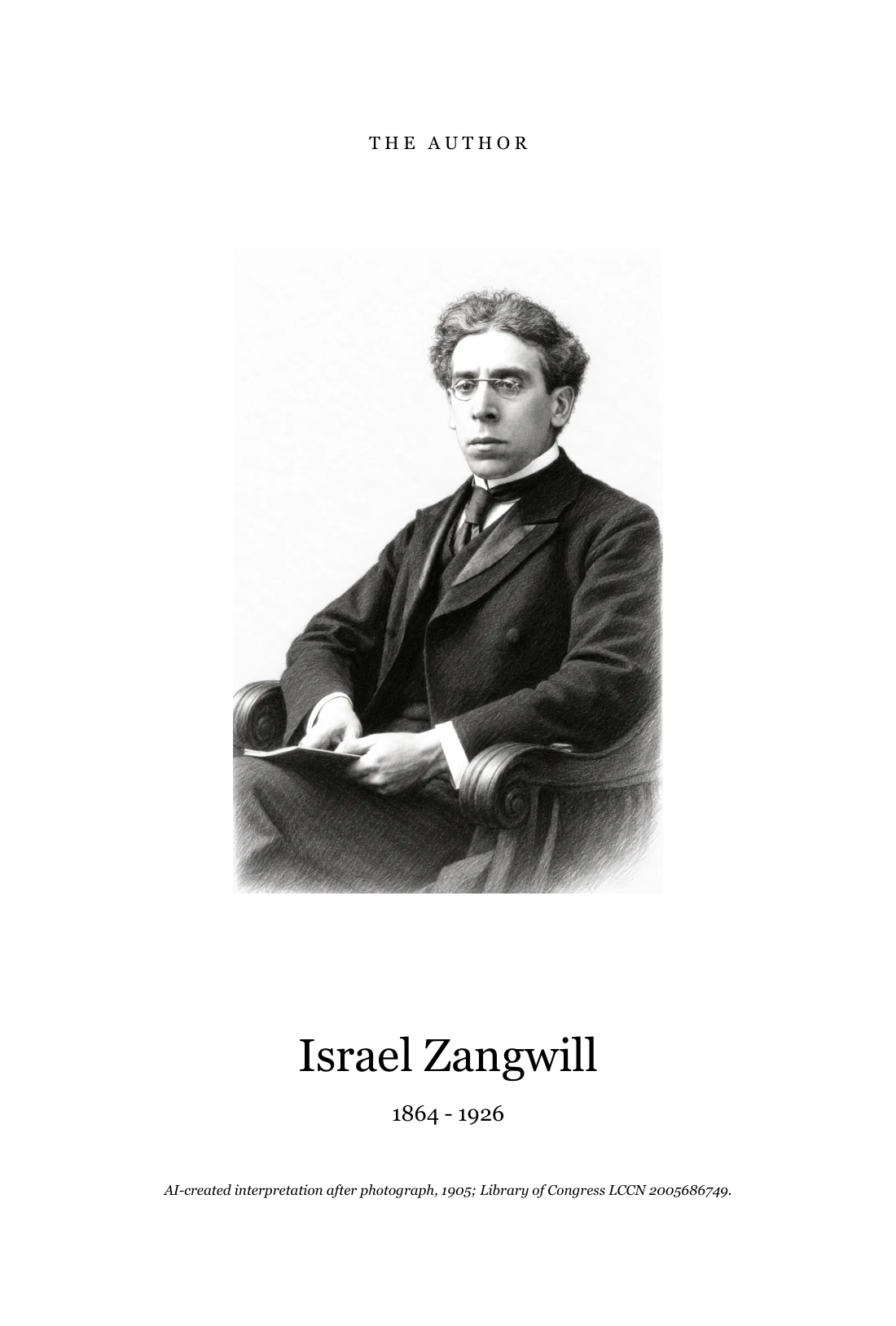
While The Big Bow Mystery was running as a serial in the London evening paper The Star in 1891, readers bombarded the paper with their solutions. When the story ended, Israel Zangwill wrote a letter of thanks to the editor. He explained, with a perfectly straight face, that he had begun with no idea who the murderer was, and had simply ruled out every suspect anyone guessed.
By degrees every one of the characters got ticked off as innocent—all except one, and I had no option but to make that character the murderer.
Israel Zangwill, letter to The Star, reprinted in The Big Bow Mystery (1895)
It was a joke, of course. The real point, as he admitted later, was that not one reader had got it right. The Big Bow Mystery, published as a book in 1892, is one of the earliest locked-room mysteries in the English language, and it is often called the first full-length locked-room mystery novel. Its puzzle has been fooling people for well over a century.
What was the first locked-room mystery?
The locked room is older than Zangwill. Edgar Allan Poe’s “The Murders in the Rue Morgue”, published in 1841 and often counted as the first detective story, turns on a killing in a room apparently sealed from the inside. But Poe’s tale is a short story. Zangwill’s claim is to have built a whole novel around the problem, and in his own introduction to an 1895 edition he said that was exactly what he had set out to do.
I said to myself one night that no mystery-monger had ever murdered a man in a room to which there was no possible access.
Israel Zangwill, introduction to The Big Bow Mystery (1895)
He was a little too modest about predecessors, but not by much. The idea sat in his mind for years, he wrote, until the editor of a popular London evening paper asked him, during the summer “silly season”, for something more original than the usual sea-serpent stories. Zangwill had murder in his soul, as he put it, and here was his chance.
What happens in The Big Bow Mystery?
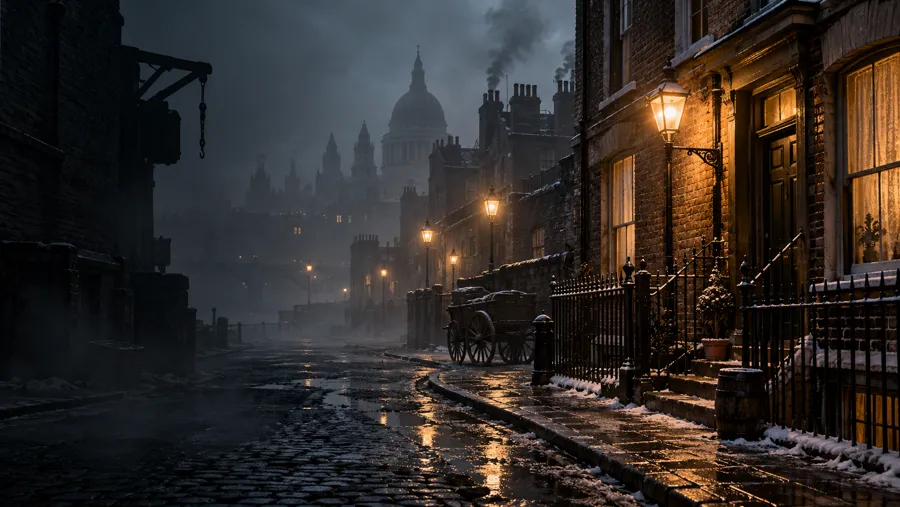
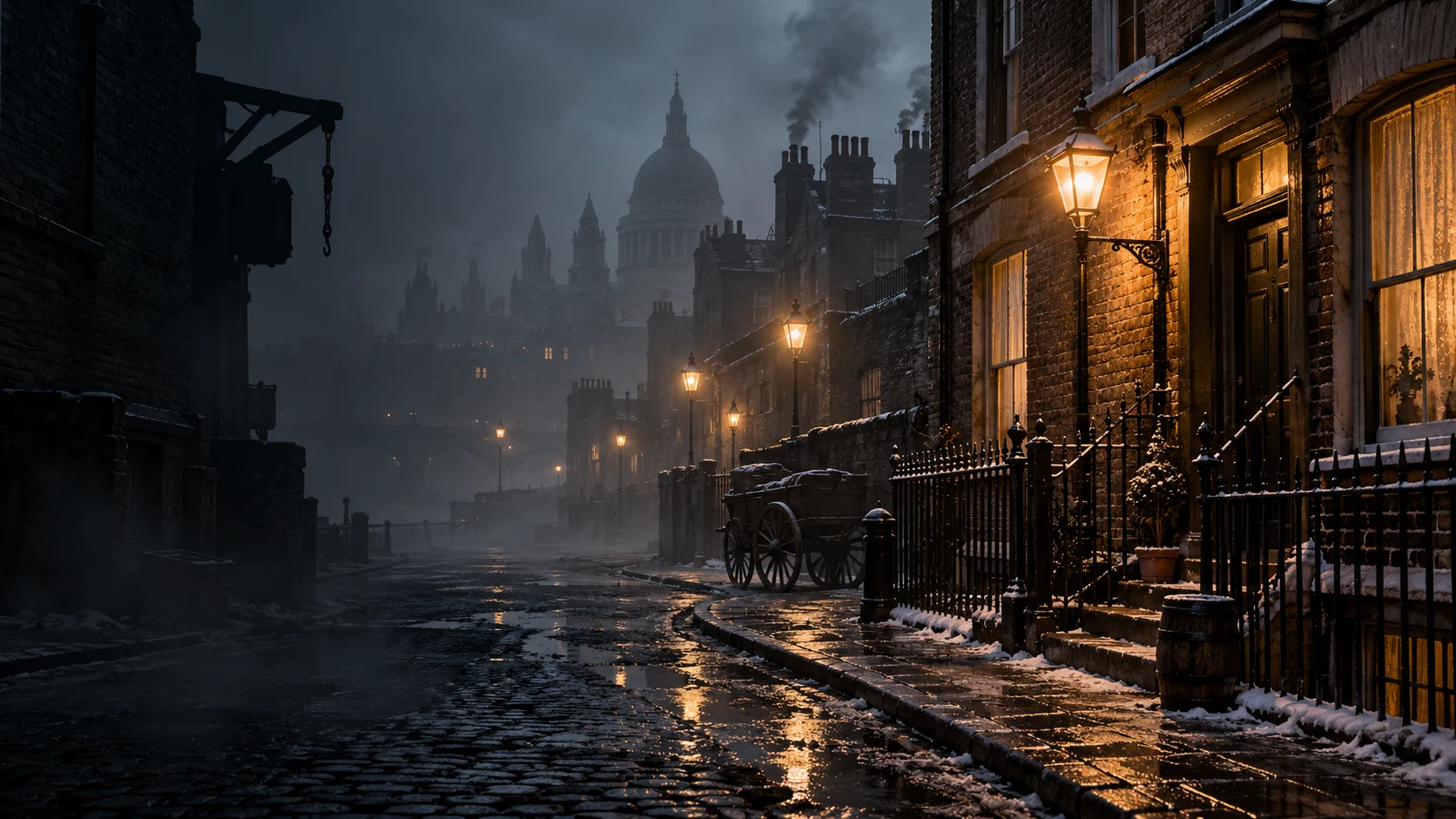
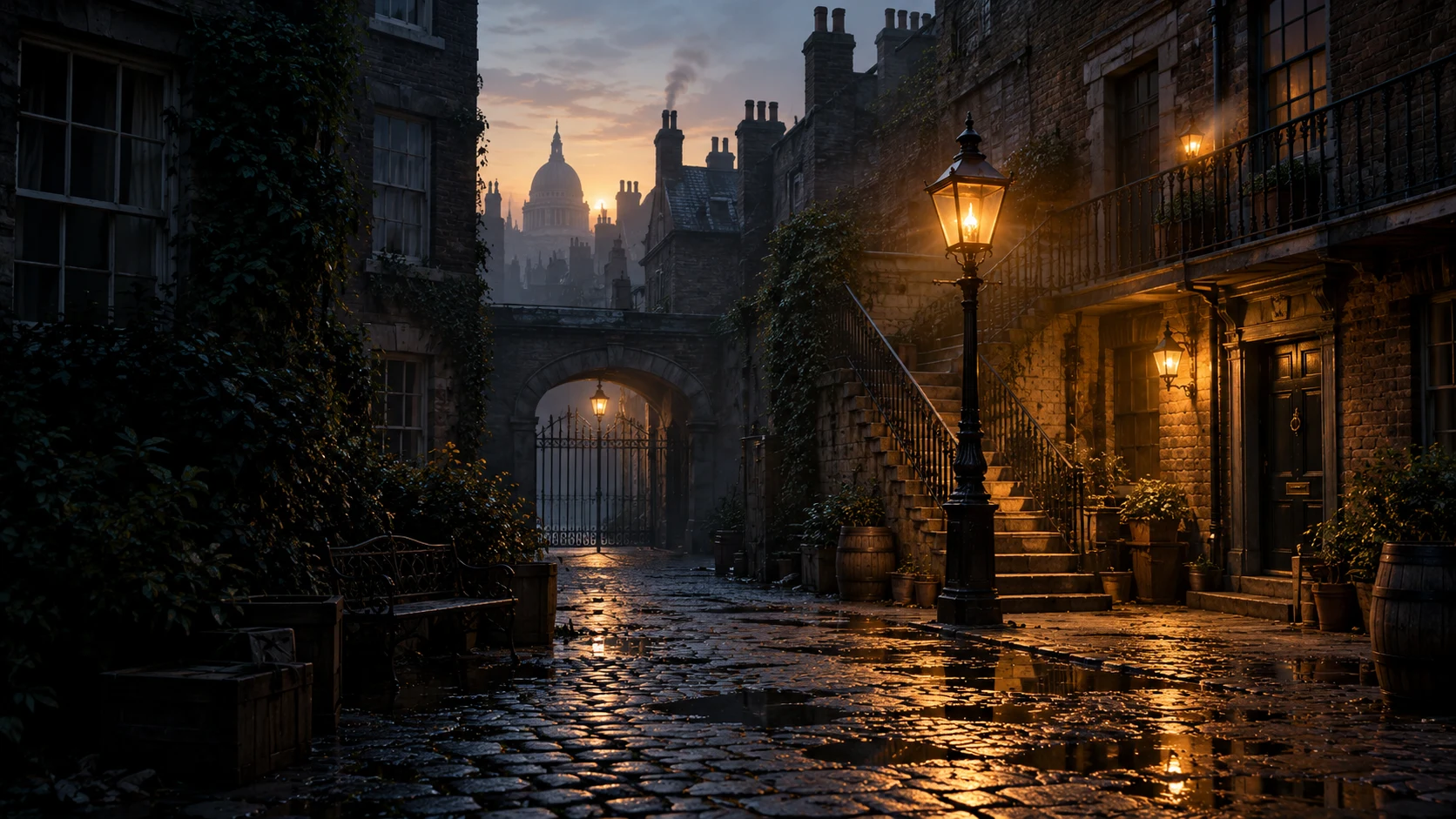
On a foggy December morning in Bow, in London’s East End, the landlady Mrs Drabdump of 11 Glover Street cannot wake her lodger, Arthur Constant, a young idealist who has moved to Bow to share the life of the working people he campaigns for. The door is locked and bolted. When it is forced, Constant is found dead in bed with his throat cut. There is no weapon, the windows are fastened, and nobody can have got in or out.
What follows is part puzzle and part comedy. Zangwill fills the street with talkers: union men, poets, neighbours, a retired detective called Grodman living a few doors away, and Edward Wimp of Scotland Yard, who has his own theory and a strong wish to beat his rival to the answer. Zangwill thought afterwards that he had overdone the humour, which tells you how much of it there is. We will not say a word about the solution.
Why is The Big Bow Mystery still worth reading?
Partly for the puzzle, which holds up. Partly for the people. Zangwill was better known for Children of the Ghetto (1892), his novel of Jewish life in the East End, and he brings the same eye to Bow’s lodging houses and meeting halls. The book is full of politics and jokes about politics — the readers who wrote to The Star even complained that he had let Mr Gladstone write more than 170 words on a postcard.
It is also short. At 120 pages, it leaves you time in a single weekend to test your own solution and still argue about it.
The Big Bow Mystery on screen
Hollywood filmed the story three times. The Perfect Crime (1928) and The Crime Doctor (1934) moved it to modern America. The Verdict (1946) took it back to Victorian London, and it was the first feature directed by Don Siegel, later famous for Invasion of the Body Snatchers and Dirty Harry, with Sydney Greenstreet and Peter Lorre in the leads.
- 1841
Poe’s “The Murders in the Rue Morgue” sets a killing in a sealed room
- 1891
The Big Bow Mystery is serialised in The Star
- 1892
Published as a book
- 1895
An American edition adds Zangwill’s introduction, “Of Murders and Mysteries”
- 1928
Filmed as The Perfect Crime
- 1946
The Verdict, Don Siegel’s first feature film
If the bolted door has you hooked, our list of the best classic locked-room mysteries has more, and Did you know Poe invented the detective story? goes back to where it began. For detectives who came after, see Books like Sherlock Holmes.
Start on that foggy morning in Glover Street, with Mrs Drabdump knocking at a door that will not open. Keep a pencil handy. You will want to make a list of suspects, and Zangwill is counting on it.
Questions readers ask
What is the first locked-room mystery novel?
Israel Zangwill’s The Big Bow Mystery (1892) is often called the first full-length locked-room mystery novel. Poe’s short story The Murders in the Rue Morgue (1841) used a sealed room earlier.
When was The Big Bow Mystery published?
It was serialised in the London newspaper The Star in 1891 and published as a book in 1892.
Has The Big Bow Mystery been filmed?
Yes, three times: The Perfect Crime (1928), The Crime Doctor (1934) and The Verdict (1946), directed by Don Siegel and starring Sydney Greenstreet and Peter Lorre.