The preface explains the shortage. According to W. C. Sellar and R. J. Yeatman, their history of England originally included four dates, but two were eliminated at the last moment after research at the Eton and Harrow cricket match revealed that they were not memorable. That left two, and the book’s full title boasts of them: 1066 and All That: A Memorable History of England, comprising all the parts you can remember, including 103 Good Things, 5 Bad Kings and 2 Genuine Dates.
The two survivors are 55 B.C., when Julius Caesar landed in Britain, and 1066, when William the Conqueror won the Battle of Hastings. Everything else in 1066 and All That floats free of the calendar, which is exactly how most of us remember the history we were taught at school.
What are the two dates in 1066 and All That?
The first comes in the first sentence of the first chapter: “The first date in English History is 55 B.C.” A footnote helpfully adds that the other date can be found in Chapter XI. Even here the authors cannot resist undermining themselves. Caesar, they explain, was compelled to invade again the following year, 54 B.C., “not 56, owing to the peculiar Roman method of counting”.
The second is the one in the title. Chapter XI announces that in the year 1066 “occurred the other memorable date in English History”, the Battle of Hastings, at which William I (1066) conquered England at the Battle of Senlac (Ten Sixty-six). From then on William rarely appears without his date attached, like a name badge. The second Test Paper asks pupils to give the dates of at least two of the following: William the Conqueror, and 1066.

What is the joke of 1066 and All That?
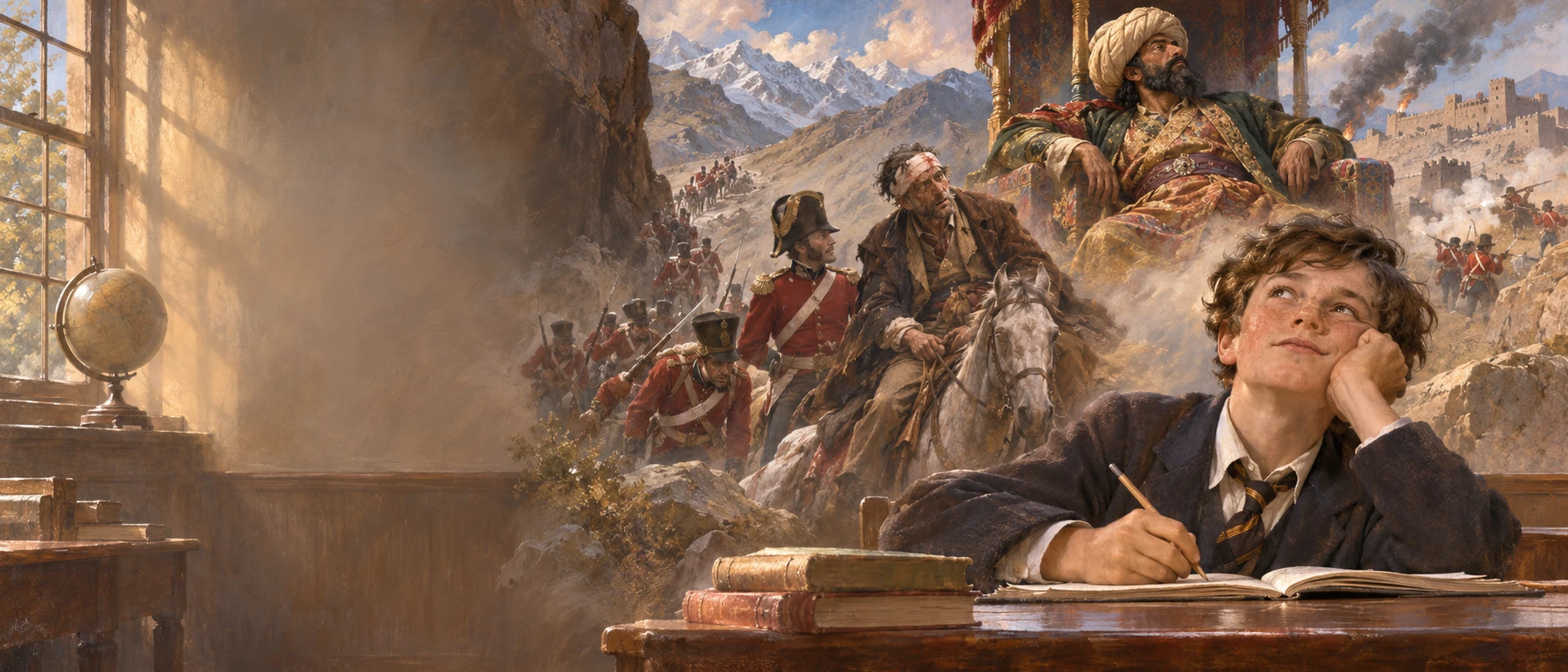
That history is not what happened but what people remember of it, which is muddled, patriotic, half-heard and full of confident verdicts. The authors set out the principle in a “Compulsory Preface”, subtitled “This means you”.
History is not what you thought. It is what you can remember. All other history defeats itself.
W. C. Sellar and R. J. Yeatman, 1066 and All That
So kings are either Good or Bad, events are either a Good Thing or a Bad Thing, and nations take turns at being Top Nation. Boadicea becomes Woadicea. Henry I dies of a surfeit of palfreys. The Civil War is fought between the Cavaliers, Wrong but Wromantic, and the Roundheads, Right but Repulsive. Half-remembered phrases collide: John is forced to sign the Magna Charter, and the Industrial Revolution becomes the Industrial Revelation.
The Test Papers parody school examinations with instructions such as “Do not attempt to answer more than one question at a time” and questions like “Which came first, A.D. or B.C.? (Be careful.)” The history ends with the First World War, after which America is clearly Top Nation, and history comes to a full stop, printed as a single dot.
Who wrote 1066 and All That?
Walter Carruthers Sellar and Robert Julian Yeatman met as students at Oriel College, Oxford, after the First World War, in which Sellar had served as an officer. Sellar, born in 1898, later taught at his old school, Fettes, until 1928. Both were contributing to Punch, and their collaboration began around that time. On the title page they styled themselves “Aegrot: Oxon:” and “Failed M.A., etc. Oxon:”, mock qualifications very much in the spirit of what follows.
The title is generally taken as a nod to Robert Graves’s war memoir Good-Bye to All That, published the year before. The real target, though, was the patriotic schoolroom history of the time, the kind of book that told the island story as a series of heroes and lessons. Sellar and Yeatman made comedy out of what pupils had actually absorbed from it. The historian Raphael Samuel later called it a much underrated anti-imperialist tract.
Is 1066 and All That still funny?
Very, especially if you half-remember the history it is mangling, which is the point. The jokes about the medieval kings and the Tudors land best; a few of the later chapters, and some of the jokes about the empire, show their age along with the attitudes they were mocking. It is best read in short bursts, a chapter or two at a time, and it is a book people quote to each other for years afterwards.
1066 and All That
1930. Sixty-two chapters of English history as half-remembered by everyone who sat through it at school, with exam papers to match. Still one of the funniest history books in the language.
Three Men in a Boat
1889. Three friends, a dog and a boat on the Thames, with Jerome’s solemn digressions on the history of the riverside. The other great English comic book about failing to take the past seriously.


For more books that make you laugh out loud, see the funniest classic novels and classic satire, or Three Men in a Boat as a travel guide. If you prefer your kings in Shakespeare’s versions, try Shakespeare’s history plays in order, which Sellar and Yeatman’s “Split King”, Henry IV Part One and Part Two, gently sends up.
Then sit the exam. Open 1066 and All That at the Compulsory Preface and see how many of the 103 Good Things you can remember afterwards.
Questions readers ask
What are the two dates in 1066 and All That?
55 B.C., when Julius Caesar invaded Britain, and 1066, the Battle of Hastings. The book’s subtitle promises “2 Genuine Dates”, and the preface claims two others were cut because they were not memorable.
Who wrote 1066 and All That?
W. C. Sellar and R. J. Yeatman, two Oxford friends who wrote for Punch. It was published by Methuen in 1930, with illustrations by John Reynolds.
What is 1066 and All That about?
It is a parody of school history, retelling English history from the Romans to the First World War as people half-remember it, full of Good Things, Bad Kings and mangled facts.
Why is it called 1066 and All That?
1066 is the most famous date in English history, and the phrase is generally taken as a nod to Robert Graves’s memoir Good-Bye to All That, published in 1929.