An imagined Renaissance ideal island city with ordered gardens, waterways and stone bridges
PIPCUB CINEMATIC EDITIONS / PAPERBACK BOOKS

Utopia

Thomas More

A traveler describes a society organized on principles that challenge the institutions of Europe.

$11.99

Printed for you. Shipping calculated at checkout.

Checkout opening soon. Shipping & delivery Returns
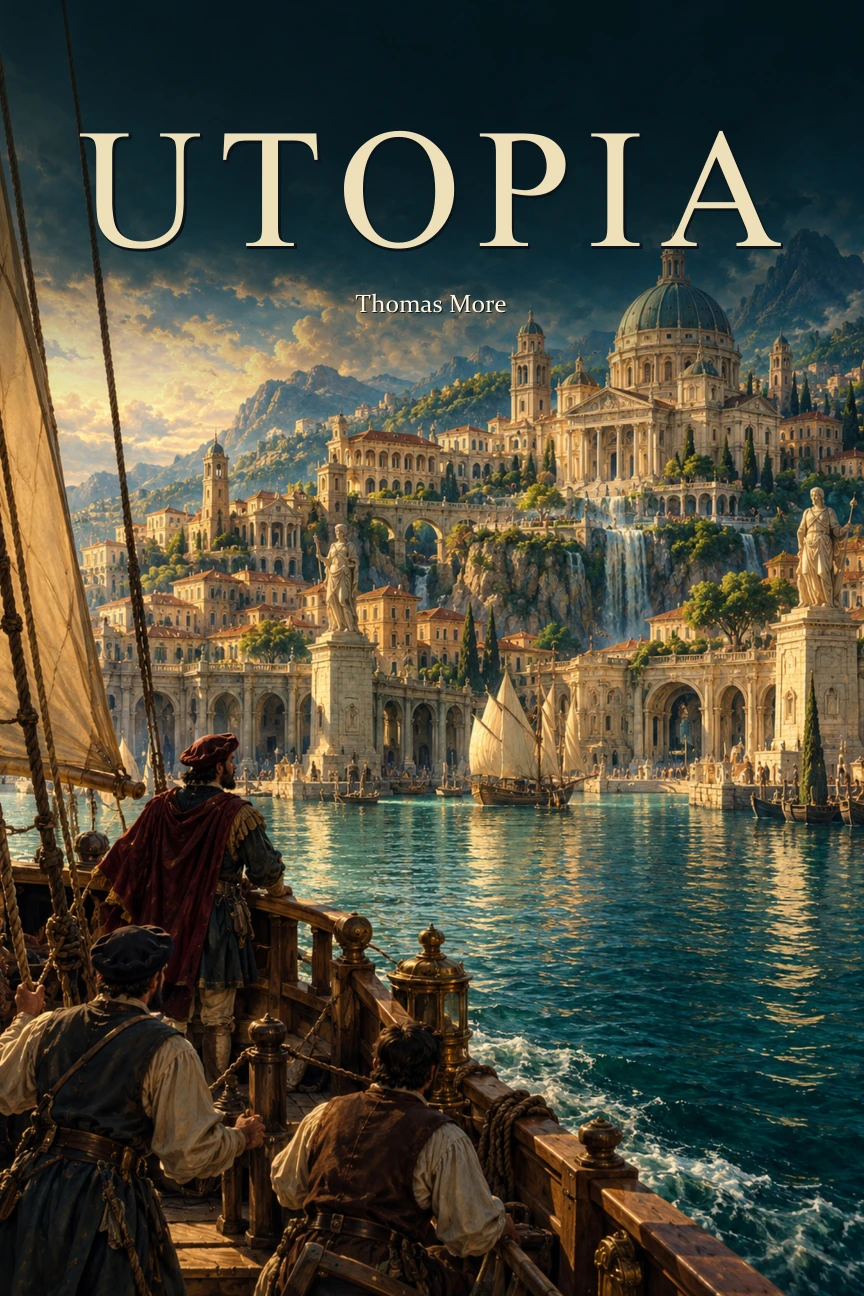
Utopia — actual Pipcub paperback cover
SCROLL INTO THE STORYAN IMAGINED WORLD · ORIGINAL AI ART
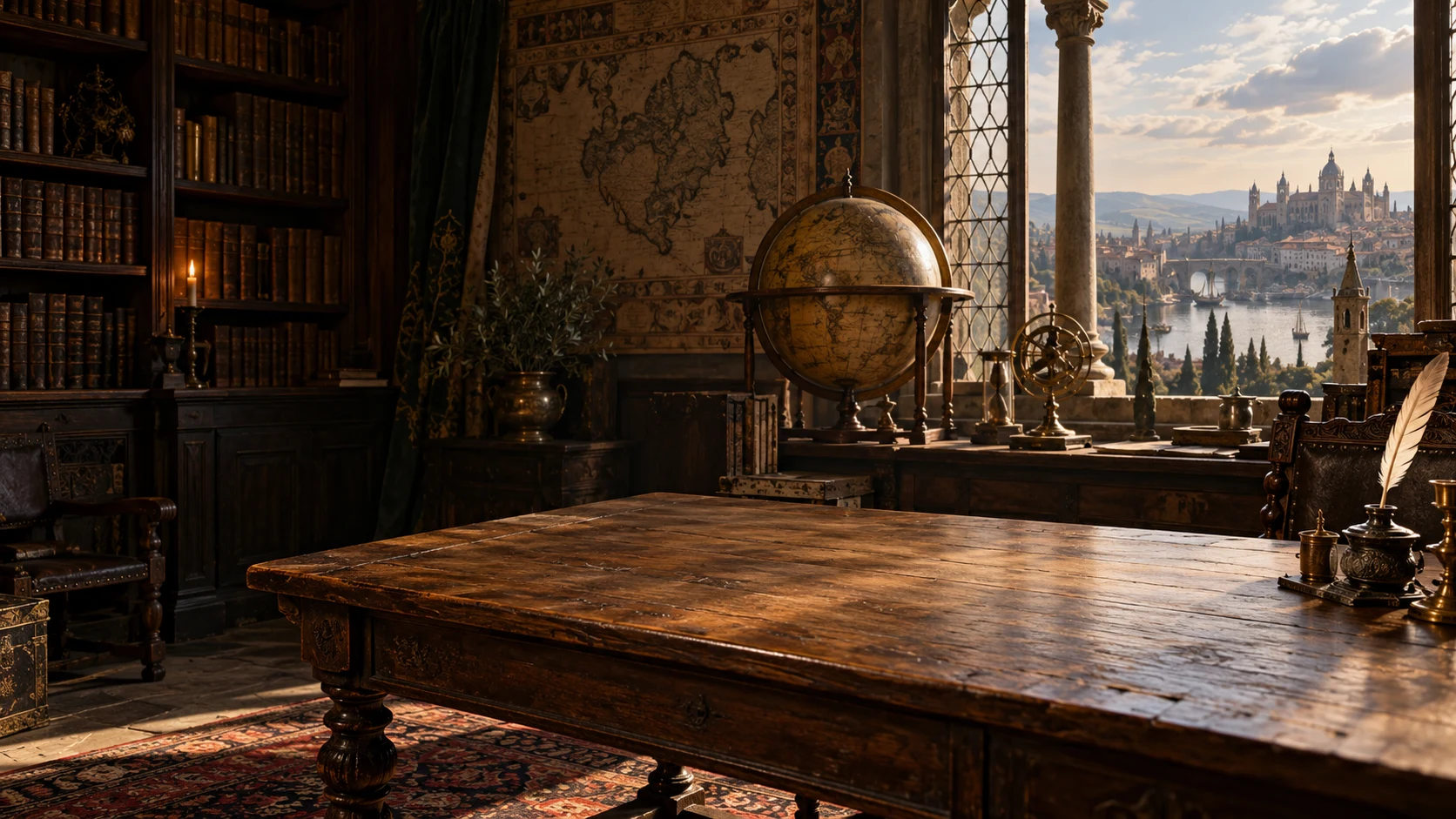
A sixteenth-century humanist study with a globe, quills and blank parchment

THE STORY

An imaginary island questions the familiar world.

A traveler describes a society organized on principles that challenge the institutions of Europe.

An imagined communal garden and cultivated landscape outside an ideal Renaissance town

THE WORLD OF THE BOOK

Imagine another society.

Work, property, government, belief, and war become subjects of searching comparison. Thomas More's enduring book invites the reader to consider both the appeal and the contradictions of an apparently better society.
Utopia front cover
Read the interior preview

LOOK INSIDE

Open a book.
Enter a world.

Preview six pages from this edition. Select a page to enlarge it, or use the arrows to keep reading.

Spread 1 of 3
Utopia · PDF page 8
Actual interior PDF page 8 of Utopia
Read accessible text

6 DISCOURSES OF RAPHAEL HYTHLODAY, OF THE BEST STATE OF A COMMONWEALTH Henry VIII., the unconquered King of England, a prince adorned with all the virtues that become a great monarch, having some differences of no small consequence with Charles the most serene Prince of Castile, sent me into Flanders, as his ambassador, for treating and composing matters between them. I was colleague and companion to that incomparable man Cuthbert Tonstal, whom the King, with such universal applause, lately made Master of the Rolls; but of whom I will say nothing; not because I fear that the testimony of a friend will be suspected, but rather because his learning and virtues are too great for me to do them justice, and so well known, that they need not my commendations, unless I would, according to the proverb, “Show the sun with a lantern.” Those that were appointed by the Prince to treat with us, met us at Bruges, according to agreement; they were all worthy men. The Margrave of Bruges was their head, and the chief man among them; but he that was esteemed the wisest, and that spoke for the rest, was George Temse, the Provost of Casselsee: both art and nature had concurred to make him eloquent: he was very learned in the law; and, as he had a great capacity, so, by a long practice in affairs, he was very dexterous at unravelling them. After we had several times met, without coming to an agreement, they went to Brussels for some days, to know the Prince’s pleasure; and, since our business would admit it, I went to Antwerp. While I was there, among many that visited me, there was one that was more acceptable to me than any other, Peter Giles, born at Antwerp, who is a man of great honour, and of a good rank in his town, though less than he deserves; for I do not know if there be anywhere to be found a more learned and a better bred young man; for as he is both a very worthy and a very knowing person, so he is so civil to all men, so particularly kind to his friends, and so full of candour and affection, that there is not, perhaps, above one or two anywhere to be found, that is in all respects so perfect a friend: he is extraordinarily modest, there is no artifice in him, and yet no man has more of a prudent simplicity. His conversation was so pleasant

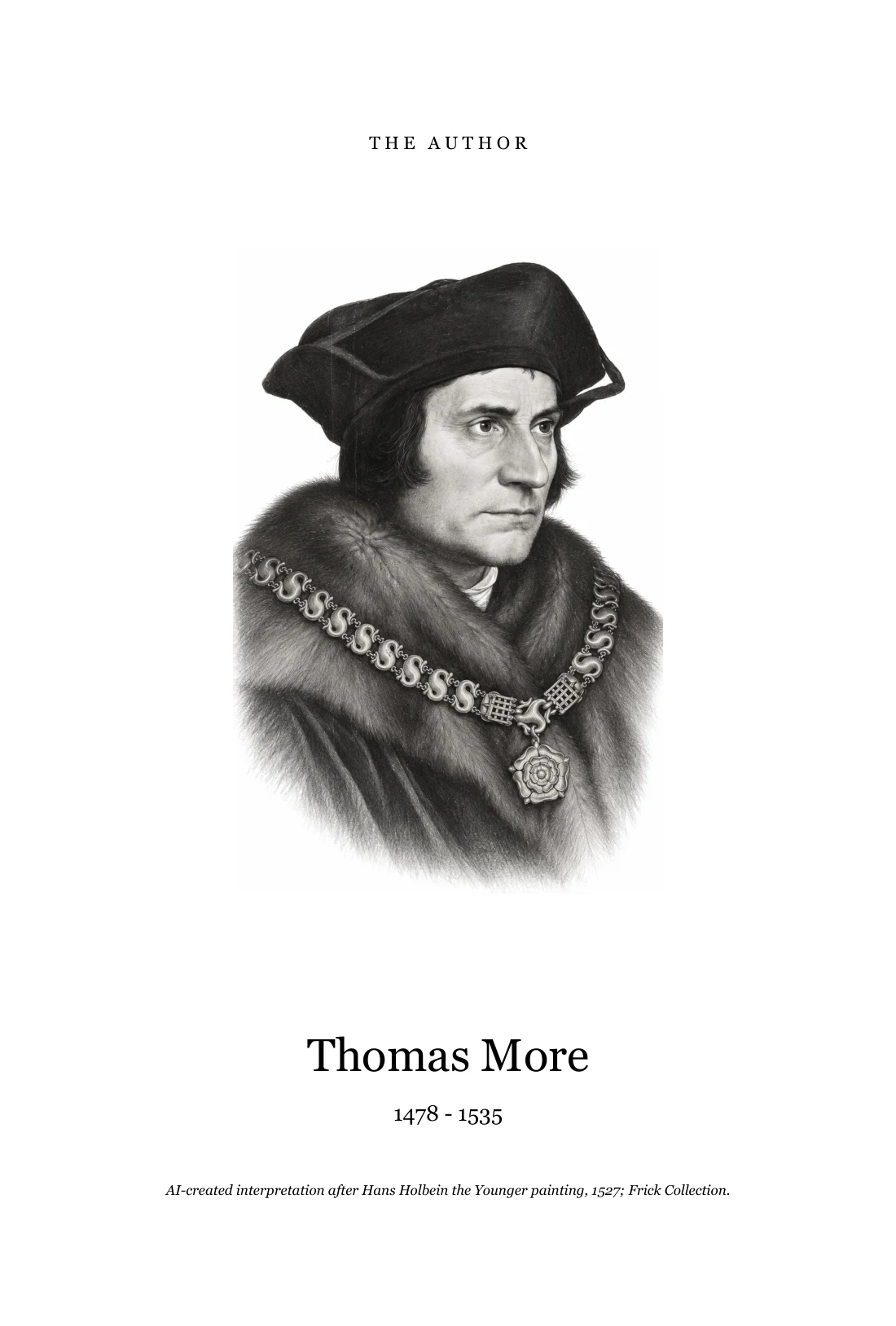
Thomas More portrait page from this edition

ABOUT THE AUTHOR

Thomas More

Thomas More was an English lawyer, humanist scholar and statesman, born in 1478. His intellectual life connected him with European scholars, including Erasmus, while his public career brought him into the service of Henry VIII. He became lord chancellor in 1529.

More about the author ↗

Discover the author behind the story. This portrait and biography are included in your edition.

FREE TO READ

Take it with you.

Utopia is in the public domain, so its words belong to everyone. Download our edition free. No account needed.

Read it in your browser ↗
Add it to your reading app
iPhone & iPad
Tap download, then open the file from Safari’s downloads, tap Share and choose Books. It stays in your Apple Books library.
Android
Tap download, open the file and choose Google Play Books. Or, in Play Books, go to Library, tap ⋮ and choose Upload files.
Kindle
Send the file to your Kindle library with Amazon’s Send to Kindle.
Kobo, Moon+ Reader and other apps
Open the downloaded file with the app, or use the app’s import option.

KEEP BROWSING

More from the library.

Unnatural Death cover

Unnatural Death

Dorothy L. Sayers

Up from Slavery cover

Up from Slavery

Booker T. Washington

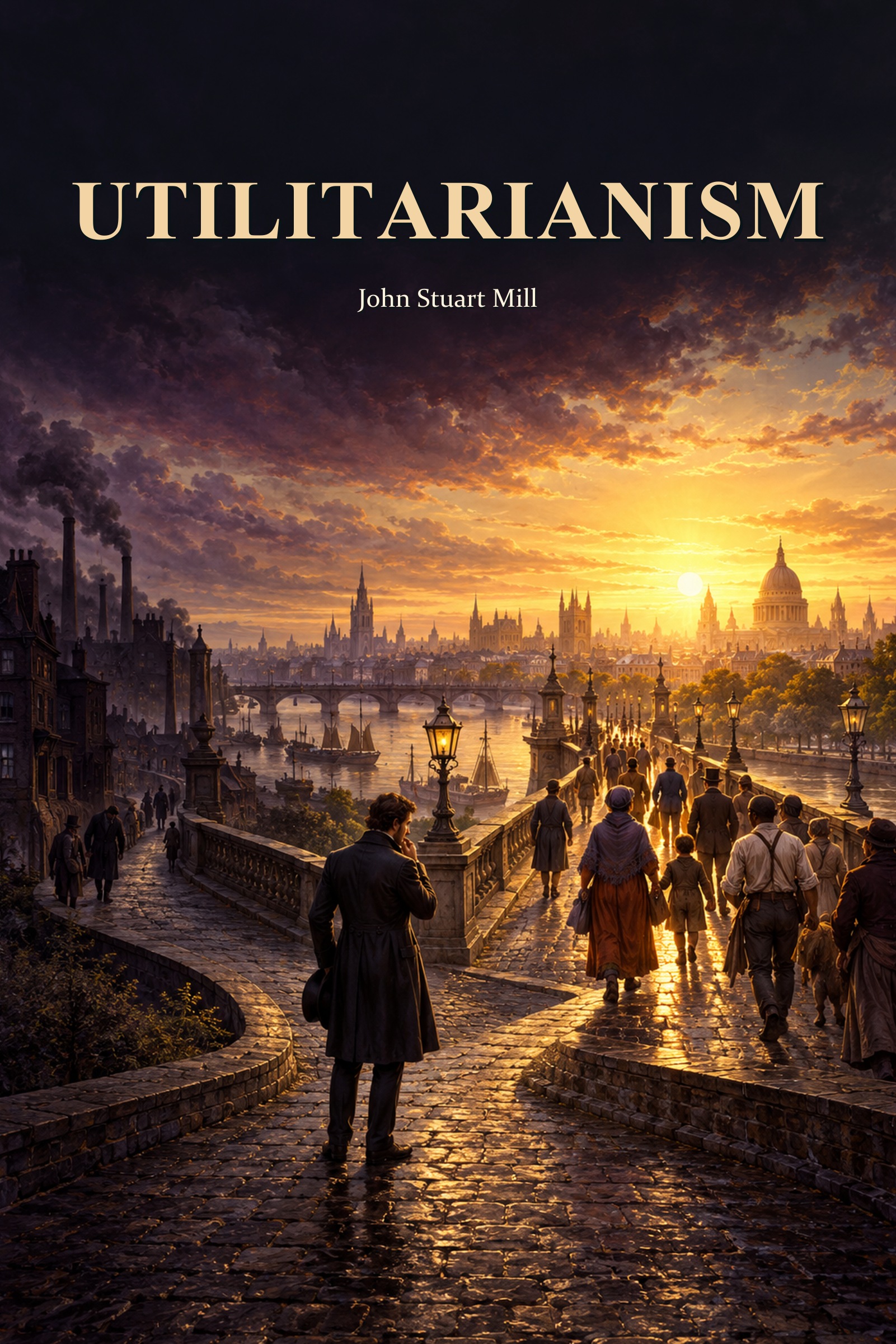
Utilitarianism cover

Utilitarianism

John Stuart Mill

Very Good, Jeeves cover

Very Good, Jeeves

P. G. Wodehouse

Victory cover

Victory

Joseph Conrad

Vile Bodies cover

Vile Bodies

Evelyn Waugh

Browse the complete library ↗
YOUR NEXT CHAPTER

Your book bag 0

A little escape. A story to keep.

Loading your book bag…