
BEGIN HERE
An imaginary island questions the familiar world.
Utopia
A traveler describes a society organized on principles that challenge the institutions of Europe.

Browse collections

Find your next chapter
Explore timeless stories, unexpected discoveries, and old favourites.
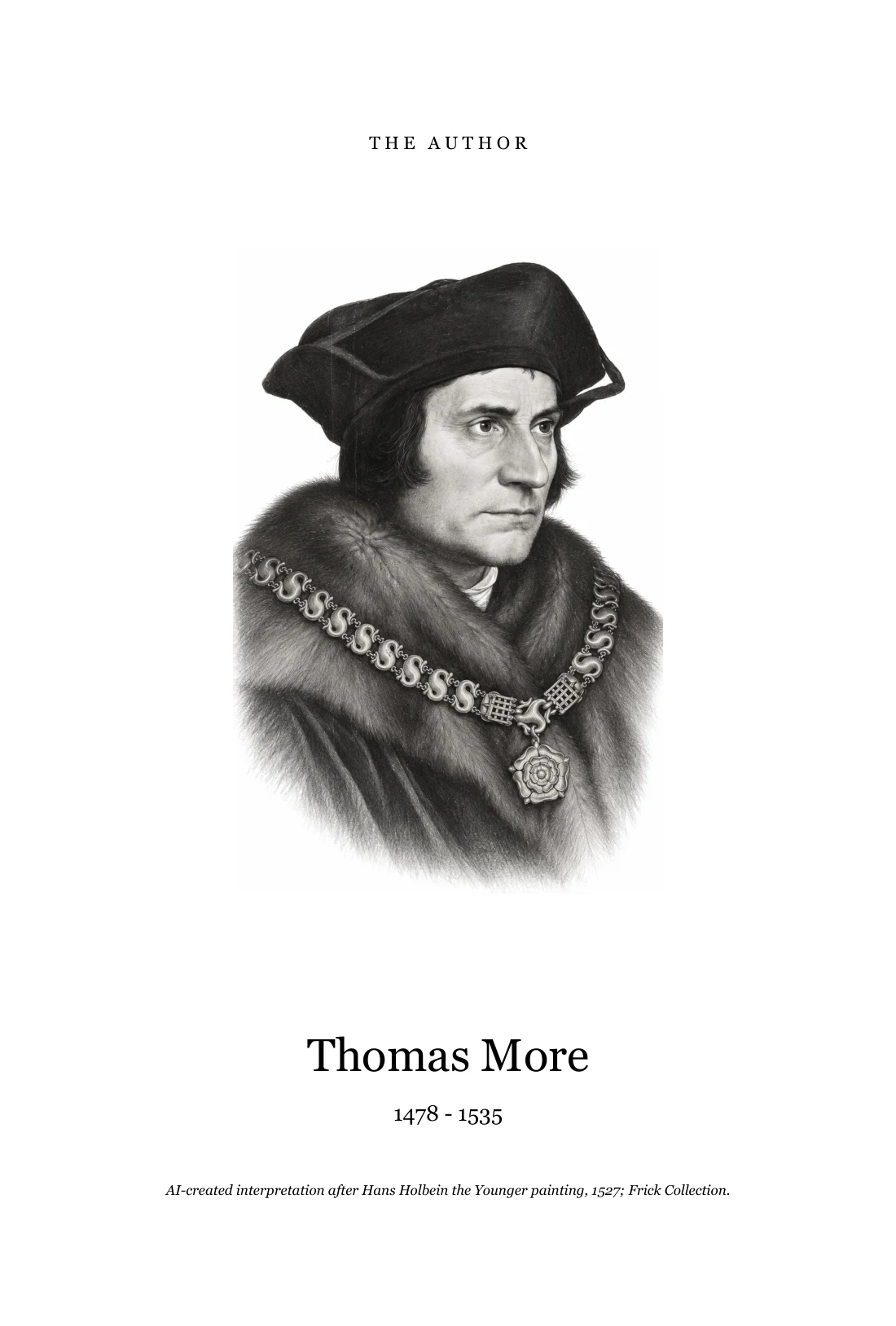
Thomas More was an English lawyer, humanist scholar and statesman, born in 1478.
THE LIFE
Thomas More was an English lawyer, humanist scholar and statesman, born in 1478. His intellectual life connected him with European scholars, including Erasmus, while his public career brought him into the service of Henry VIII. He became lord chancellor in 1529.
His most famous book, Utopia, was published in Latin in 1516. It describes an imagined island society within a framework of conversation and debate. The unfamiliar arrangements of that society create a way to examine institutions and assumptions that might otherwise seem natural or inevitable.
More's later life was shaped by the conflict over royal authority and the English Church. He refused to accept the king's supremacy over the Church and was convicted of treason and executed in 1535. His career places literary inquiry, religious conviction and political power in a difficult and consequential relationship.
Reading Utopia requires care with voices and irony. The positions advanced by a fictional speaker cannot simply be treated as a list of the author's recommendations. The book asks readers to compare competing social arrangements, examine the costs of familiar practices and consider how an imagined place can expose problems in the world they inhabit.
Biographical references: Frick Collection; Folger Shakespeare Library. Portrait source: Hans Holbein the Younger painting, 1527; Frick Collection. Full source records retained in the edition archive.
BEGIN HERE
Utopia
A traveler describes a society organized on principles that challenge the institutions of Europe.
KINDRED SPIRITS