THE STORY
An old mystery refuses to stay buried.
Sax Rohmer brings the fascination of ancient Egypt into a modern tale of suspense. The characters must decide how much trust to place in what they see and in the explanations offered to them.
Browse collections

Find your next chapter
Explore timeless stories, unexpected discoveries, and old favourites.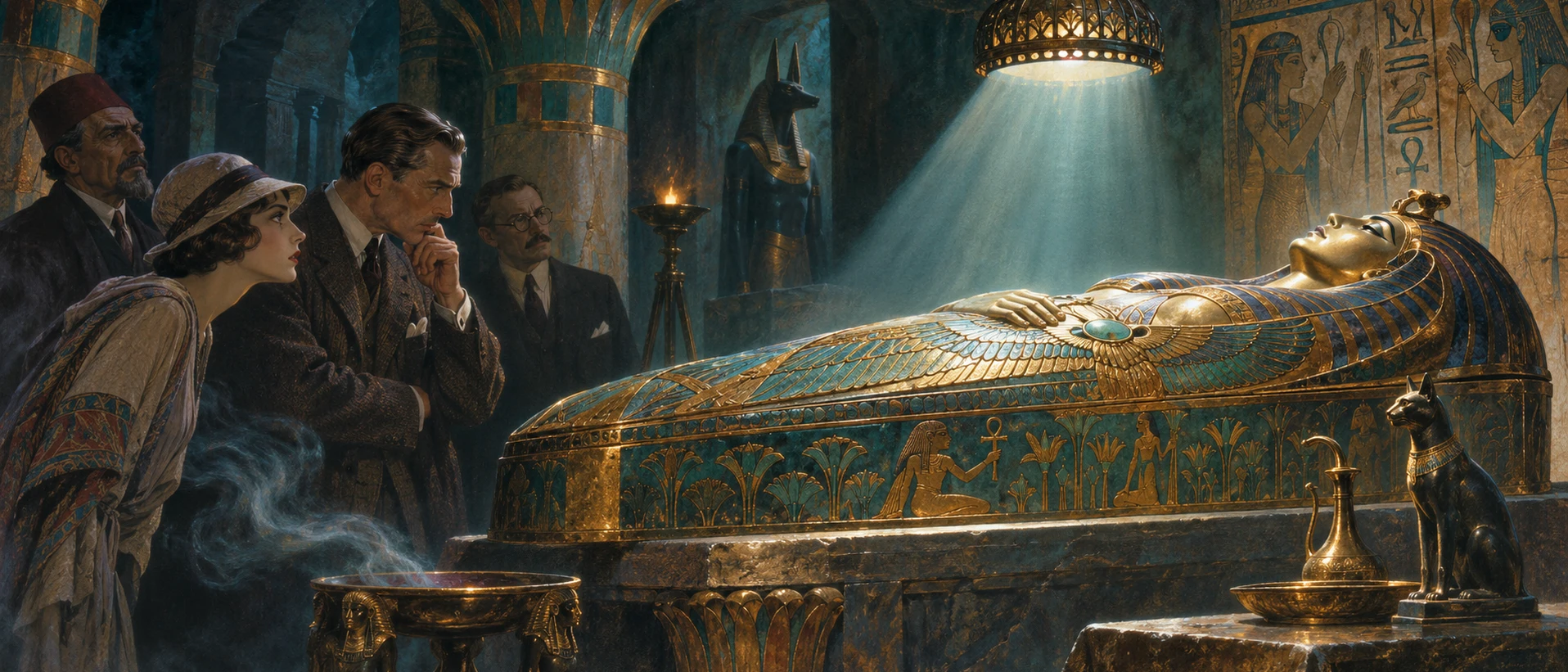
Sax Rohmer brings the fascination of ancient Egypt into a modern tale of suspense. The characters must decide how much trust to place in what they see and in the explanations offered to them.
$14.99
Printed for you. Shipping calculated at checkout.
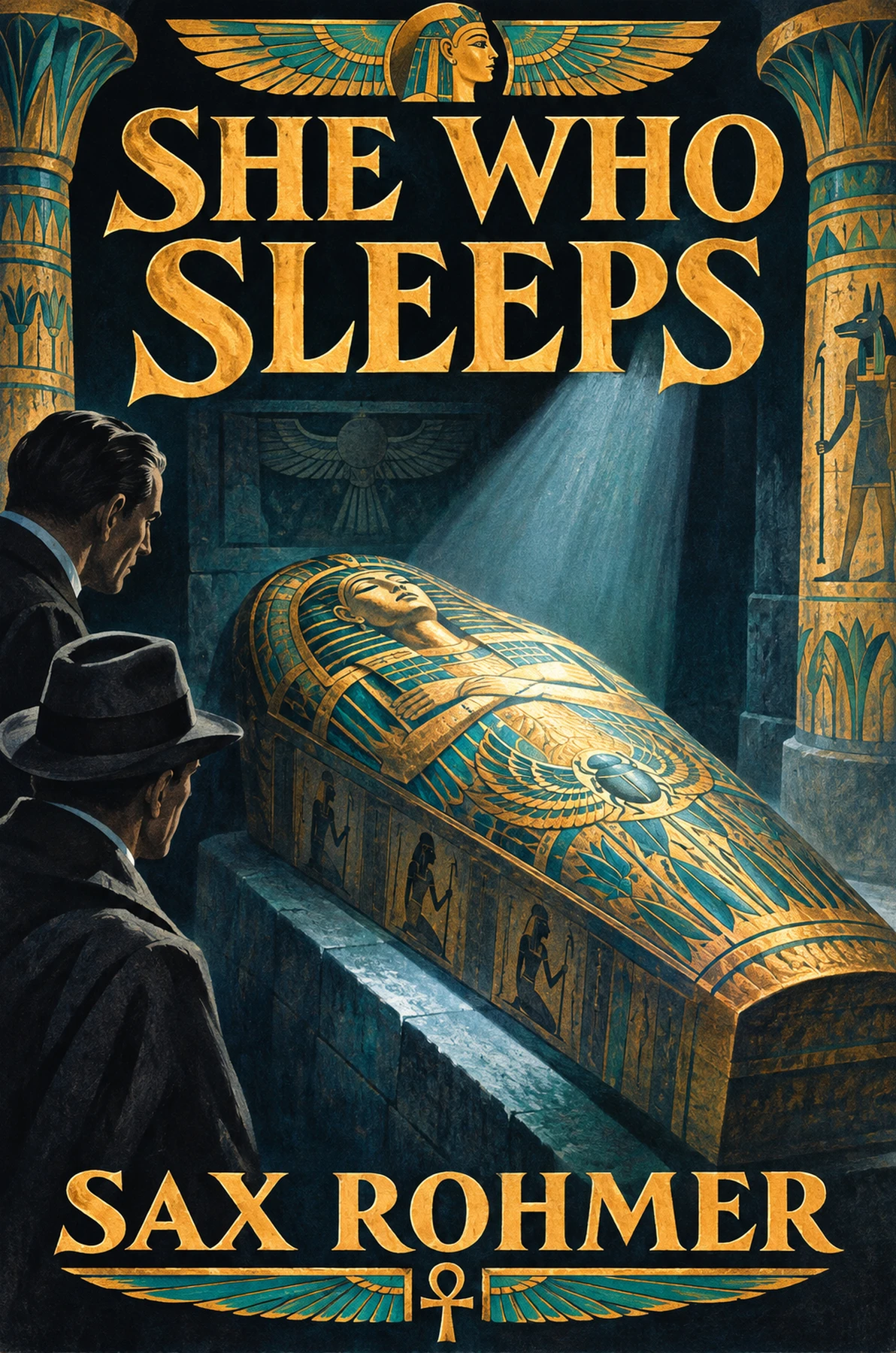


THE STORY
Sax Rohmer brings the fascination of ancient Egypt into a modern tale of suspense. The characters must decide how much trust to place in what they see and in the explanations offered to them.

THE WORLD OF THE BOOK
A magnifying glass passes over a gilded funerary mask.
LOOK INSIDE
Preview six pages from this edition. Select a page to enlarge it, or use the arrows to keep reading.
Spread 1 of 3

ABOUT THE AUTHOR
Sax Rohmer was the pen name of Arthur Henry Ward, an English novelist born in Birmingham. His early working life included clerical work, newspaper reporting and writing for music-hall performers. An interest in the occult and Egyptology helped shape the atmosphere of his early fiction. He became best known for the Fu Manchu stories, which began appearing in serial form in 1912. The first three novels in that series were written while he lived at Herne Hill in London. Their popularity, enlarged by screen adaptations, made the character one of the most recognisable villains of commercial adventure fiction. Rohmer's work combines mystery, pursuit and theatrical menace, but it also relies on racist stereotypes of Chinese people and fears circulating in Britain during his lifetime. Those assumptions are central to understanding the series' historical setting and reception, rather than incidental details of its imagined world. He continued writing beyond the early success of Fu Manchu, producing a substantial body of popular fiction. His books offer evidence of the ways suspense, sensational settings and repeated characters sustained a mass readership. They also show how entertainment can carry the prejudices of its period, requiring readers to distinguish a story's inventions from the people and cultures it claims to represent. Biographical references: English Heritage, Sax Rohmer; Wikipedia. Portrait source: Photograph published in Mid-Week Pictorial, 12 January 1929. Full source records are retained in the edition archive.
More about the author ↗THE NEXT CHAPTER
FREE TO READ
She Who Sleeps is in the public domain, so its words belong to everyone. Download our edition free. No account needed.
Best for phones, Apple Books, Google Play Books, Kobo and Kindle
The printed page layout, with illustrations
KEEP BROWSING