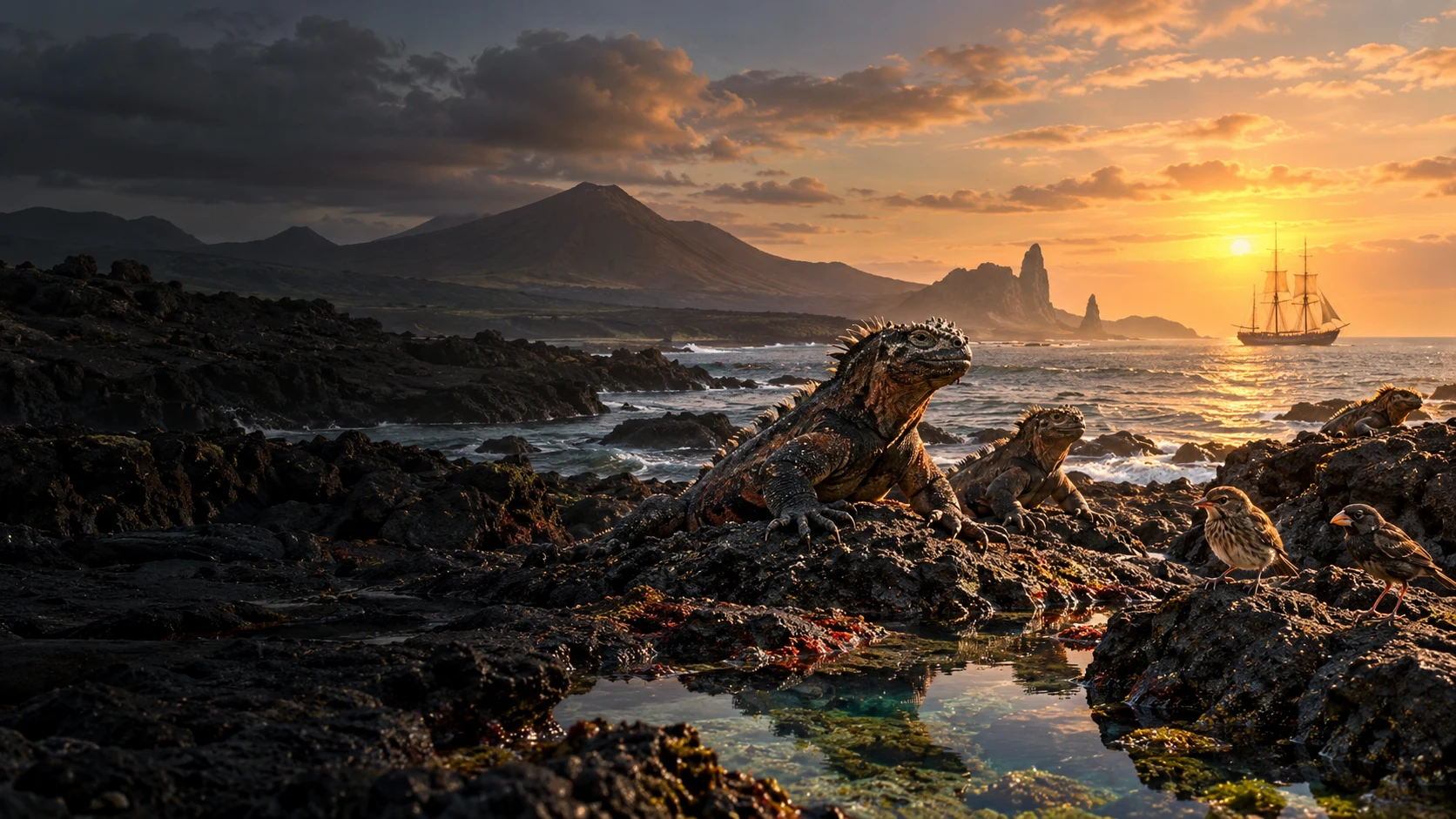
Galapagos volcanic shore with marine iguanas, finches and a distant nineteenth-century survey ship
PIPCUB CINEMATIC EDITIONS / PAPERBACK BOOKS

On the Origin of Species

Charles Darwin

Darwin draws together observations of animals, plants, fossils and the natural world to explain descent with modification.

$20.99

Printed for you. Shipping calculated at checkout.

Checkout opening soon. Shipping & delivery Returns
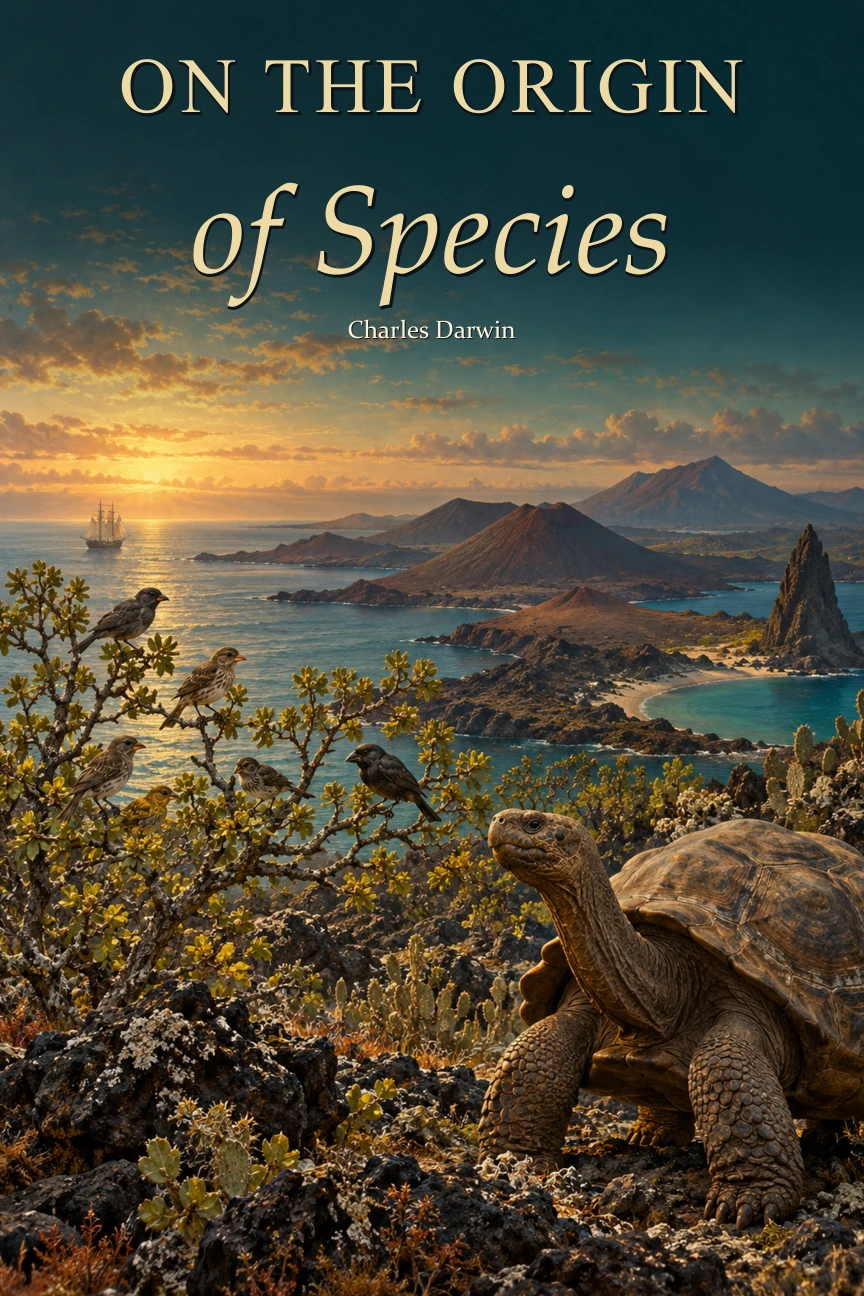
On the Origin of Species — actual Pipcub paperback cover
SCROLL INTO THE STORYAN IMAGINED WORLD · ORIGINAL AI ART
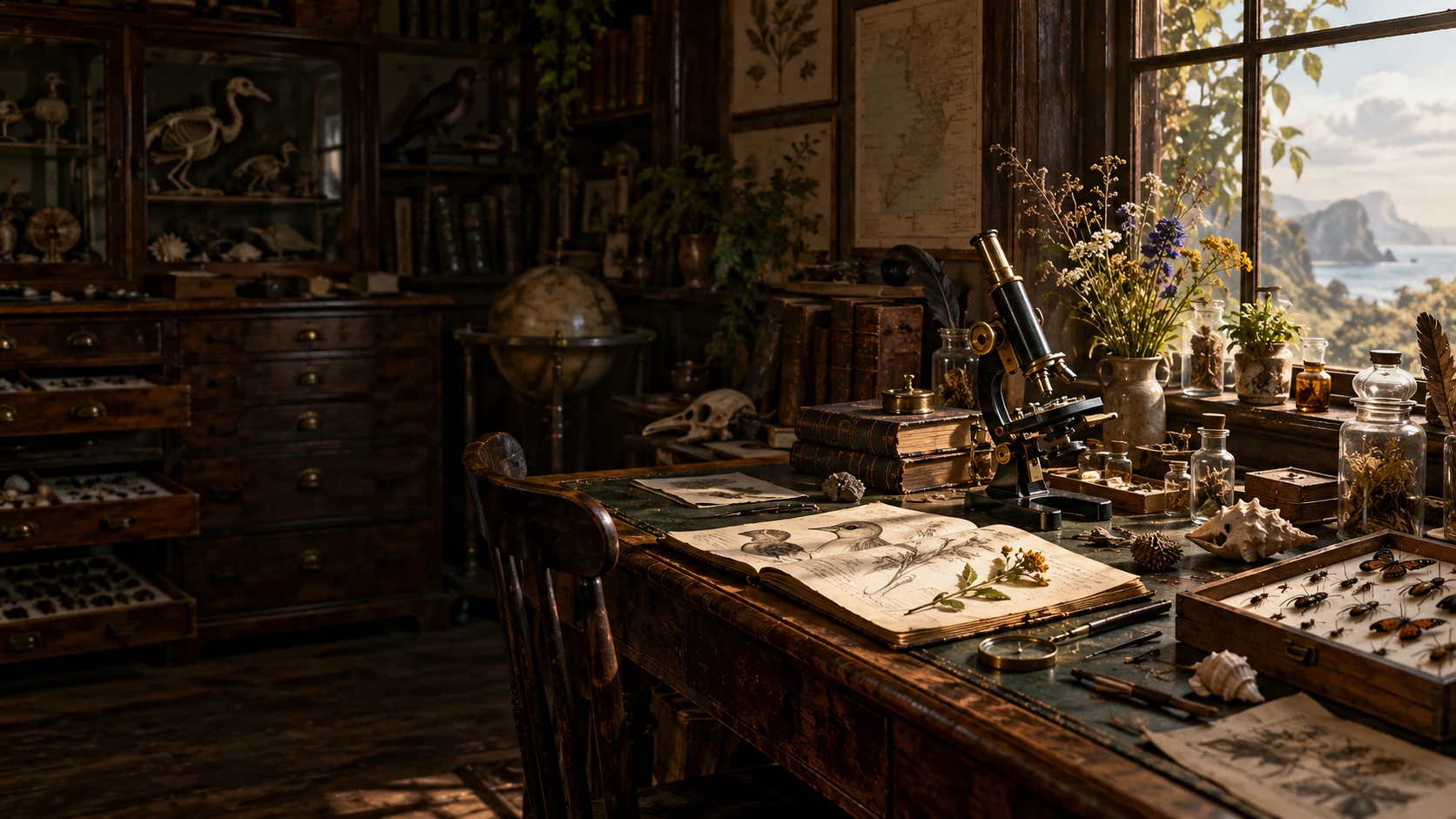
A Victorian naturalist's study with specimen drawers, botanical samples and a microscope

THE STORY

The book that changed how we see life.

Darwin draws together observations of animals, plants, fossils and the natural world to explain descent with modification.
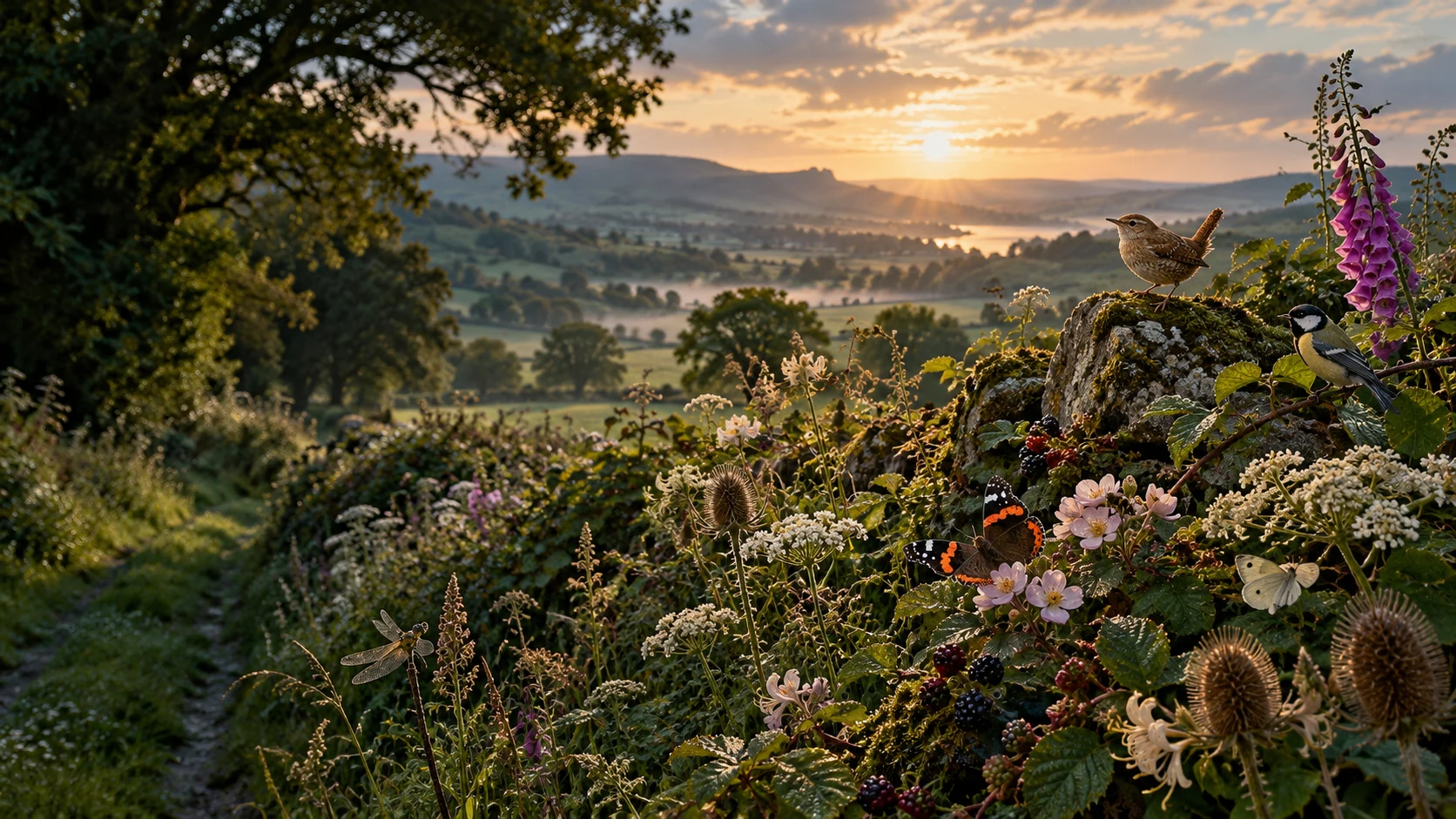
A richly varied English hedgerow with wildflowers, insects and birds in detailed natural light

THE WORLD OF THE BOOK

Look closely at life.

This edition presents the 1859 text, with its original evolutionary diagram and historical index.
On the Origin of Species front cover
Read the interior preview

LOOK INSIDE

Open a book.
Enter a world.

Preview six pages from this edition. Select a page to enlarge it, or use the arrows to keep reading.

Spread 1 of 3
On the Origin of Species · PDF page 10
Actual interior PDF page 10 of On the Origin of Species
Read accessible text

8 CHAPTER I. VARIATION UNDER DOMESTICATION. Causes of Variability. Effects of Habit. Correlation of Growth. Inheritance. Character of Domestic Varieties. Difficulty of distinguishing between Varieties and Species. Origin of Domestic Varieties from one or more Species. Domestic Pigeons, their Differences and Origin. Principle of Selection anciently followed, its Effects. Methodical and Unconscious Selection. Unknown Origin of our Domestic Productions. Circumstances favourable to Man’s power of Selection. When we look to the individuals of the same variety or sub-variety of our older cultivated plants and animals, one of the first points which strikes us, is, that they generally differ much more from each other, than do the individuals of any one species or variety in a state of nature. When we reflect on the vast diversity of the plants and animals which have been cultivated, and which have varied during all ages under the most different climates and treatment, I think we are driven to conclude that this greater variability is simply due to our domestic productions having been raised under conditions of life not so uniform as, and somewhat different from, those to which the parent-species have been exposed under nature. There is, also, I think, some probability in the view propounded by Andrew Knight, that this variability may be partly connected with excess of food. It seems pretty clear that organic beings must be exposed during several generations to the new conditions of life to cause any appreciable amount of variation; and that when the organisation has once begun to vary, it generally continues to vary for many generations. No case is on record of a variable being ceasing to be variable under cultivation. Our oldest cultivated plants, such as wheat, still often yield new varieties: our oldest domesticated animals are still capable of rapid improvement or modification. It has been disputed at what period of life the causes of variability, whatever they may be, generally act; whether during the early or late period of development of the embryo, or at the instant of conception. Geoffroy St. Hilaire’s experiments show that unnatural treatment of the embryo causes monstrosities; and monstrosities cannot be

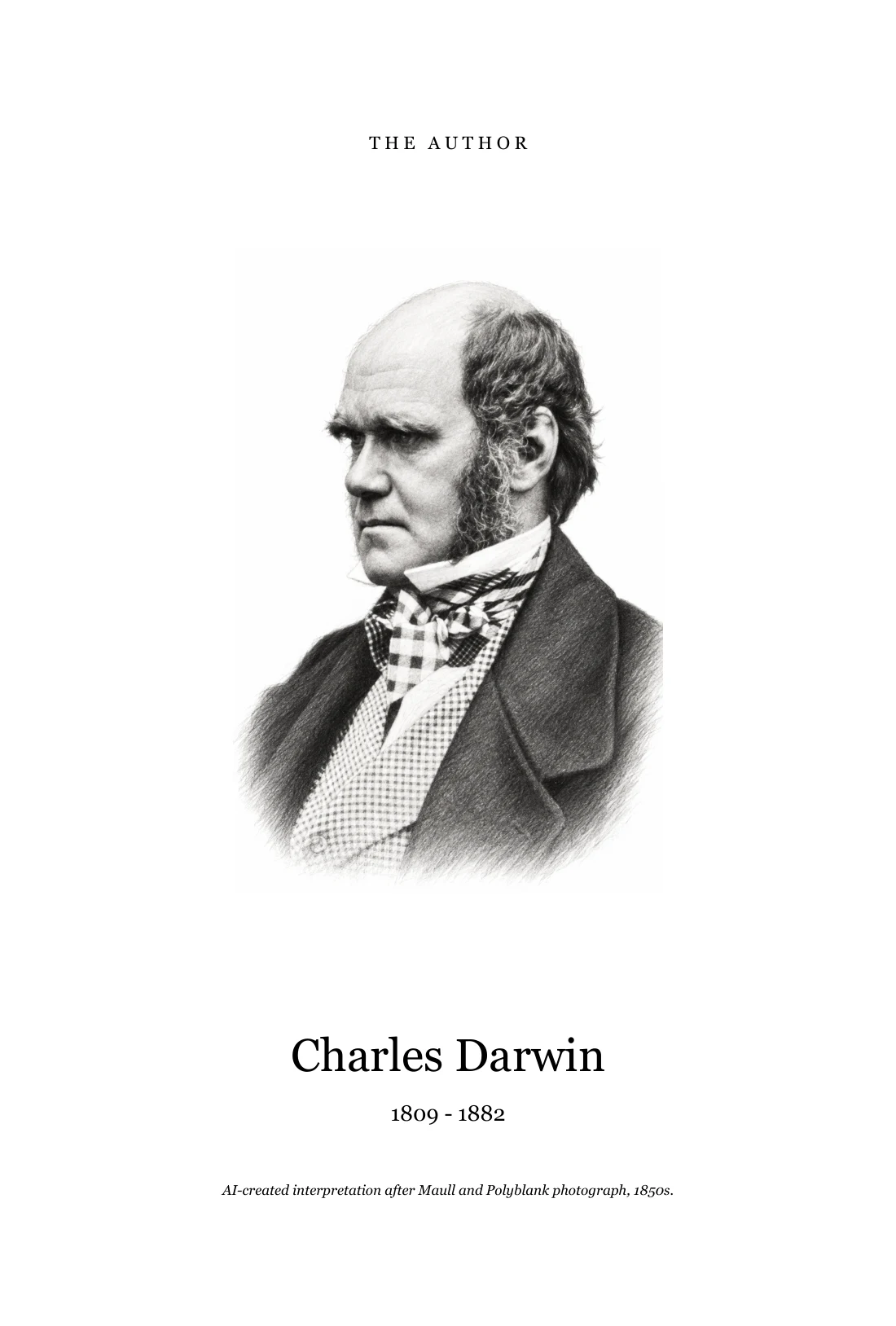
Charles Darwin portrait page from this edition

ABOUT THE AUTHOR

Charles Darwin

Charles Darwin was an English naturalist, born in Shrewsbury in 1809. His observations during the voyage of HMS Beagle helped shape a lifetime of research into living things and the history of the natural world. Travel was followed by decades of study, experiment and correspondence.

More about the author ↗

Discover the author behind the story. This portrait and biography are included in your edition.

FREE TO READ

Take it with you.

On the Origin of Species is in the public domain, so its words belong to everyone. Download our edition free. No account needed.

Read it in your browser ↗
Add it to your reading app
iPhone & iPad
Tap download, then open the file from Safari’s downloads, tap Share and choose Books. It stays in your Apple Books library.
Android
Tap download, open the file and choose Google Play Books. Or, in Play Books, go to Library, tap ⋮ and choose Upload files.
Kindle
Send the file to your Kindle library with Amazon’s Send to Kindle.
Kobo, Moon+ Reader and other apps
Open the downloaded file with the app, or use the app’s import option.

KEEP BROWSING

More from the library.

On Love cover

On Love

Stendhal

On the Edge cover

On the Edge

Walter De la Mare

On the Nature of Things cover

On the Nature of Things

Lucretius

One of Ours cover

One of Ours

Willa Cather

One of the Six Hundred cover

One of the Six Hundred

James Grant

One Wonderful Night: A Romance of New York cover

One Wonderful Night: A Romance of New York

Louis Tracy

Browse the complete library ↗
YOUR NEXT CHAPTER

Your book bag 0

A little escape. A story to keep.

Loading your book bag…