THE STORY
Look closely at the dust in a shaft of light
Lucretius uses familiar sights to make atoms, empty space, sensation, and mortality imaginable in verse.
Browse collections

Find your next chapter
Explore timeless stories, unexpected discoveries, and old favourites.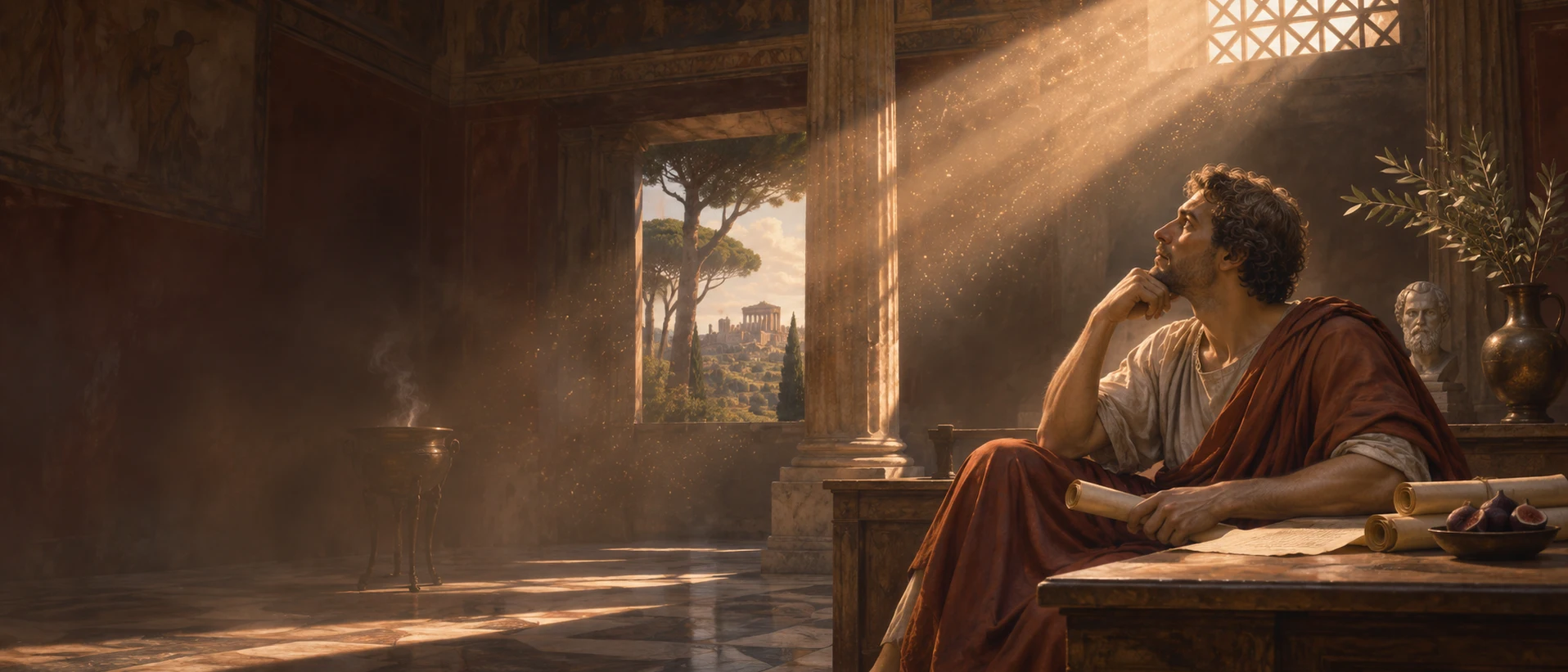
Lucretius uses familiar sights to make atoms, empty space, sensation, and mortality imaginable in verse.
$15.99
Printed for you. Shipping calculated at checkout.

THE STORY
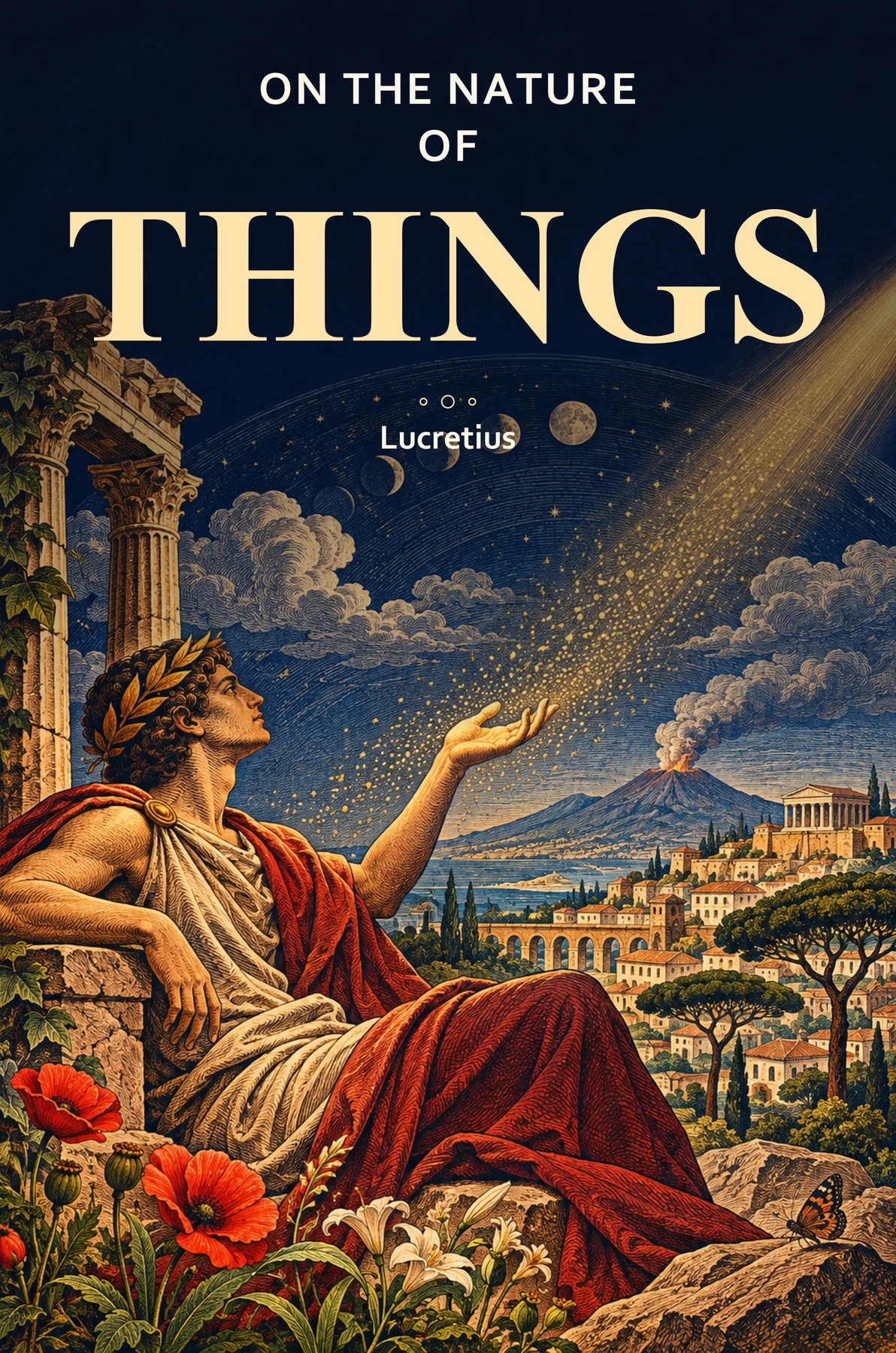
Lucretius uses familiar sights to make atoms, empty space, sensation, and mortality imaginable in verse.

THE WORLD OF THE BOOK
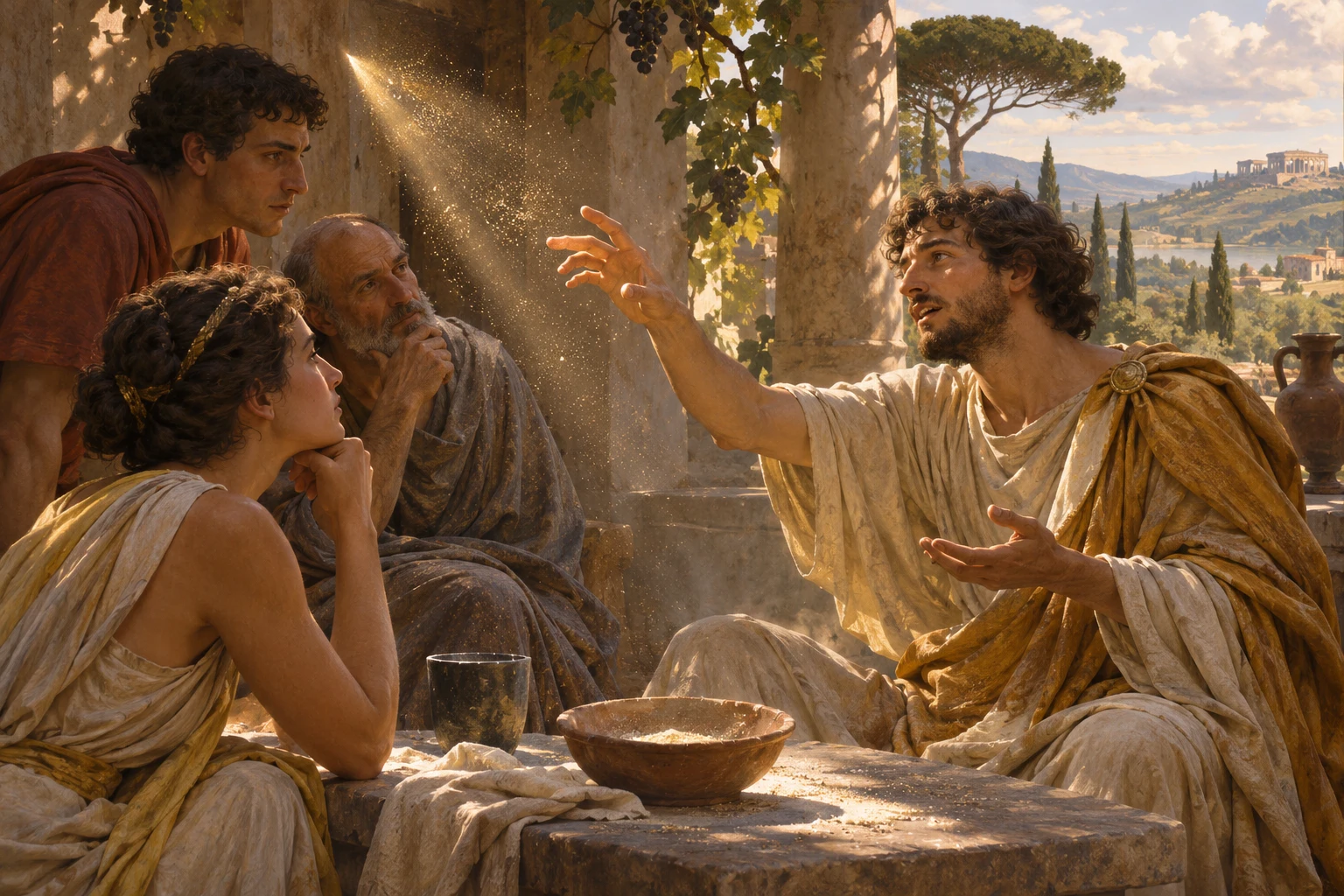
Dust glows in sunlight beside carved stone and acanthus leaves.
LOOK INSIDE
Preview six pages from this edition. Select a page to enlarge it, or use the arrows to keep reading.
Spread 1 of 3
ABOUT THE AUTHOR
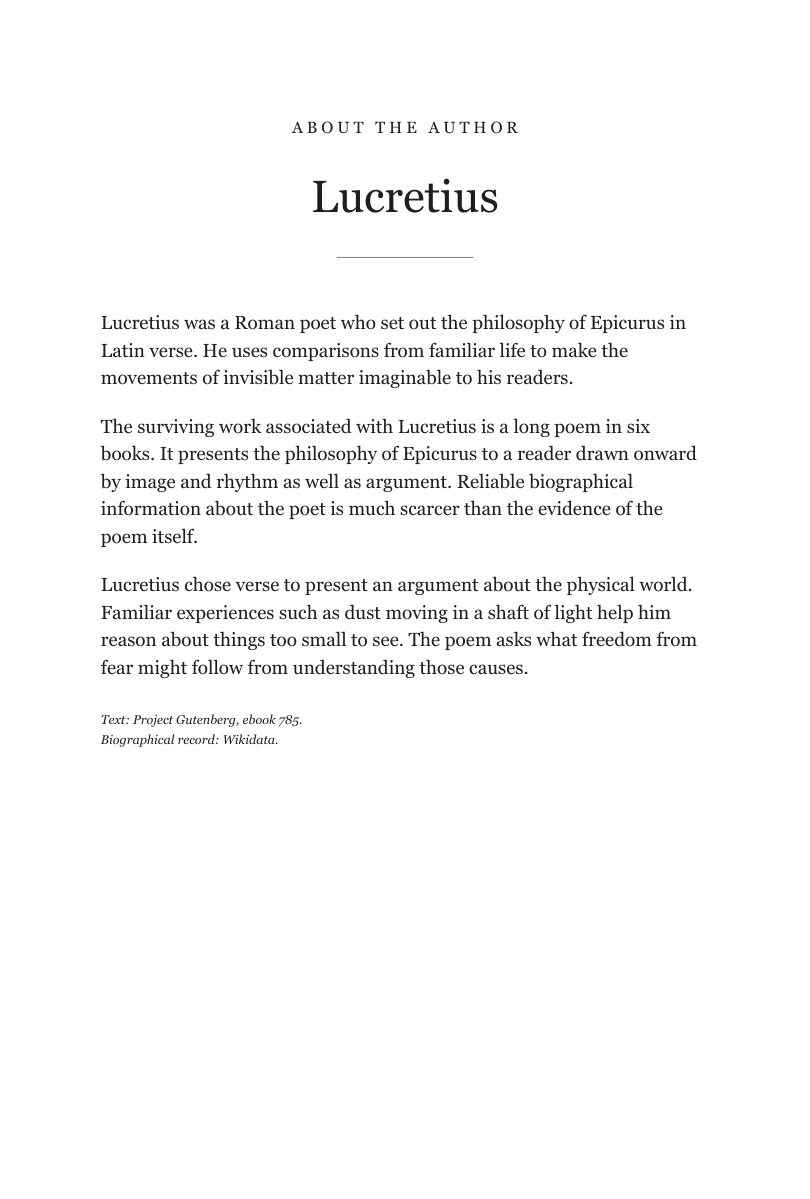
Lucretius was a Roman poet who set out the philosophy of Epicurus in Latin verse. He uses comparisons from familiar life to make the movements of invisible matter imaginable to his readers.
More about the author ↗FREE TO READ
On the Nature of Things is in the public domain, so its words belong to everyone. Download our edition free. No account needed.
Best for phones, Apple Books, Google Play Books, Kobo and Kindle
The printed page layout, with illustrations
KEEP BROWSING