
BEGIN HERE
The book that changed how we see life.
On the Origin of Species
Darwin draws together observations of animals, plants, fossils and the natural world to explain descent with modification.

Browse collections

Find your next chapter
Explore timeless stories, unexpected discoveries, and old favourites.
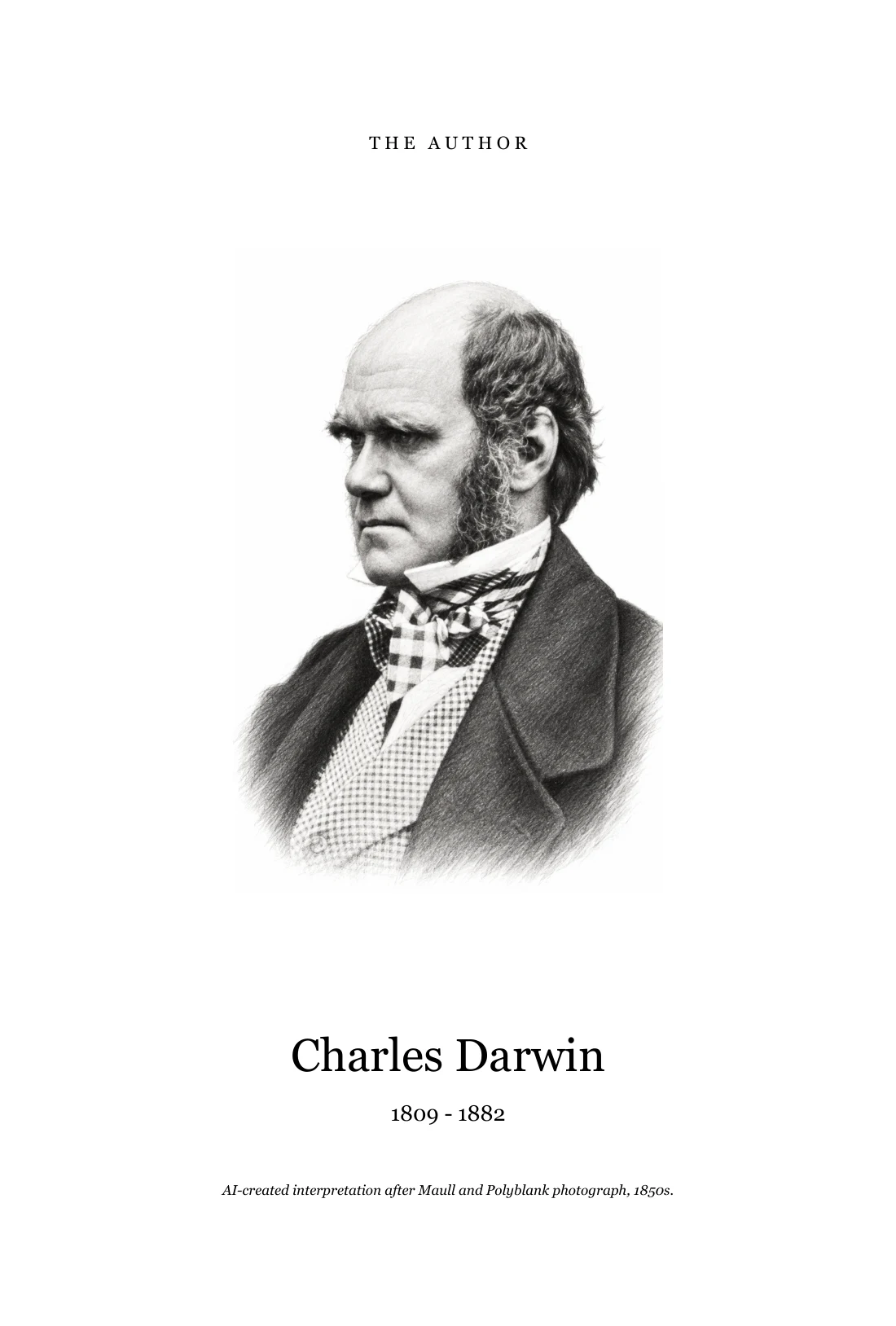
Charles Darwin was an English naturalist, born in Shrewsbury in 1809.
THE LIFE
Charles Darwin was an English naturalist, born in Shrewsbury in 1809. His observations during the voyage of HMS Beagle helped shape a lifetime of research into living things and the history of the natural world. Travel was followed by decades of study, experiment and correspondence.
In On the Origin of Species, published in 1859, Darwin presented an extended argument for evolution through natural selection. He brought together evidence from breeding, geographical distribution, anatomy and other fields. Familiar examples were connected to questions reaching across immense spans of time.
Darwin continued to publish on a wide range of subjects, including plants, human evolution, animal behaviour and earthworms. His work depended on careful observation and the exchange of information with other researchers. He also paid close attention to objections and to the limits of the evidence available to him.
He died in 1882. His books can be read as records of reasoning in motion. A small detail may become significant when compared with another, and an apparent exception may require an argument to be refined. His prose shows how patient attention to ordinary organisms can lead to a transformed understanding of the relationships among living things.
Biographical references: Darwin Correspondence Project; Natural History Museum. Portrait source: Maull and Polyblank photograph, 1850s. Full source records retained in the edition archive.
BEGIN HERE
On the Origin of Species
Darwin draws together observations of animals, plants, fossils and the natural world to explain descent with modification.
KINDRED SPIRITS