A seated figure looks out from a shaded garden over Rome.
PIPCUB CINEMATIC EDITIONS / PAPERBACK BOOKS

Meditations

Marcus Aurelius

Written as personal reflections, Marcus Aurelius's notes return to the questions of judgment, duty and the limits of control.

$13.99

Printed for you. Shipping calculated at checkout.

Checkout opening soon. Shipping & delivery Returns
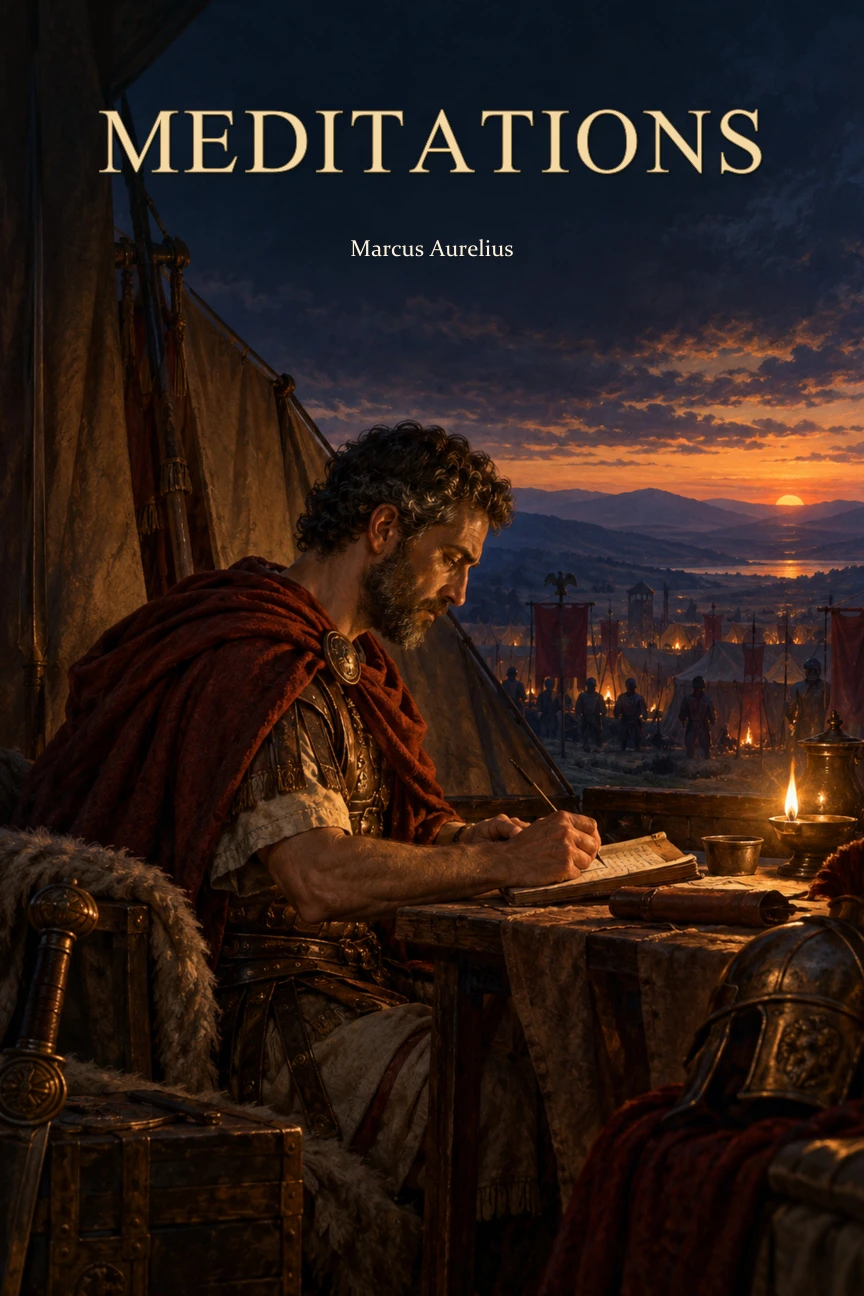
Meditations — actual Pipcub paperback cover
SCROLL INTO THE STORYAN IMAGINED WORLD · ORIGINAL AI ART
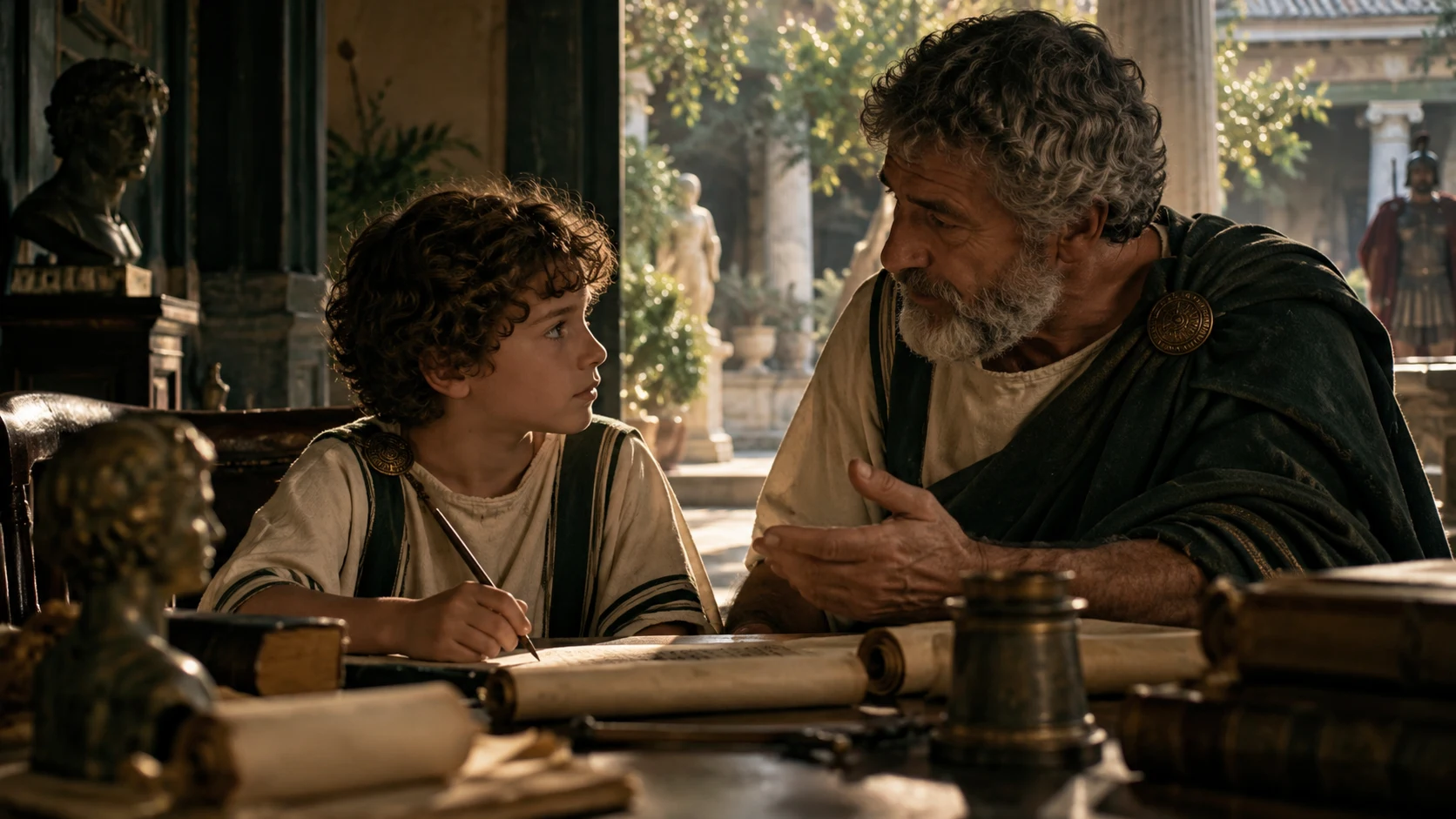
A boy and an older man sit together at a table strewn with scrolls.

THE STORY

Meet the day with a steadier mind.

Written as personal reflections, Marcus Aurelius's notes return to the questions of judgment, duty and the limits of control.
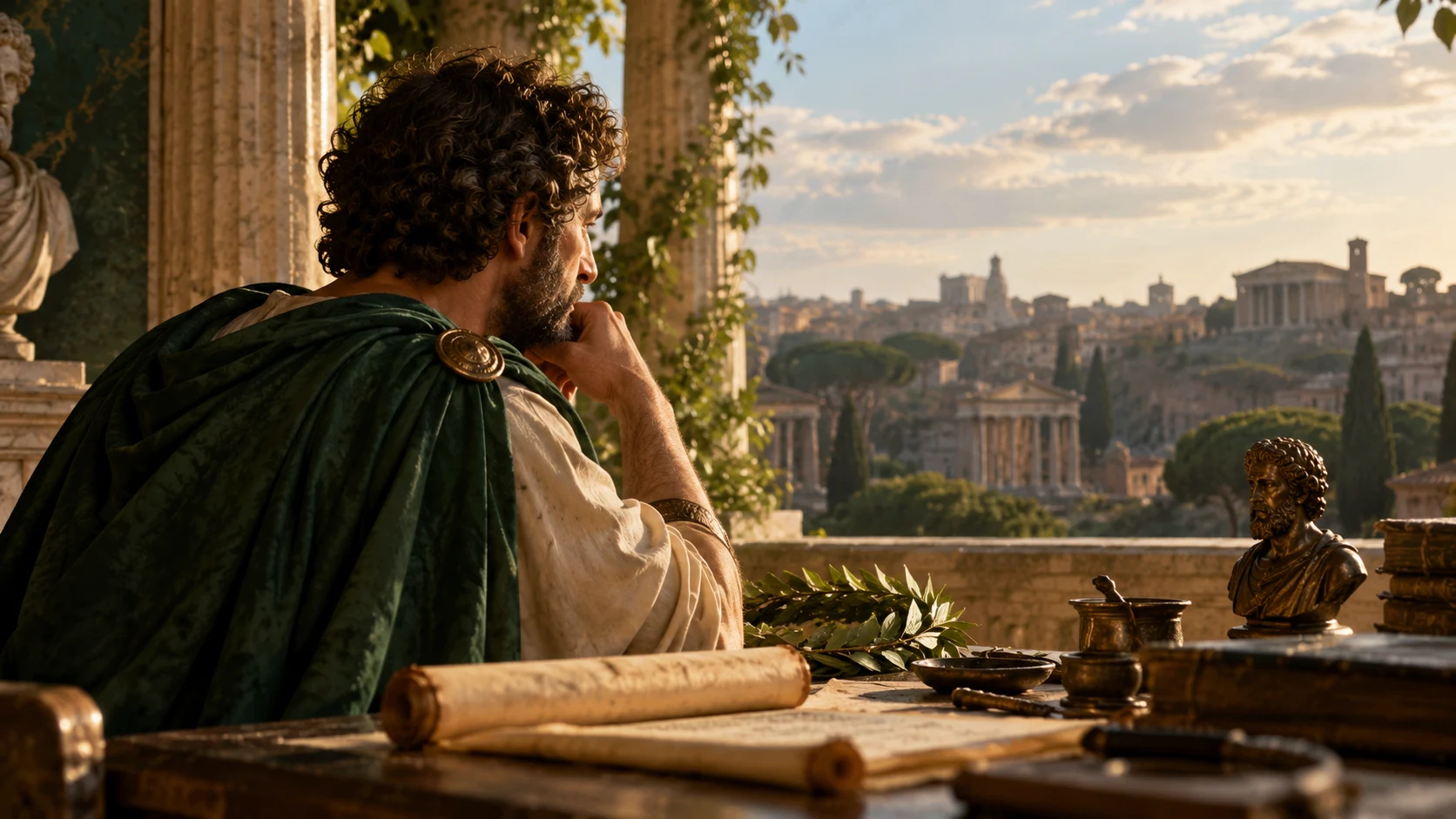
A man pauses over his writing and looks across distant rooftops.

THE WORLD OF THE BOOK

Meditations

They consider how a person might act with clarity amid distraction, disappointment and change. These brief passages offer a demanding, humane encounter with Stoic thought and the continuing work of examining one's own conduct.
Meditations front cover
Read the interior preview

LOOK INSIDE

Open a book.
Enter a world.

Preview six pages from this edition. Select a page to enlarge it, or use the arrows to keep reading.

Spread 1 of 3
Meditations · PDF page 6
Actual interior PDF page 6 of Meditations
Read accessible text

4 Antoninus Pius died in 161, and Marcus assumed the imperial state. He at once associated with himself L. Ceionius Commodus, whom Antoninus had adopted as a younger son at the same time with Marcus, giving him the name of Lucius Aurelius Verus. Henceforth the two are colleagues in the empire, the junior being trained as it were to succeed. No sooner was Marcus settled upon the throne than wars broke out on all sides. In the east, Vologeses III. of Parthia began a long-meditated revolt by destroying a whole Roman Legion and invading Syria (162). Verus was sent off in hot haste to quell this rising; and he fulfilled his trust by plunging into drunkenness and debauchery, while the war was left to his officers. Soon after Marcus had to face a more serious danger at home in the coalition of several powerful tribes on the northern frontier. Chief among those were the Marcomanni or Marchmen, the Quadi (mentioned in this book), the Sarmatians, the Catti, the Jazyges. In Rome itself there was pestilence and starvation, the one brought from the east by Verus's legions, the other caused by floods which had destroyed vast quantities of grain. After all had been done possible to allay famine and to supply pressing needs—Marcus being forced even to sell the imperial jewels to find money—both emperors set forth to a struggle which was to continue more or less during the rest of Marcus's reign. During these wars, in 169, Verus died. We have no means of following the campaigns in detail; but thus much is certain, that in the end the Romans succeeded in crushing the barbarian tribes, and effecting a settlement which made the empire more secure. Marcus was himself commander-in-chief, and victory was due no less to his own ability than to his wisdom in choice of lieutenants, shown conspicuously in the case of Pertinax. There were several important battles fought in these campaigns; and one of them has become celebrated for the legend of the Thundering Legion. In a battle against the Quadi in 174, the day seemed to be going in favour of the foe, when on a sudden arose a great storm of thunder and rain the lightning struck the barbarians with terror, and they turned to rout. In later days this storm was said to have been sent in answer to the prayers of a legion which contained many Christians, and the name Thundering Legion should be given to it on this account. The title of Thundering Legion is known at an earlier date, so this part of the story at least cannot be true; but the aid of the storm is acknowledged by one of the scenes carved on Antonine's Column at Rome, which commemorates these wars. The settlement made after these troubles might have been more satisfactory but for an unexpected rising in the east. Avidius Cassius, an

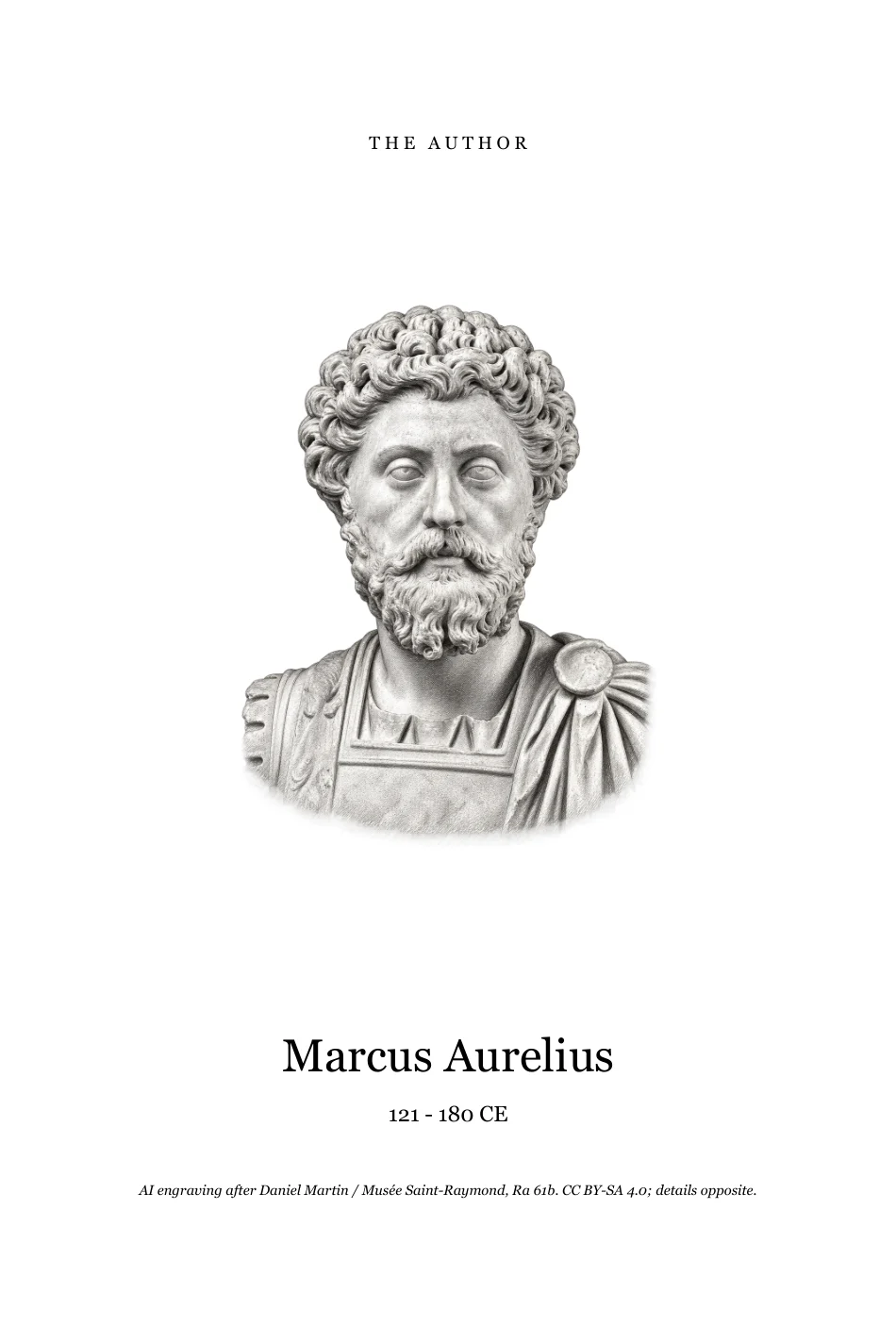
Author profile page from this edition · Marcus Aurelius

ABOUT THE AUTHOR

Marcus Aurelius

Marcus Aurelius was a Roman emperor and Stoic philosopher, born in 121 CE. Educated in rhetoric and philosophy, he succeeded his adoptive father, Antoninus Pius, in 161. His reign lasted until 180 and was marked by warfare, rebellion and a devastating epidemic.

More about the author ↗

Author profile page from this edition

FREE TO READ

Take it with you.

Meditations is in the public domain, so its words belong to everyone. Download our edition free. No account needed.

Read it in your browser ↗
Add it to your reading app
iPhone & iPad
Tap download, then open the file from Safari’s downloads, tap Share and choose Books. It stays in your Apple Books library.
Android
Tap download, open the file and choose Google Play Books. Or, in Play Books, go to Library, tap ⋮ and choose Upload files.
Kindle
Send the file to your Kindle library with Amazon’s Send to Kindle.
Kobo, Moon+ Reader and other apps
Open the downloaded file with the app, or use the app’s import option.

KEEP BROWSING

More from the library.

Max Carrados cover

Max Carrados

Ernest Bramah

Maxims and Reflections cover

Maxims and Reflections

Johann Wolfgang von Goethe

Medea of Euripides cover

Medea of Euripides

Euripides

Memoirs of an Infantry Officer cover

Memoirs of an Infantry Officer

Siegfried Sassoon

Men Without Women cover

Men Without Women

Ernest Hemingway

Men, Women and Ghosts cover

Men, Women and Ghosts

Amy Lowell

Browse the complete library ↗
YOUR NEXT CHAPTER

Your book bag 0

A little escape. A story to keep.

Loading your book bag…