BEGIN HERE
Meet the day with a steadier mind.
Meditations
Written as personal reflections, Marcus Aurelius's notes return to the questions of judgment, duty and the limits of control.

Browse collections

Find your next chapter
Explore timeless stories, unexpected discoveries, and old favourites.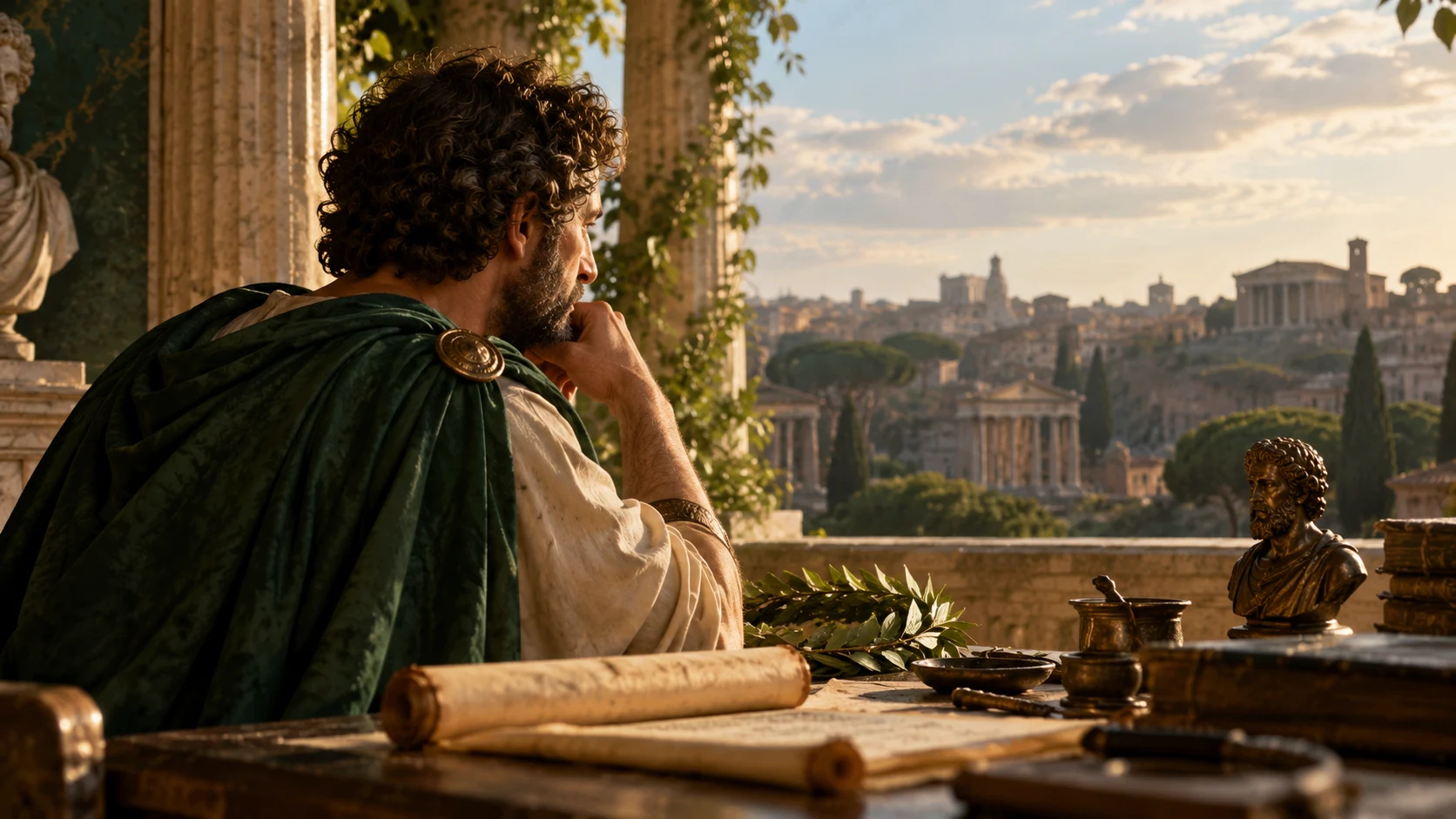
Marcus Aurelius was a Roman emperor and Stoic philosopher, born in 121 CE. Educated in rhetoric and philosophy, he succeeded his adoptive father, Antoninus Pius, in 161.
THE LIFE
Marcus Aurelius was a Roman emperor and Stoic philosopher, born in 121 CE. Educated in rhetoric and philosophy, he succeeded his adoptive father, Antoninus Pius, in 161. His reign lasted until 180 and was marked by warfare, rebellion and a devastating epidemic.
The work now known as Meditations consists of reflections written for his own use. Rather than presenting a single sustained argument, he returns repeatedly to questions of judgement, duty, anger, mortality and life with other people. At least part of the work belongs to his years on military campaign.
Stoic philosophy places moral character above wealth, reputation or comfort. Marcus repeatedly tests that commitment against the distractions and frustrations of daily life. The tension between his position as ruler and his effort to govern his own responses gives these private exercises their continuing interest.
Readers can approach each passage as a practice to be tried and examined, while asking how power affects its claims. The facing illustration follows an identified Roman marble bust in the Musée Saint-Raymond, Toulouse. It preserves the sculpture's features and stone eyes; it is not a reconstruction of the emperor's living face.
Biographical reference: Stanford Encyclopedia of Philosophy. Portrait: AI engraving of Roman bust Ra 61b after photograph by Daniel Martin, Photothèque du musée Saint-Raymond, via Wikimedia Commons. Source and adaptation: CC BY-SA 4.0, creativecommons.org/licenses/by-sa/4.0/. Background removed; sculpture redrawn.
BEGIN HERE
Meditations
Written as personal reflections, Marcus Aurelius's notes return to the questions of judgment, duty and the limits of control.
KINDRED SPIRITS