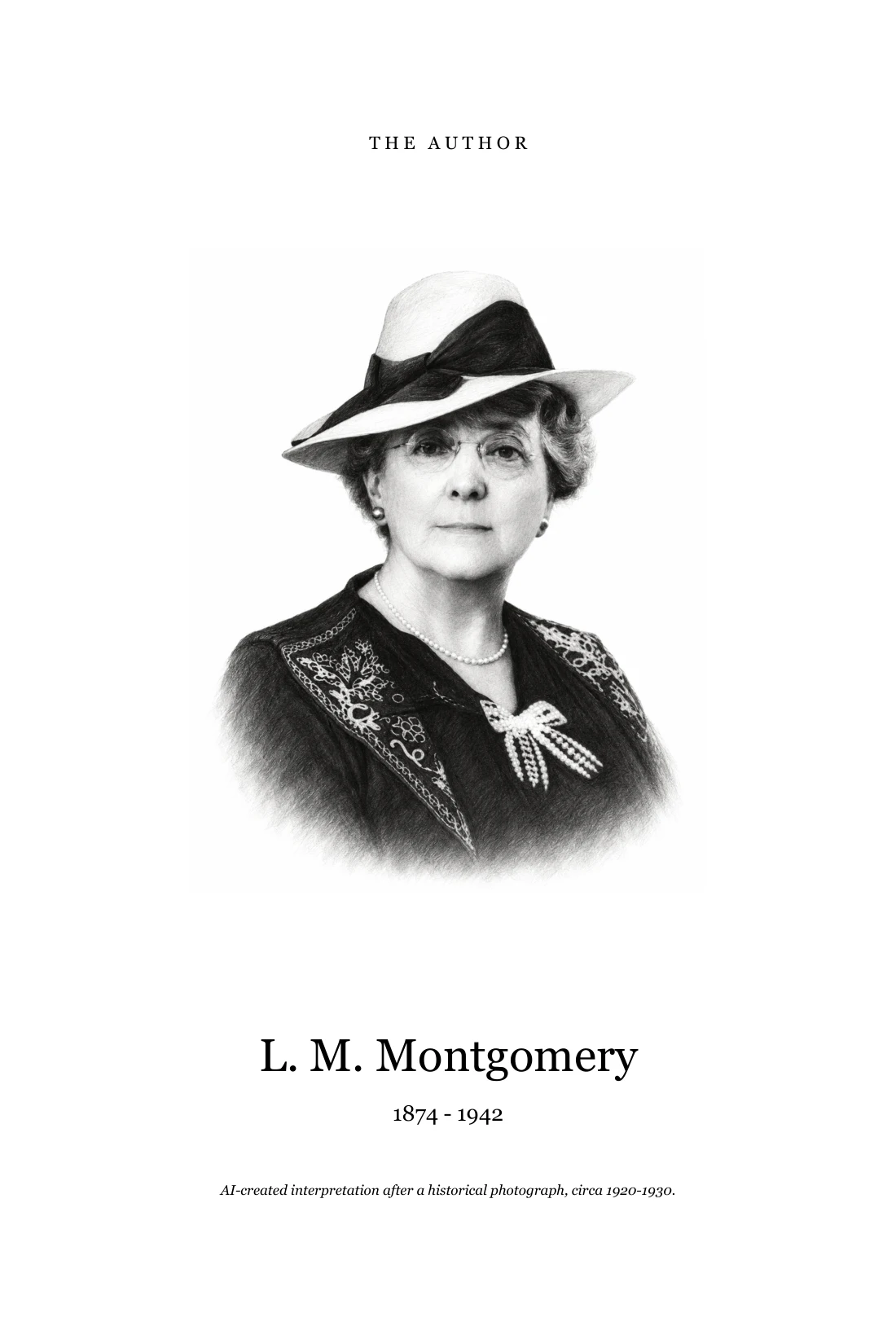
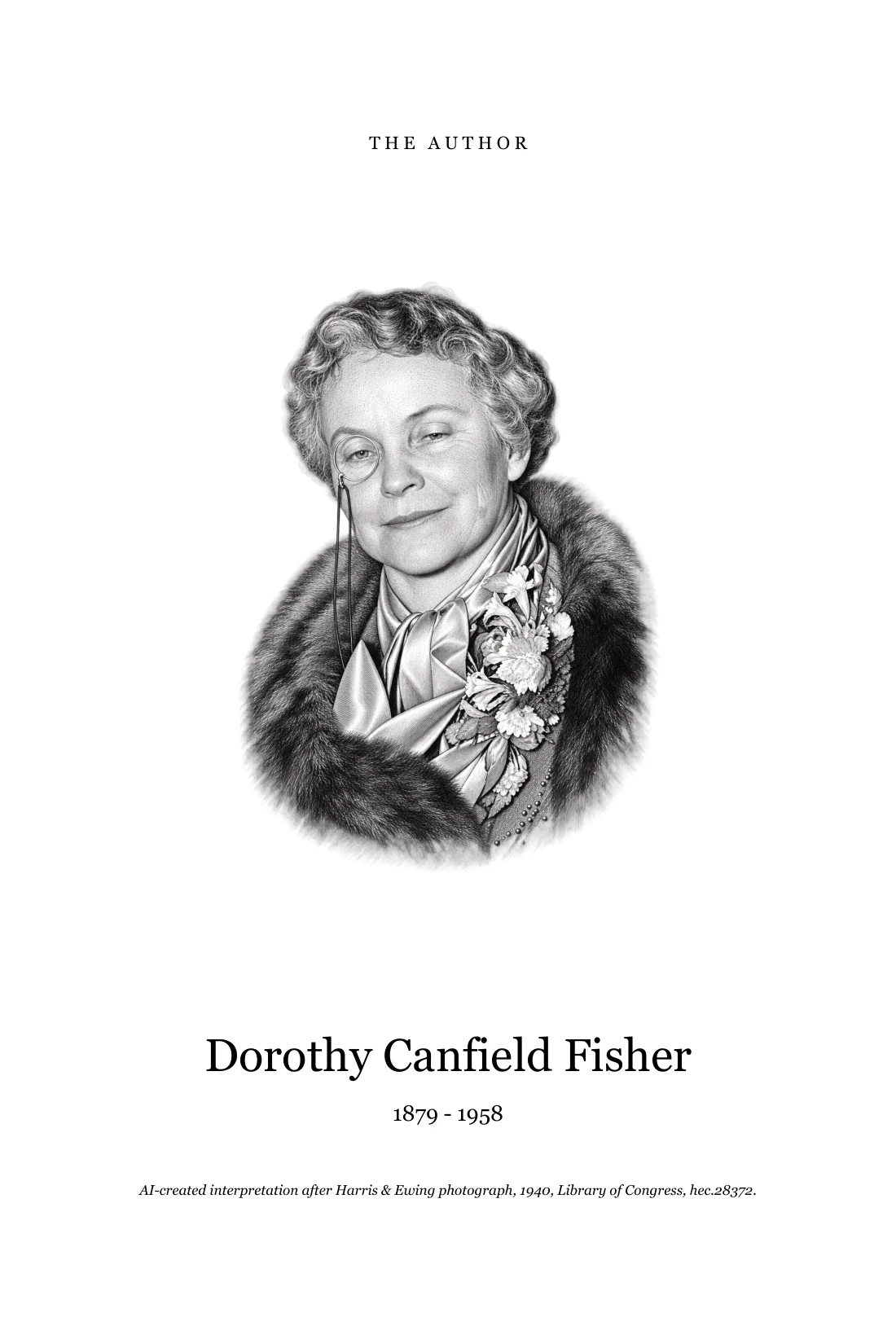
Readers who meet Rebecca of Sunnybrook Farm after Anne of Green Gables often ask the same question: is this a copy? The dates say otherwise. Kate Douglas Wiggin’s novel came out from Houghton Mifflin in 1903 and became an immediate best-seller. L. M. Montgomery’s Anne did not arrive until 1908.
Nobody needs to accuse anyone of borrowing. Both books belong to a tradition of lively girls set down among stiff adults, and each is very much its own. But the family resemblance is striking, and if you love Anne, Rebecca is the obvious next friend to make.
What is Rebecca of Sunnybrook Farm about?
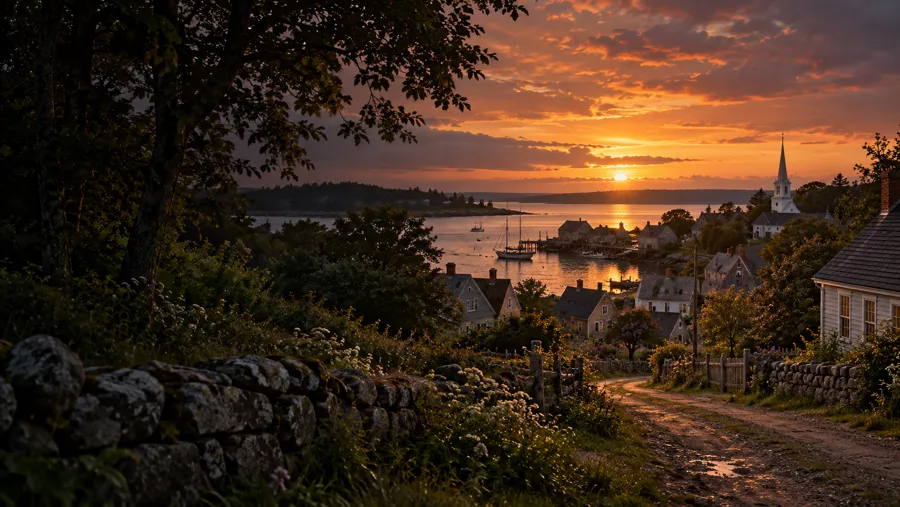
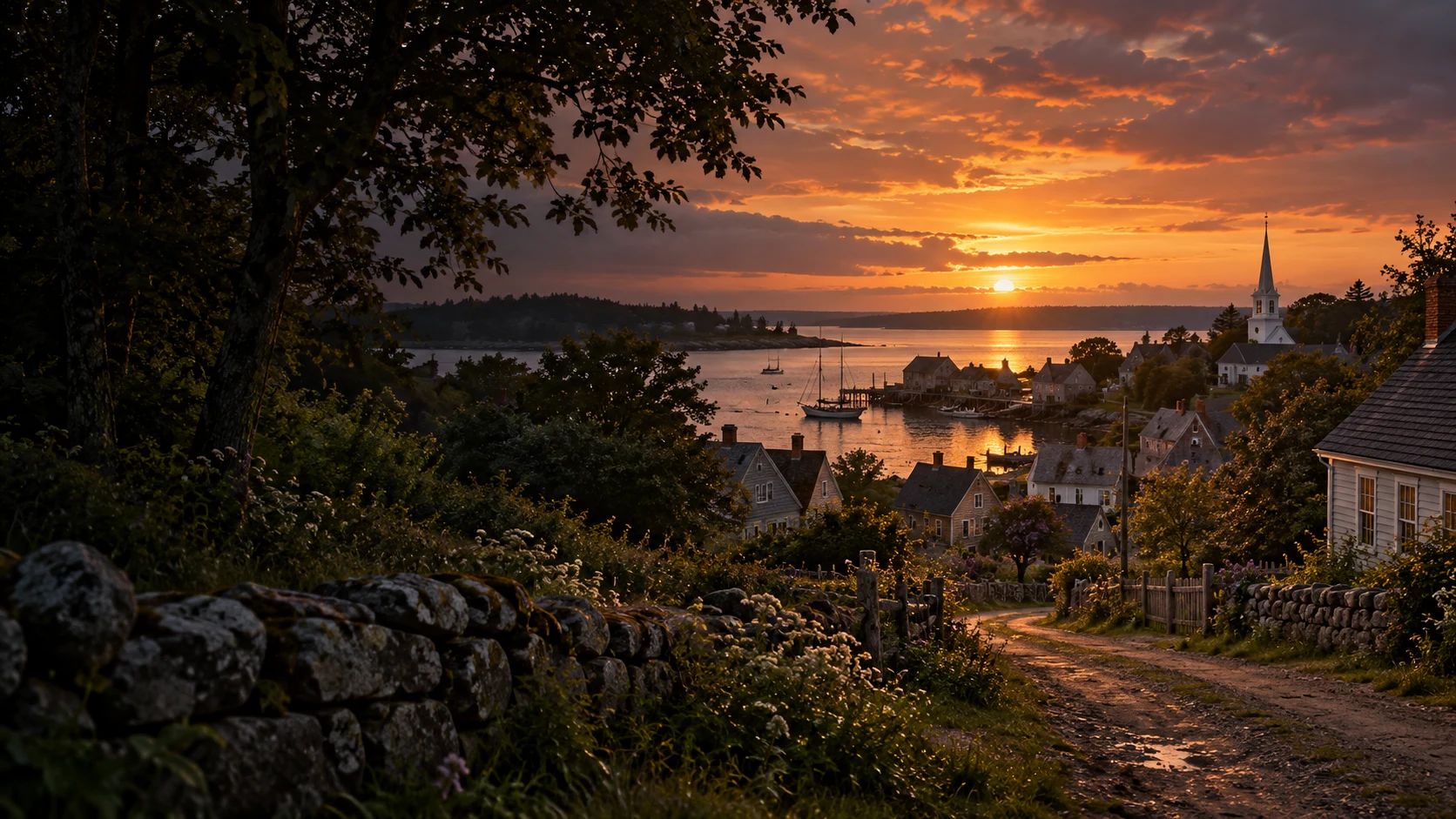
Rebecca Rowena Randall, ten or eleven when the book begins, is the second of seven children on a poor, mortgaged farm in Maine whose father has died. Her mother’s two older sisters, Miranda and Jane Sawyer, have offered to take one of the girls into their brick house and educate her. They wanted Hannah, the eldest, who is good at housework. They get Rebecca, who is good at words.
The book follows her from the day she arrives in the village of Riverboro through school, friendship, scrapes and small triumphs, to young womanhood. Aunt Jane is kind. Aunt Miranda is not, and sees in the girl her feckless Randall father, which is not a compliment. Much of the book’s comedy and feeling comes from Rebecca’s slow, sideways campaign to win her over.
Boys always do the nice splendid things, and girls can only do the nasty dull ones that get left over.
Kate Douglas Wiggin, Rebecca of Sunnybrook Farm, chapter I
How is Rebecca like Anne of Green Gables?
The opening chapters are the easiest place to see it. Rebecca travels to Riverboro alone on the stagecoach and talks the driver, Mr Jeremiah Cobb, into a daze. He feels, Wiggin writes, as if he “was being hurried from peak to peak of a mountain range without time to take a good breath in between”. In Anne, Matthew Cuthbert drives Anne home from the station, and as she talks without stopping he finds, much to his own surprise, that he is enjoying himself.
- Both heroines are imaginative, wordy and poetic. Her mother calls the place “just Randall’s Farm”, but Rebecca calls it Sunnybrook, and she writes verses; Anne renames every pond and lane she meets.
- Both are sent to live with older, unmarried relatives in a small rural community, one of whom is severe and one gentle.
- Both shine at school, win prizes and go on to further study.
- Both books are full of sharp, funny village portraits, and both turn quietly serious towards the end.
The differences matter as much. Rebecca is dark-haired, not red-haired, and she has a whole family at home depending on her, and her book is more episodic, closer to a series of sketches. Anne’s world is bigger and more romantic. Rebecca’s is narrower, funnier about money, and in places more biting about the adults.
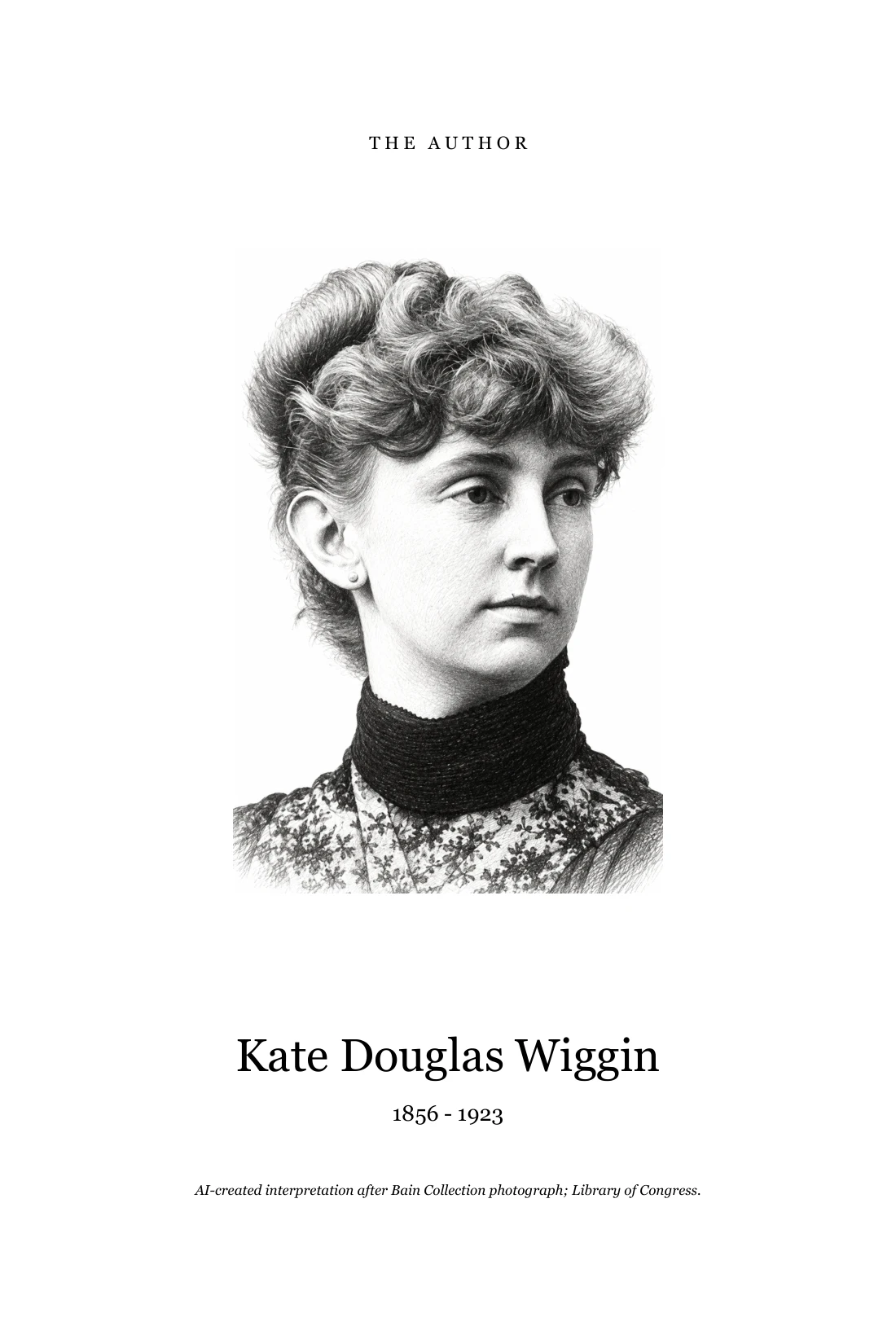
Who was Kate Douglas Wiggin?
Wiggin was born in Philadelphia in 1856 and grew up largely in Maine, the setting of Rebecca’s Riverboro. In 1878 she ran the first free kindergarten in California, on Silver Street in a poor district of San Francisco, and by 1880 she had added a school to train its teachers. Her early books, including The Birds’ Christmas Carol, were written to raise money for the work.
As a girl of eleven she once found herself on a train with Charles Dickens and talked to him for the whole journey, a meeting she later wrote up as A Child’s Journey with Dickens. It is easy to imagine Rebecca doing exactly the same.
Rebecca on stage and screen
Wiggin co-wrote a stage version that reached Broadway in 1909, and the book was filmed three times. Mary Pickford played Rebecca in 1917, directed by Marshall Neilan, and Marian Nixon in 1932. The best-known film, starring Shirley Temple in 1938, keeps the title and the aunt but throws out most of the story: this Rebecca wins a radio audition to sing for a breakfast cereal.
Rebecca of Sunnybrook Farm
1903. A poet of about ten with six siblings and a mortgage at home is sent to her stern aunts in Maine. Funny, sharp and warm.
Anne of Green Gables
1908. The orphan who was supposed to be a boy, and the island that adopts her. Read it straight after Rebecca and enjoy the echoes.
Understood Betsy
1917. Another girl sent to country relatives, in Vermont this time, who learns to think for herself. Shorter and brisker than either.


Rebecca’s literary sisters
More girls in the same tradition are gathered in Books like Anne of Green Gables and Brave heroines in classic children’s books. Anne’s own story continues in Did you know there are eight Anne of Green Gables books?, and for Vermont’s answer to Rebecca, see Did you know Understood Betsy was written by a Montessori champion?.
Then climb onto the stagecoach. Open Rebecca of Sunnybrook Farm, sit beside Mr Cobb, and let her talk.
Questions readers ask
Did Rebecca of Sunnybrook Farm come before Anne of Green Gables?
Yes. Rebecca of Sunnybrook Farm was published in 1903, five years before L. M. Montgomery’s Anne of Green Gables appeared in 1908.
What is Rebecca of Sunnybrook Farm about?
Rebecca Randall, aged about ten, leaves her family’s struggling farm to live with two aunts in Riverboro, Maine, one stern and one kind. The novel follows her through school and friendships to young womanhood.
Is the Shirley Temple film like the book?
Not really. The 1938 film keeps the title and some characters but invents a new plot about a girl who wins a radio singing contest. The 1917 film with Mary Pickford was the first screen version.
What age is Rebecca of Sunnybrook Farm for?
It suits confident readers from about nine upwards and works well read aloud. Adults who enjoy Anne of Green Gables tend to love it too.