
Twenty-four years. That is the price in Christopher Marlowe’s play: Mephistopheles will serve Doctor Faustus for twenty-four years of knowledge, pleasure and power, and then Lucifer will collect him, body and soul. Faustus signs the contract in his own blood, and the audience spends the rest of the evening watching the clock.
The deal has been renegotiated by writer after writer ever since. The Faust books below include a tragedy, a two-part poetic drama, a French novel about a shrinking piece of leather and an anonymous American thriller by the author of Little Women. Read together, they show how each age decided what a soul was worth.
Was there a real Faust?
Yes, though little about him is certain. Johann Georg Faust was a wandering German alchemist, astrologer and magician who died around 1541, and who was called a conman and a heretic in his own lifetime. Within decades he had become a legend. In 1587 the printer Johann Spies published a chapbook, the Historia von D. Johann Fausten, telling how Faust sold himself to the devil, and an English translation followed in 1592, credited only to “P. F., Gent.”

Marlowe’s Doctor Faustus
Christopher Marlowe drew on that English translation, and because its earliest known edition is dated 1592 his play is often dated to 1592 or 1593, though scholars have never agreed on the date and some place it a few years earlier. It was not printed until 1604, more than ten years after his death, and it survives in two quite different versions: the shorter 1604 “A” text and an expanded 1616 “B” text with extra comic scenes.
The play holds the most famous line about Helen of Troy ever written, “Was this the face that launch’d a thousand ships”, but its most chilling moment comes earlier, when Faustus asks Mephistopheles how he can be out of hell:
Why, this is hell, nor am I out of it: / Think’st thou that I, who saw the face of God, / And tasted the eternal joys of heaven, / Am not tormented with ten thousand hells, / In being depriv’d of everlasting bliss?
Mephistopheles, in Christopher Marlowe, Doctor Faustus (1604 text)
Goethe’s Faust
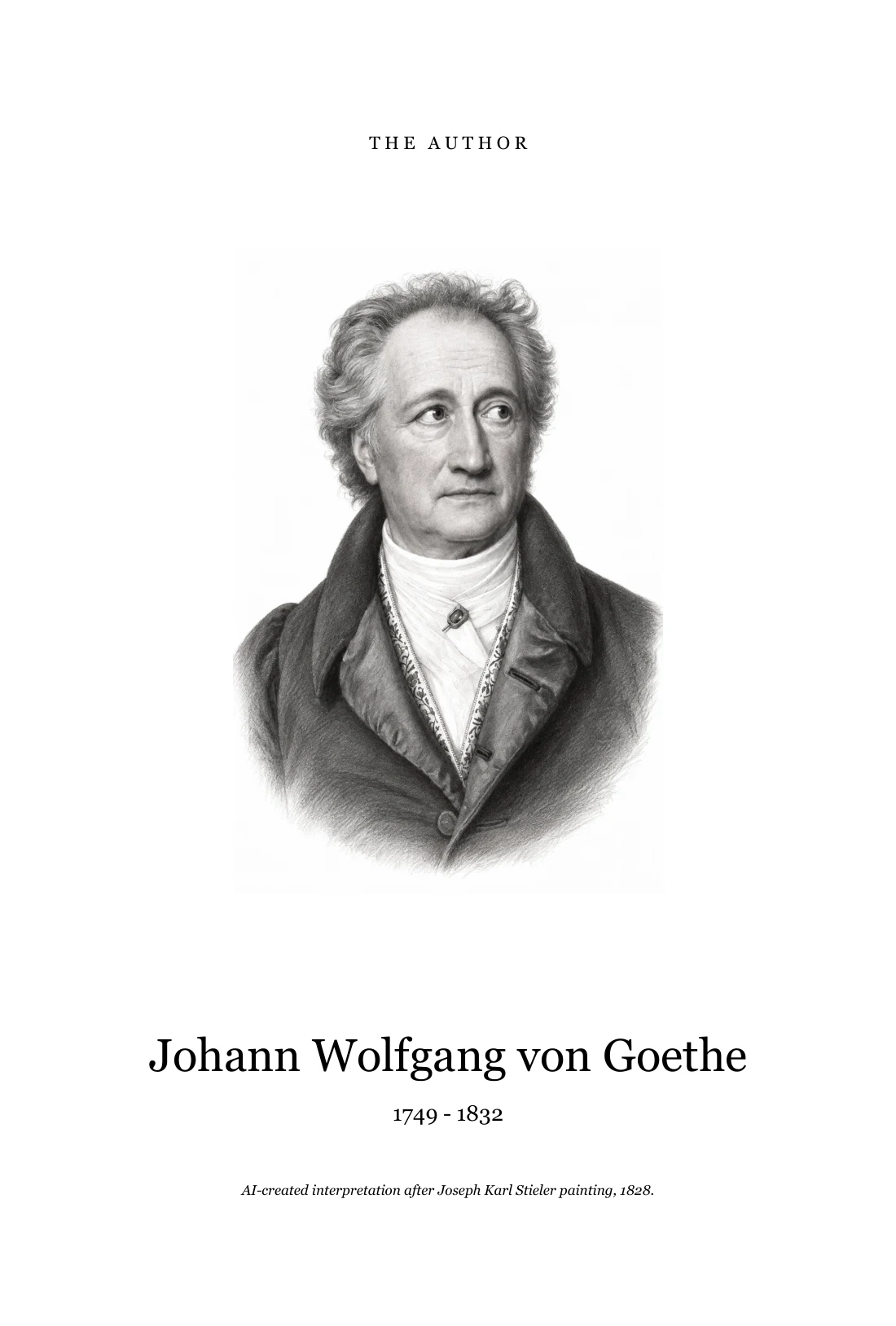
Johann Wolfgang von Goethe worked on his Faust for most of his life. Early drafts date from the 1770s, Faust, Part One was published in 1808, and he finished Part Two in 1831; it appeared the following year, after his death. Many readers consider it the greatest work in German literature.
Part One is also the Faust that went to the opera house, as Gounod’s Faust (1859). We list it alongside Carmen and La traviata in Classic novels and plays that became famous operas.
A Faustian bargain without the devil: Balzac’s Magic Skin
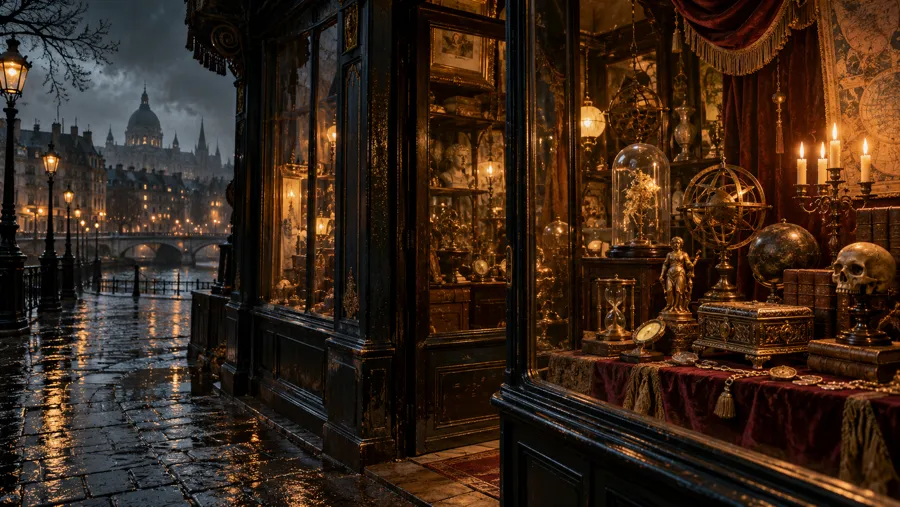
Not every Faust story needs a demon. In La Peau de chagrin (1831), Honoré de Balzac replaces Mephistopheles with a piece of shagreen, the skin of a wild ass, found in a Paris antique shop.
The book sold out on publication and prompted the first letters from Ewelina Hańska, the Polish noblewoman who later became Balzac’s wife. For where it sits in his great sequence, see Balzac’s Human Comedy: where to start.
Louisa May Alcott’s anonymous Faust
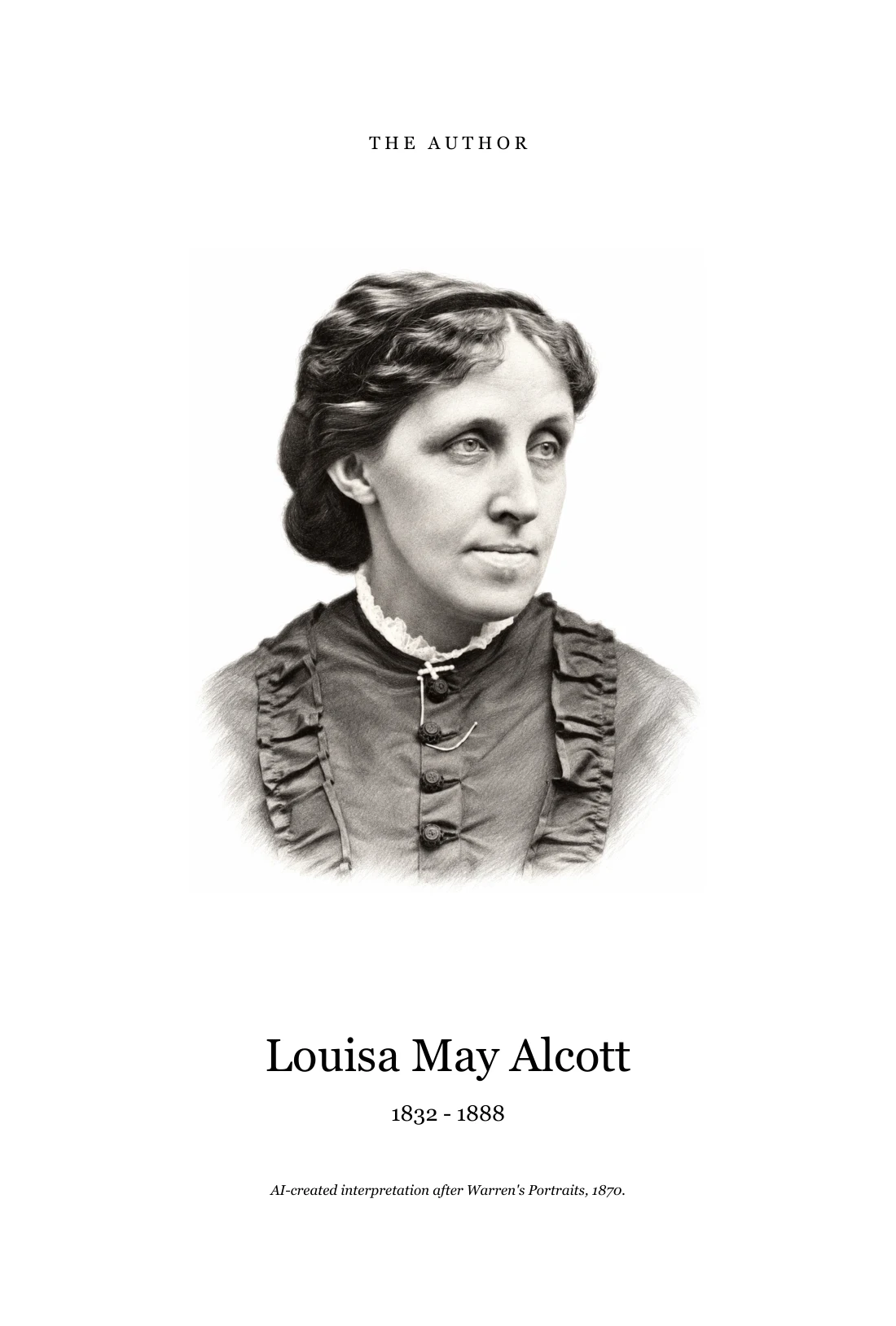
The biggest surprise on the shelf comes from Concord, Massachusetts. In 1877 Louisa May Alcott published A Modern Mephistopheles anonymously in Roberts Brothers’ No Name Series, in which authors wrote in styles not their own and readers were invited to guess who they were. Alcott later explained that she had wanted to attempt something more serious than her magazine stories and books for the young.
Her other hidden career, writing sensational stories under a pen name, is the subject of Did you know Louisa May Alcott secretly wrote thrillers?
Which Faust book should you read first?
Start with Marlowe. Doctor Faustus is short enough for one evening, and everything that follows answers it in some way. Then choose by temperament: Goethe if you want philosophy and poetry, Balzac if you want Paris and money, Alcott if you want a gothic thriller with a sting.
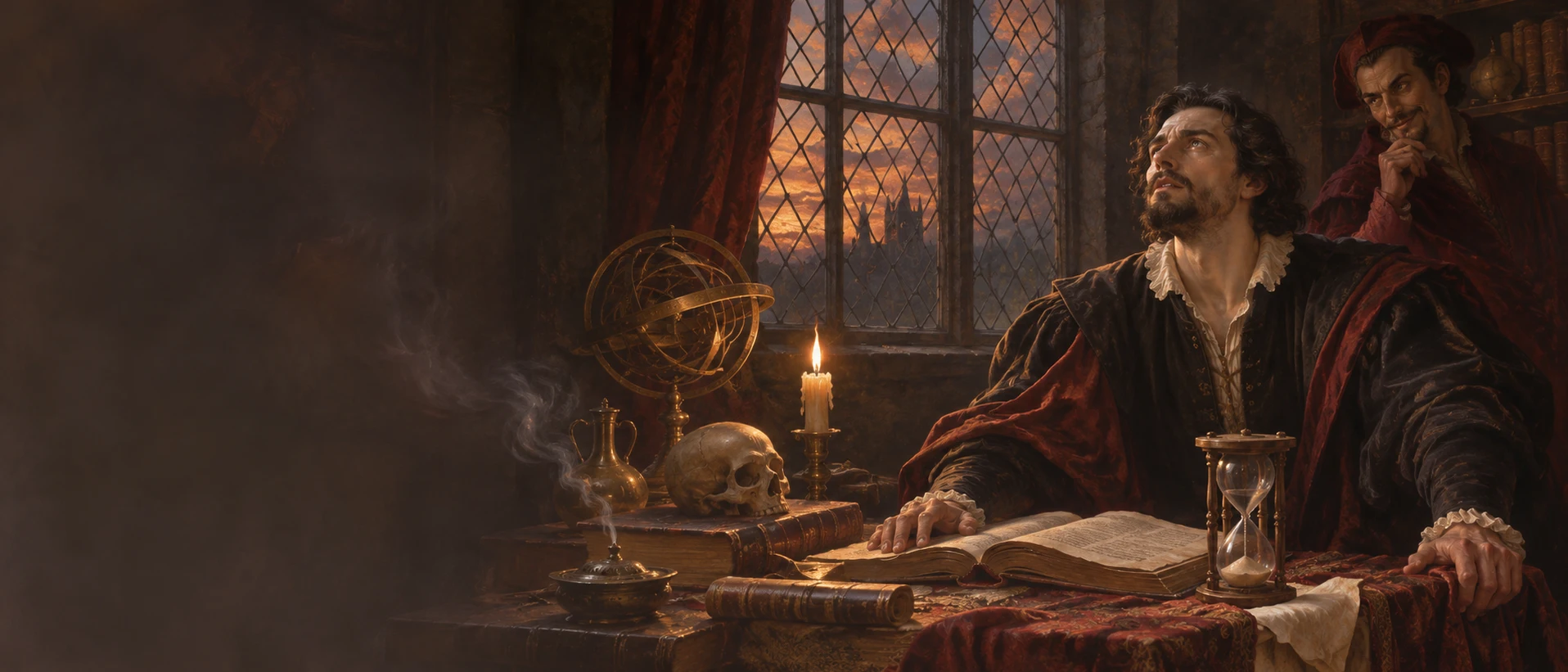
Take them in any order you like, but start with the scholar alone in his study, rejecting every subject in turn, in Doctor Faustus.
Questions readers ask
What are the most famous Faust books?
The two great classics are Christopher Marlowe’s play Doctor Faustus (c. 1592, printed 1604) and Goethe’s Faust (Part One 1808, Part Two 1832). Balzac’s The Magic Skin (1831) and Louisa May Alcott’s A Modern Mephistopheles (1877) are lesser-known variations on the same bargain.
Was Faust a real person?
Yes. Johann Georg Faust was a German itinerant alchemist, astrologer and magician who died around 1541. Legends about him were collected in a German chapbook of 1587, which Marlowe knew in English translation.
How long does Faustus get in Marlowe’s play?
Twenty-four years. Mephistopheles agrees to serve Faustus for twenty-four years, after which Lucifer will claim his body and soul.
What is a Faustian bargain?
A deal in which someone trades something of ultimate value, traditionally their soul, for knowledge, power or pleasure in this life. The phrase comes from the Faust legend.