
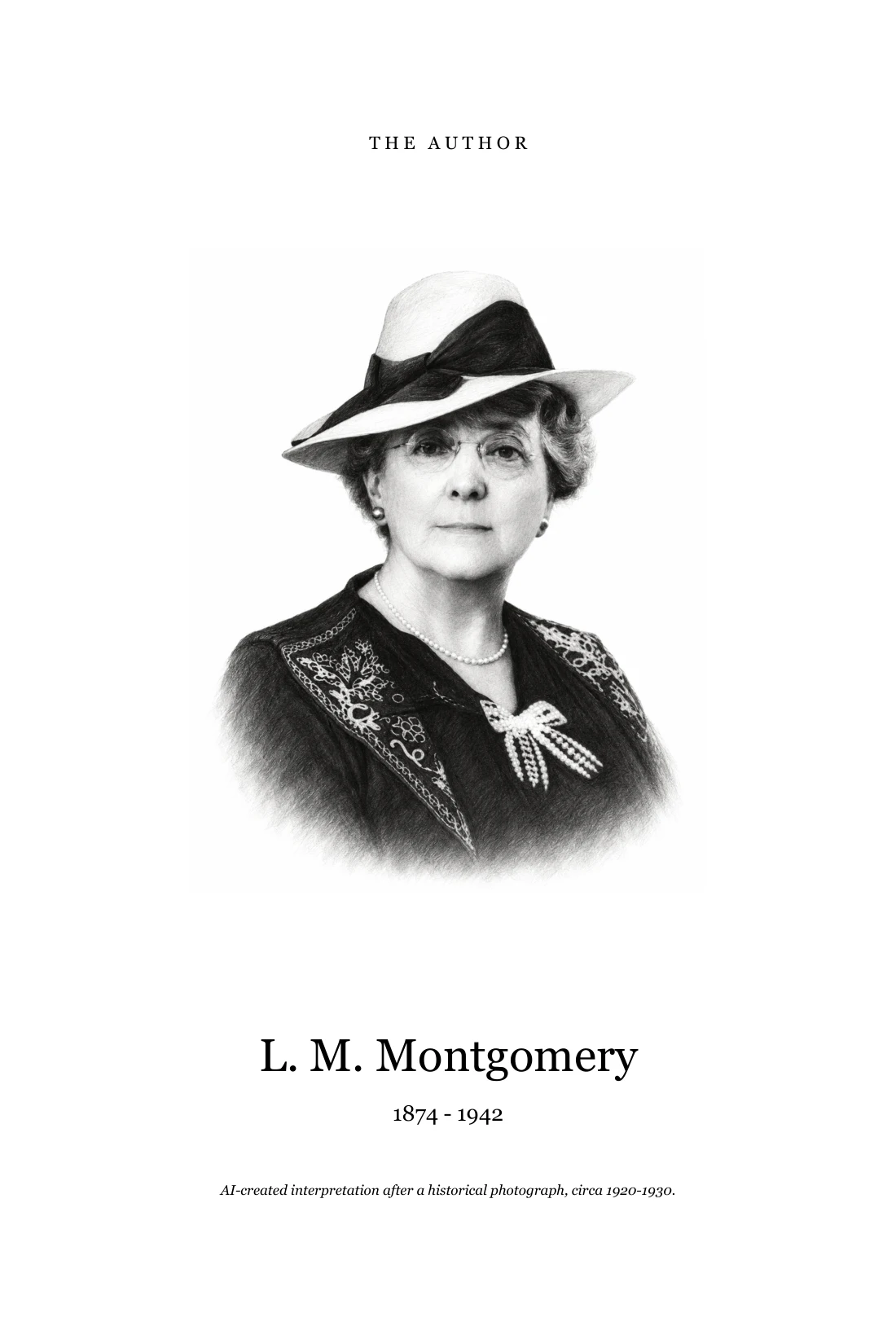
Around 1905 L. M. Montgomery, a young writer living with her grandmother in Cavendish, Prince Edward Island, finished a novel about a red-haired orphan girl. She sent it to publishers, and one after another they sent it back. Discouraged, she put the manuscript away in an old hatbox, meaning, by her own account, to cut it down one day to a short serial for a Sunday-school paper.
Some time later she came across it again, read it through, and decided it was better than she remembered. She sent it out once more, this time to L. C. Page & Company of Boston, who accepted it. Anne of Green Gables was published in 1908 and is said never to have been out of print since.
Anne of Green Gables history: from notebook to novel
Montgomery kept a notebook of ideas for stories, and one entry, she later said, described an elderly couple who apply to an orphanage for a boy and are sent a girl by mistake. She began with the idea of a short serial for a Sunday-school paper, the sort of piece she had been selling for years to make a living.
The girl had other plans. Anne Shirley talked her way off the page, and the short serial became a full novel. Montgomery drew on everything she knew: the red roads and orchards of Cavendish, the gossip of a small Presbyterian community, and her own childhood, which had its share of loneliness. Her mother died before she was two, and she was brought up by her grandparents, so a child who longs to belong was not a character she had to invent.

Why did publishers reject Anne of Green Gables?
Montgomery never recorded detailed reasons, and rejection letters of the time were rarely generous with explanations. It is easy to guess at some of them, though. The book is quiet, rural and made almost entirely of character; there is no villain, no great adventure and no romance to speak of until the very end. It would not have looked like an obvious commercial prospect.
Accounts differ on exactly how long the manuscript sat in the hatbox, from several months to a year or more. When Montgomery rediscovered it, she judged it worth one more try. Page accepted it, and the book’s success was quick: readers took to Anne at once, and Page soon wanted more.
That appetite shaped the rest of Montgomery’s career. She went on to write many more books about Anne, sometimes more willingly than others, as Anne grew up, went to college, married and raised a family of her own. We list them all in Did you know there are eight Anne of Green Gables books?
Anne of Green Gables
1908. Marilla and Matthew Cuthbert expect a boy from the orphanage and get Anne instead. The book that came out of the hatbox.
Anne of Avonlea
1909. Anne at sixteen, teaching in the Avonlea school. The first of the sequels her publisher was quick to ask for.
The Blue Castle
1926. Montgomery’s novel for adults, about a downtrodden woman of twenty-nine who decides to change her life. Many readers’ favourite after Anne.


What is Anne of Green Gables like to read today?
Funnier than people expect. Anne’s monologues, her disasters with hair dye and cordial, her feud with Gilbert Blythe and her solemn friendship with Diana are written with a sharp comic eye, and Marilla’s dry responses are half the pleasure. The book is sentimental in places, but it earns its tears honestly, and it is never as sugary as its reputation.
It suits confident readers from about nine or ten, and it is a wonderful read-aloud, with short chapters that each hold a complete episode. Adults rereading it often find that Marilla, who starts out stern and is slowly undone by love, is the real heart of the story.
The language is old-fashioned in places, with long words that Anne herself delights in, but children tend to enjoy the vocabulary rather than stumble over it. If your reader likes Anne, Montgomery’s other heroines are well worth meeting; see Beyond Anne: L. M. Montgomery’s other heroines. And Anne earns her place among the brave heroines in classic children’s books.

Where to begin
Start with the first book, read in order, and let Anne’s world widen as she grows. If you fall for her, Anne of Avonlea follows straight on. If you want Montgomery at her most grown-up, try The Blue Castle.
But first there is a girl in a too-tight dress waiting at a railway station in June, and an old man driving down the road to fetch a boy. Open Anne of Green Gables and be glad that a writer once took a manuscript back out of a hatbox.
Questions readers ask
Was Anne of Green Gables rejected by publishers?
Yes. L. M. Montgomery sent it to several publishers who turned it down, and she put it away in a hatbox. When she found it again she sent it to L. C. Page & Company of Boston, which published it in 1908.
What is the history of Anne of Green Gables?
Montgomery wrote it in the mid-1900s, starting from a note about a couple who adopt an orphan girl by mistake. After rejections and a spell in a hatbox, it was published in 1908 and became an immediate success. The Anne of Green Gables history is now part of the book’s legend on Prince Edward Island.
Is Anne of Green Gables based on a real person?
Not directly. Anne is invented, but Montgomery drew on her own childhood, raised by her grandparents in Cavendish, and on the places and people she knew there.
 Anne of the Island228 pages · $14.99
 The Story Girl246 pages · $15.99
 Rilla of Ingleside264 pages · $15.99
 Anne’s House of Dreams210 pages · $14.99