
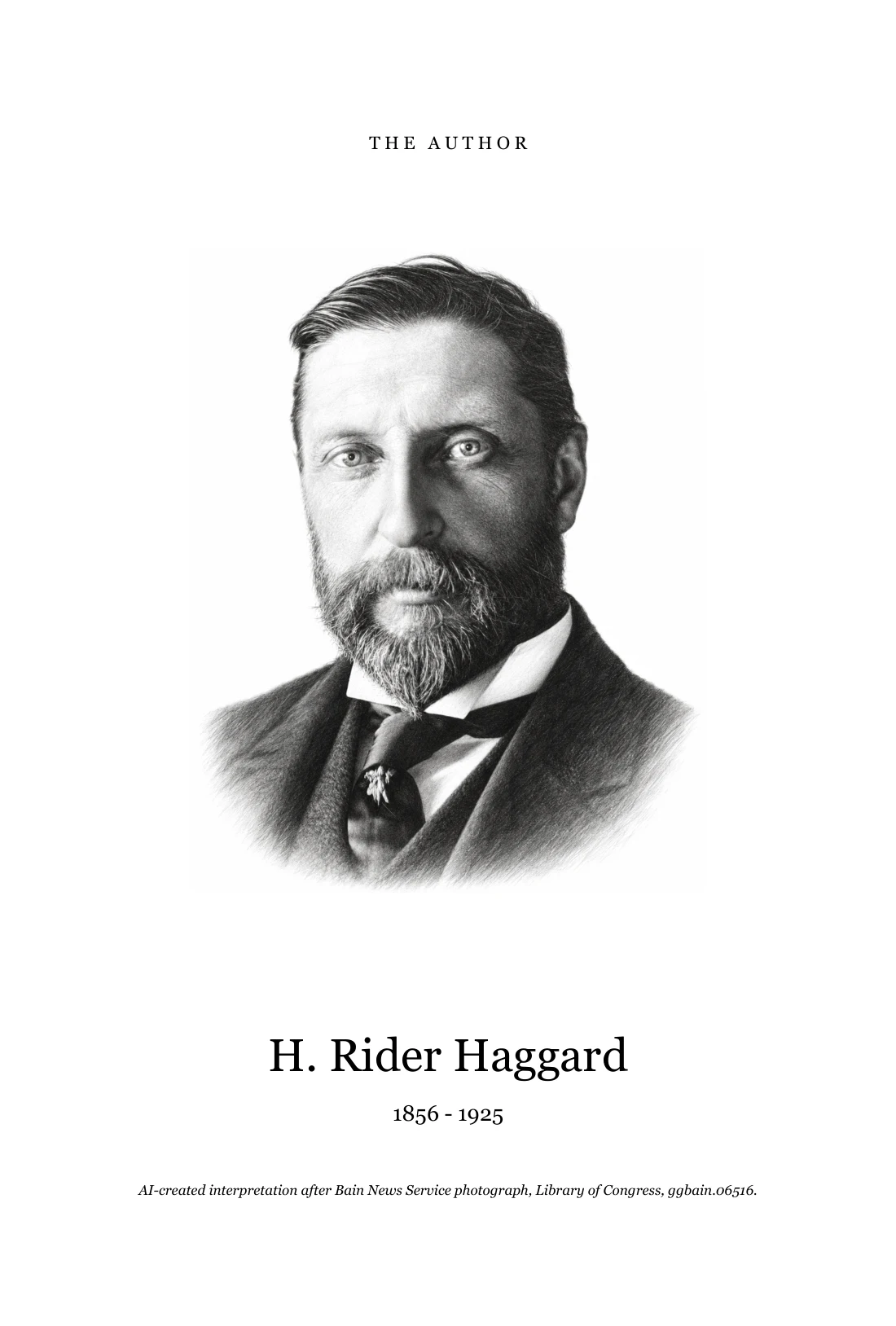
Fourteen books, and the hero dies in the second. Allan Quatermain narrates King Solomon’s Mines (1885), and at the close of its sequel, Allan Quatermain (1887), H. Rider Haggard lets him go: the final chapter is headed “By Another Hand”. That might have been the end. Instead, Haggard spent most of the next forty years writing about Allan’s earlier life, so that nearly every Quatermain book after 1887 is a prequel.
If you want the short answer: there are fourteen Allan Quatermain books, published between 1885 and 1927, the last two after Haggard’s death. Start with King Solomon’s Mines. After that, publication order works well, but the later books can be read in almost any order, because each one is an old man’s memory of a single adventure.
How many Allan Quatermain books are there?
Haggard wrote thirteen Quatermain novels and one collection, Allan’s Wife and Other Tales, along with a few stories that never made it into a book of their own. Here is how they appeared.
- 1885
King Solomon’s Mines: Allan leads Sir Henry Curtis and Captain Good in search of Sir Henry’s lost brother and a legendary treasure.
- 1887
Allan Quatermain: the three friends travel to a hidden African kingdom called Zu-Vendis.
- 1888–89
Maiwa’s Revenge and Allan’s Wife and Other Tales begin the backward look at Allan’s past.
- 1912–13
Marie and Child of Storm, both rooted in the turbulent history of the Boers and the Zulu kingdom.
- 1915
Allan and the Holy Flower.
- 1916
The Ivory Child introduces Lord Ragnall and the visions of the herb taduki.
- 1917
Finished, which completes the Zulu trilogy begun with Marie.
- 1920
The Ancient Allan: Allan relives a past life in ancient Egypt.
- 1921
She and Allan, in which Allan meets Haggard’s immortal queen Ayesha.
- 1924
Heu-Heu, or The Monster.
- 1926–27
The Treasure of the Lake and Allan and the Ice-Gods, published after Haggard’s death in 1925.

The Allan Quatermain books in order
Our shelf holds four of them. Read the first two in order, since the second follows on directly, then the two later novels, which belong together as a pair.
- $14.99
King Solomon's Mines
1885. A treasure map, a desert crossing, the mountains called Sheba’s Breasts and a kingdom at war. Allan, fifty-five and freely admitting he is “a timid man”, becomes a hero anyway.
- $15.99
Allan Quatermain
1887. Grief sends Allan back to Africa with Curtis and Good, and with the Zulu warrior Umslopogaas and his great axe. Darker, more romantic and more elegiac than the first book.
- $16.99
The Ivory Child
1916. An English lord, a kidnapping and two mysterious priests drag Allan towards a land where a monstrous elephant called Jana is worshipped as a god. Pulp adventure in Haggard’s late, confident style.
- $14.99
The Ancient Allan
1920. Allan and Lady Ragnall breathe the smoke of taduki and wake as other people in Persian-ruled Egypt. Haggard’s Quatermain meets his lifelong fascination with Egypt.


Publication order or the order of Allan’s life?
Both work, which is part of the series’ charm. Read by publication, you meet Allan as a weathered veteran and then watch Haggard sketch in the young trader, husband and hunter he used to be. Read by Allan’s own chronology, the series begins in the distant past with Allan and the Ice-Gods and The Ancient Allan (both framed as visions), moves through Marie in the 1830s and on through the Zulu books, and ends with King Solomon’s Mines and Allan Quatermain in the 1880s.
For a first reading, publication order is kinder. King Solomon’s Mines explains who Allan is and why anyone would follow him into a desert, and the later books assume you already like him.

Why does the second book begin in mourning?
Allan Quatermain opens with a bereaved father, and it is one of the most surprising first pages in Victorian adventure fiction.
“I have just buried my boy, my poor handsome boy of whom I was so proud, and my heart is broken.”
H. Rider Haggard, Allan Quatermain (1887)
Haggard dedicated the novel to his own son, Arthur John, in the hope that the boy and “many other boys whom I shall never know” might find something in Allan and his companions to live up to. Four years later that son died of measles at the age of ten. Readers who know this find it hard to read the opening without a shiver.
The Ivory Child and The Ancient Allan
These two late novels show how far Haggard was willing to stretch his hunter. The Ivory Child opens in England, with Allan giving a shooting lesson on Lord Ragnall’s estate, and he is soon caught up with two priests, Harût and Marût, who have come from Africa for reasons of their own. The book also introduces taduki, a herb whose smoke brings visions.
In The Ancient Allan that herb opens the past. Allan and Lady Ragnall find themselves living other lives in Egypt under Persian rule, centuries before Christ. Along with Allan and the Ice-Gods, it is the only Quatermain book not set in nineteenth-century Africa, and it reads like a bridge between Haggard’s two great loves, the African romance and the Egyptian one.
A note on period attitudes
These are imperial adventures written from inside the British Empire, and they share its assumptions. Haggard spent years in southern Africa, took Zulu history seriously and gave characters like Umslopogaas real stature, but his books also use the racial language and hierarchies of his time. Readers should expect both.
Where next?
For the story of how King Solomon’s Mines came to be written, see Was King Solomon’s Mines really written on a bet?. Allan’s meeting with Ayesha makes more sense once you know her own books, covered in She and Ayesha, and Lost world novels gathers the books that followed in Haggard’s footsteps.
But the hunter has to be met at the beginning, at fifty-five, pen in hand and a little embarrassed to be writing a book at all. Open King Solomon’s Mines and let him tell it his way.
Questions readers ask
How many Allan Quatermain books are there?
H. Rider Haggard wrote fourteen: thirteen novels and one collection, Allan’s Wife and Other Tales, published between 1885 and 1927. The last two appeared after his death.
What order should I read the Allan Quatermain books in?
Start with King Solomon’s Mines (1885) and Allan Quatermain (1887), then read the rest in publication order or in the order of Allan’s life. Most later books are prequels and stand alone.
Does Allan Quatermain die?
Yes, at the end of Allan Quatermain (1887), the second book. Almost all the later novels are set earlier in his life, told as his memories.
Who was Allan Quatermain based on?
He is often linked to the hunter Frederick Selous, but according to Haggard’s diary he told Theodore Roosevelt that he had created Allan before he knew Selous.
 She284 pages · $16.99
 Eric Brighteyes292 pages · $16.99
 The People of the Mist388 pages · $19.99
 Nada the Lily300 pages · $16.99