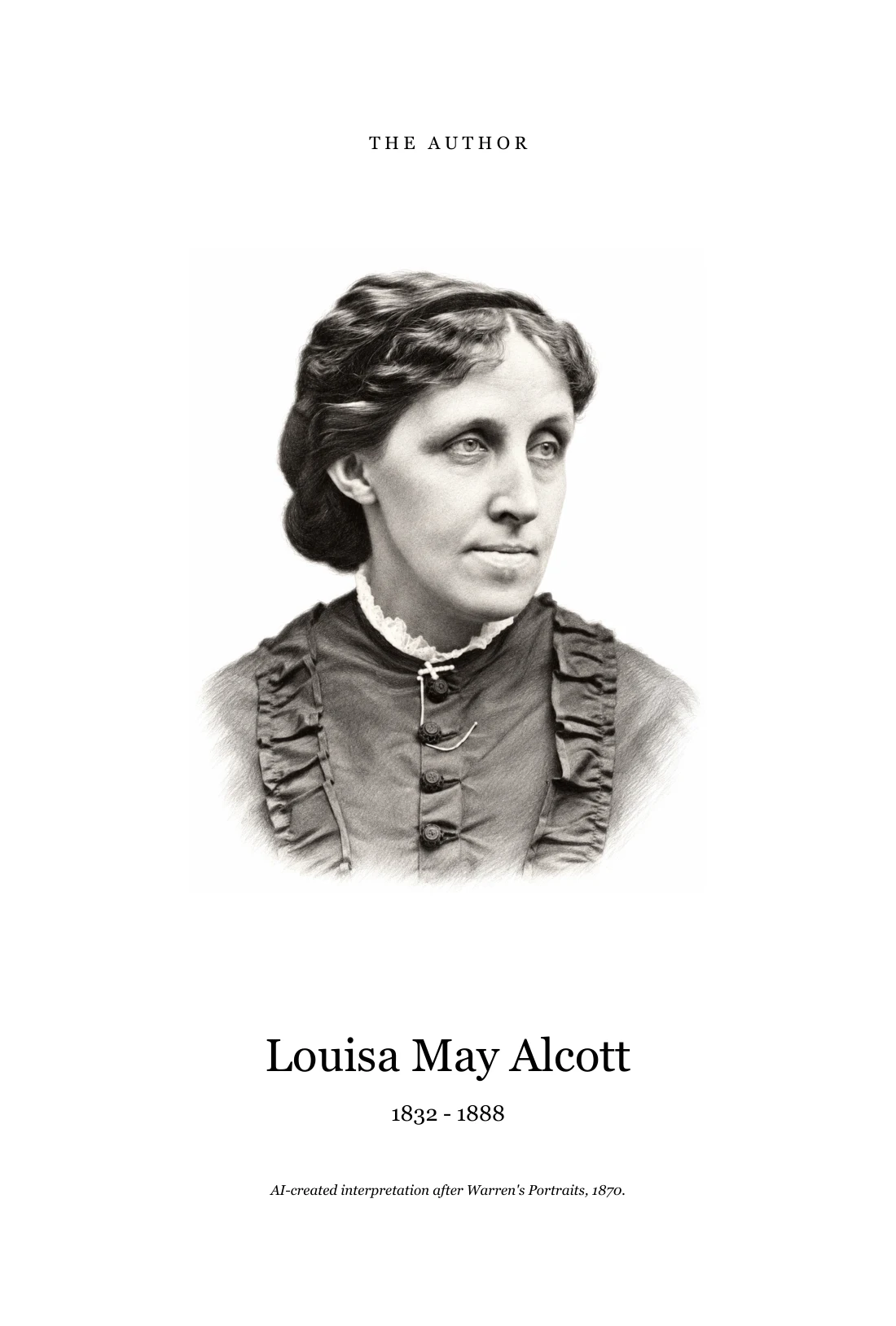
Readers wanted only one thing from Louisa May Alcott. The first part of Little Women was selling fast, her publisher had asked for a second, and on 1 November 1868 she began writing it and made a note in her journal.
Girls write to ask who the little women marry, as if that was the only end and aim of a woman’s life. I won’t marry Jo to Laurie to please any one.
Louisa May Alcott, journal, November 1868
She kept her word, and readers have been arguing about it ever since. The Little Women adaptations are, in a sense, a long-running reply to that journal entry. Each film has to decide how much of Alcott’s two-part novel to tell, whose story it really is, and what to do with an ending its own author half resented.
Every English-language Little Women film in order
- 1917
A British silent, directed by Alexander Butler with Ruby Miller as Jo, the first film of the novel. It is now lost.
- 1918
An American silent from Paramount, directed by Harley Knoles with Dorothy Bernard as Jo. Also lost.
- 1933
George Cukor’s RKO film with Katharine Hepburn as Jo, the first with sound. It won the Oscar for its screenplay.
- 1949
Mervyn LeRoy’s Technicolor version for MGM, with June Allyson, Elizabeth Taylor, Margaret O’Brien and Janet Leigh.
- 1994
Gillian Armstrong’s film with Winona Ryder, Susan Sarandon as Marmee and Christian Bale as Laurie.
- 2018
A modern retelling directed by Clare Niederpruem, made for the novel’s 150th anniversary.
- 2019
Greta Gerwig’s version with Saoirse Ronan, Florence Pugh, Emma Watson, Eliza Scanlen and Timothée Chalamet.
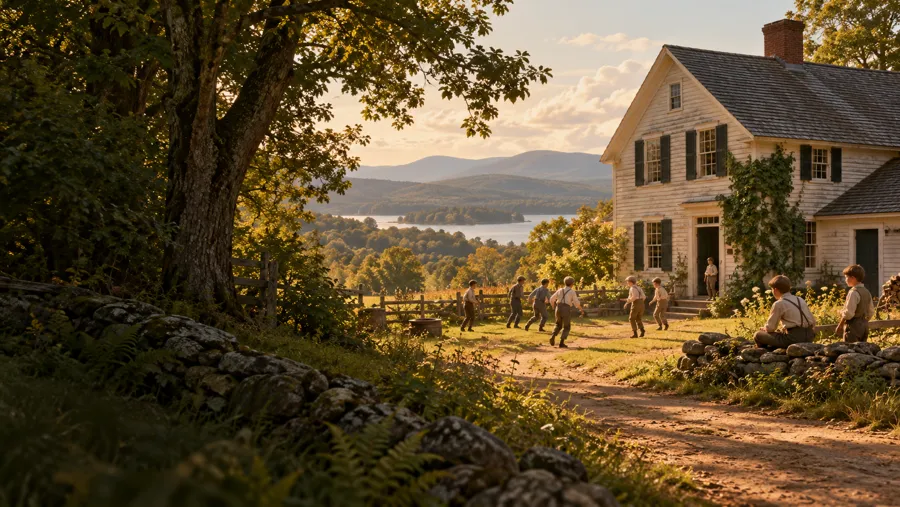
1933: Katharine Hepburn’s Jo
Cukor’s film was the third screen version and the first that audiences could hear. It is faithful in spirit and in look: the set decorator modelled the March family’s home on Orchard House, Alcott’s own house in Concord. The screenplay by Sarah Y. Mason and Victor Heerman won the Academy Award for adaptation, and the film was also nominated for Best Picture and Best Director. The 1949 remake would share the same two screenwriters, joined by Andrew Solt.
Like most later versions, it compresses Alcott’s second part heavily. The novel is really two books, the girls’ year of growing up and then the years that follow, and the films tend to race through the second.
1949: the film that swapped the sisters’ ages
MGM’s colour remake shared its screenwriters with the 1933 film but made one striking change. In the novel the order is Meg, Jo, Beth and then Amy, the youngest. Here Beth, played by the child star Margaret O’Brien, appears several years younger than Amy, played by Elizabeth Taylor. The film won an Oscar for its colour art direction, and it looks every bit the MGM prestige picture.
1994: two Amys and a modern Marmee
Gillian Armstrong’s film, from a screenplay by Robin Swicord, solved the age problem the obvious way: Amy is played by Kirsten Dunst as a girl and by Samantha Mathis as a young woman. It is often remembered for Susan Sarandon’s forthright Marmee, and it earned Winona Ryder a Best Actress nomination, along with nominations for its costumes and score.
2019: Greta Gerwig rearranges the book
Gerwig’s change is structural. Her film opens in 1868 with the sisters already grown, Jo selling stories in New York and Amy in Paris, and cuts back and forth to their childhood seven years earlier. The effect is to set the two halves of the novel side by side rather than one after the other, so that the sweetness of the first is always shadowed by what comes next.
Her other change is to the ending. Gerwig blends Jo with Alcott herself, so the film closes with Jo bargaining with a publisher over copyright and royalties, and leaves it open how much of the romance that follows is Jo’s own fiction. It is a direct answer to that 1868 journal entry. The film received six Academy Award nominations, including Best Picture, Best Actress for Ronan and Best Supporting Actress for Pugh, and won for its costume design.
Which Little Women movie is most faithful to the book?
For the story, 1933 and 1994 arguably stay closest to Alcott’s sequence of events, and 1994 covers more of the second part. For the spirit of Alcott’s own ambitions, 2019 is the most daring. All of them cut and compress, and the quieter chapters of the second part are usually the first to go. Television has had more room, notably the 1978 American miniseries and the BBC’s three-part version of 2017, adapted by Heidi Thomas.
Little Women
1868–69. Both parts of the novel: a year of growing up in Civil War Massachusetts, then the marriages, losses and ambitions that follow. Much more than any film can hold.
Little Men
1871. Jo and Professor Bhaer’s school for boys at Plumfield. The first sequel, which has had screen versions of its own.
Jo’s Boys
1886. The last March family novel, catching up with Jo’s boys as young men.


For what happens after the films stop, read the Little Women sequels, and for how the book came to be written at all, why Alcott didn’t want to write Little Women. There is much more of Louisa May Alcott to discover beyond Orchard House.
But read the novel first, before deciding whose Jo is yours. Little Women is long, and it is generous, and its last chapters say things no film has quite dared to.
Questions readers ask
How many Little Women movies are there?
There have been seven English-language feature films: 1917, 1918, 1933, 1949, 1994, 2018 and 2019. The two silent films are lost. Mexico also made a loose Spanish-language film version, Mujercitas, in the 1970s. There have also been several television versions, including a 1978 miniseries and the BBC’s 2017 series.
Which Little Women movie is most faithful to the book?
The 1933 and 1994 films follow Alcott’s sequence of events most closely. Greta Gerwig’s 2019 film keeps most of the story but tells it out of order and reshapes the ending around Alcott’s own life.
Who played Jo in Little Women?
In the English-language films Jo has been played by Ruby Miller (1917), Dorothy Bernard (1918), Katharine Hepburn (1933), June Allyson (1949), Winona Ryder (1994), Sarah Davenport (2018) and Saoirse Ronan (2019).
Does Jo marry Laurie in the book?
No. Alcott deliberately refused to pair them, writing in her journal in 1868 that she would not marry Jo to Laurie to please anyone. Laurie marries Amy, and Jo marries Professor Bhaer.
 An Old-Fashioned Girl266 pages · $15.99
 Under the Lilacs214 pages · $14.99
 Jack and Jill242 pages · $15.99
 Eight Cousins204 pages · $14.99