An early twentieth century Cambridge college courtyard
PIPCUB CINEMATIC EDITIONS / PAPERBACK BOOKS

The Problems of Philosophy

Bertrand Russell

Beginning with ordinary experience, Russell asks how perception, knowledge, and reality are related.

$11.99

Printed for you. Shipping calculated at checkout.

Checkout opening soon. Shipping & delivery Returns

The Problems of Philosophy — actual Pipcub paperback cover
SCROLL INTO THE STORYAN IMAGINED WORLD · ORIGINAL AI ART
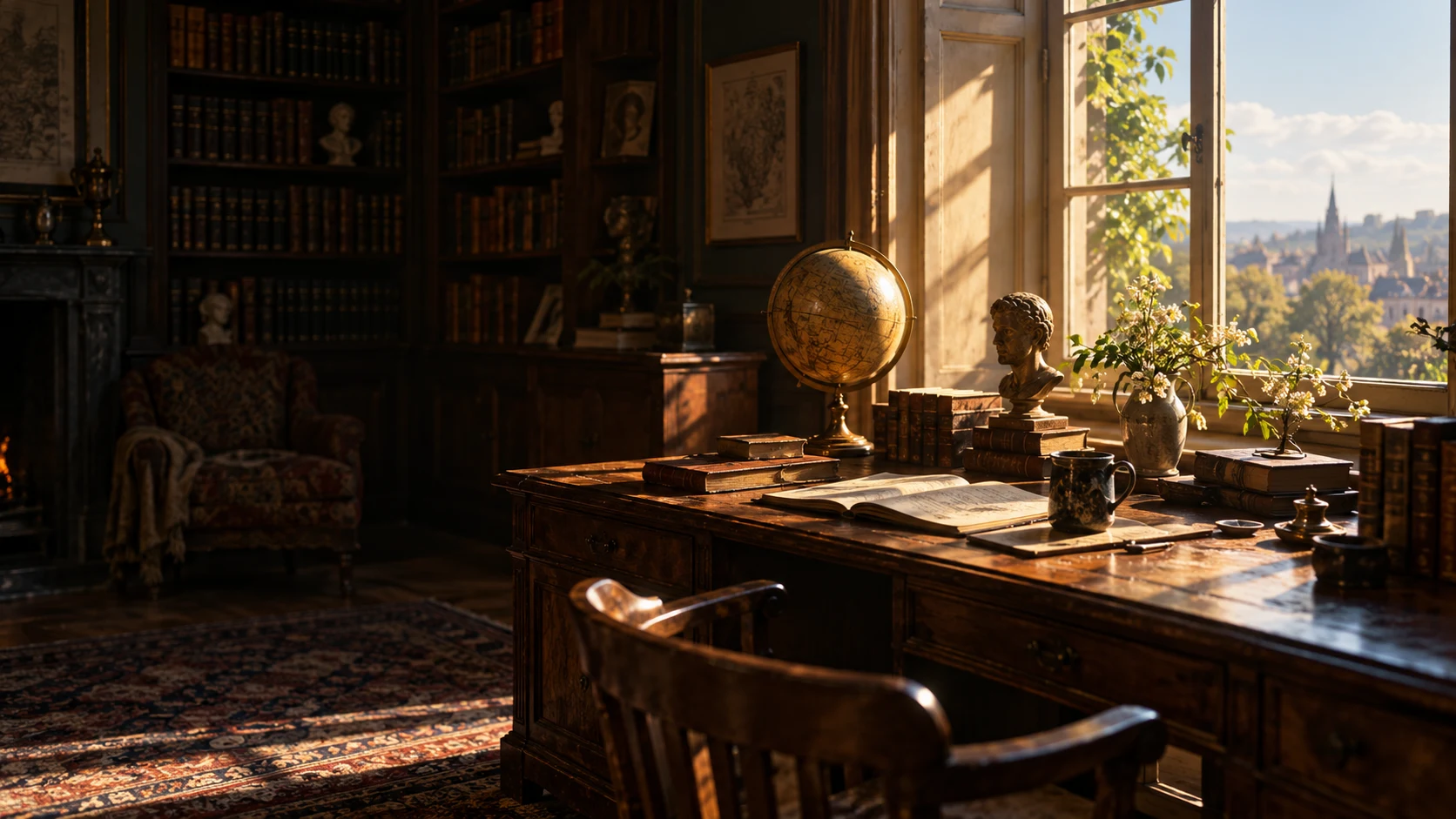
A quiet philosopher's study with desk and sunlit window

THE STORY

What can we know about the world before us?

Beginning with ordinary experience, Russell asks how perception, knowledge, and reality are related.

A reflective garden pond with geometric stone paths

THE WORLD OF THE BOOK

Look again at the familiar.

His clear introductory inquiry moves from a table’s appearance to some of philosophy’s most enduring problems. The book invites the reader to examine familiar certainties with patience, curiosity, and a willingness to question.

The Problems of Philosophy front cover
Read the interior preview

LOOK INSIDE

Open a book.
Enter a world.

Preview six pages from this edition. Select a page to enlarge it, or use the arrows to keep reading.

Spread 1 of 3
The Problems of Philosophy · PDF page 6
Actual interior PDF page 6 of The Problems of Philosophy
Read accessible text

4 sound. Any one else who sees and feels and hears the table will agree with this description, so that it might seem as if no difficulty would arise; but as soon as we try to be more precise our troubles begin. Although I believe that the table is 'really' of the same colour all over, the parts that reflect the light look much brighter than the other parts, and some parts look white because of reflected light. I know that, if I move, the parts that reflect the light will be different, so that the apparent distribution of colours on the table will change. It follows that if several people are looking at the table at the same moment, no two of them will see exactly the same distribution of colours, because no two can see it from exactly the same point of view, and any change in the point of view makes some change in the way the light is reflected. For most practical purposes these differences are unimportant, but to the painter they are all-important: the painter has to unlearn the habit of thinking that things seem to have the colour which common sense says they 'really' have, and to learn the habit of seeing things as they appear. Here we have already the beginning of one of the distinctions that cause most trouble in philosophy—the distinction between 'appearance' and 'reality', between what things seem to be and what they are. The painter wants to know what things seem to be, the practical man and the philosopher want to know what they are; but the philosopher's wish to know this is stronger than the practical man's, and is more troubled by knowledge as to the difficulties of answering the question. To return to the table. It is evident from what we have found, that there is no colour which pre-eminently appears to be the colour of the table, or even of any one particular part of the table—it appears to be of different colours from different points of view, and there is no reason for regarding some of these as more really its colour than others. And we know that even from a given point of view the colour will seem different by artificial light, or to a colour-blind man, or to a man wearing blue spectacles, while in the dark there will be no colour at all, though to touch and hearing the table will be unchanged. This colour is not something which is inherent in the table, but something depending upon the table and the spectator and the way the light falls on the table. When, in ordinary life, we speak of the colour of the table, we only mean the sort of colour which it

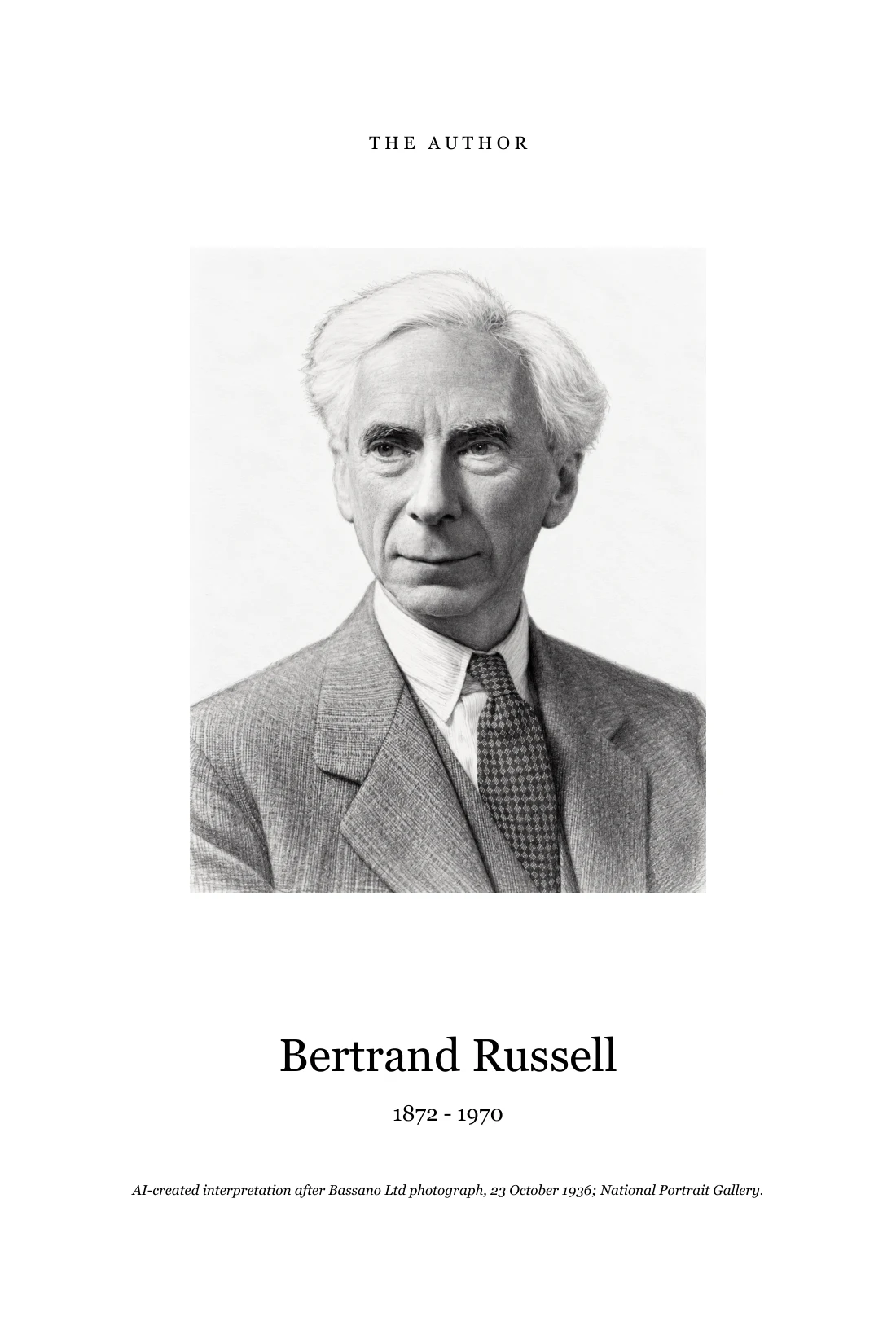
Bertrand Russell portrait page from this edition

ABOUT THE AUTHOR

Bertrand Russell

Bertrand Russell was a British philosopher, mathematician and public writer, born in 1872. His work in logic helped shape modern analytic philosophy. Alongside technical investigations, he wrote for general readers about knowledge, education, society and the responsibilities of human beings toward one another.

More about the author ↗

Discover the author behind the story. This portrait and biography are included in your edition.

FREE TO READ

Take it with you.

The Problems of Philosophy is in the public domain, so its words belong to everyone. Download our edition free. No account needed.

Read it in your browser ↗
Add it to your reading app
iPhone & iPad
Tap download, then open the file from Safari’s downloads, tap Share and choose Books. It stays in your Apple Books library.
Android
Tap download, open the file and choose Google Play Books. Or, in Play Books, go to Library, tap ⋮ and choose Upload files.
Kindle
Send the file to your Kindle library with Amazon’s Send to Kindle.
Kobo, Moon+ Reader and other apps
Open the downloaded file with the app, or use the app’s import option.

KEEP BROWSING

More from the library.

The Princess of Cleves cover

The Princess of Cleves

Madame de La Fayette

The Prisoner of Zenda cover

The Prisoner of Zenda

Anthony Hope

The problem of Cell 13 cover

The problem of Cell 13

Jacques Futrelle

The Prodigal Village: A Christmas Tale cover

The Prodigal Village: A Christmas Tale

Irving Bacheller

The Professor cover

The Professor

Charlotte Brontë

The Professor's House cover

The Professor's House

Willa Cather

Browse the complete library ↗
YOUR NEXT CHAPTER

Your book bag 0

A little escape. A story to keep.

Loading your book bag…