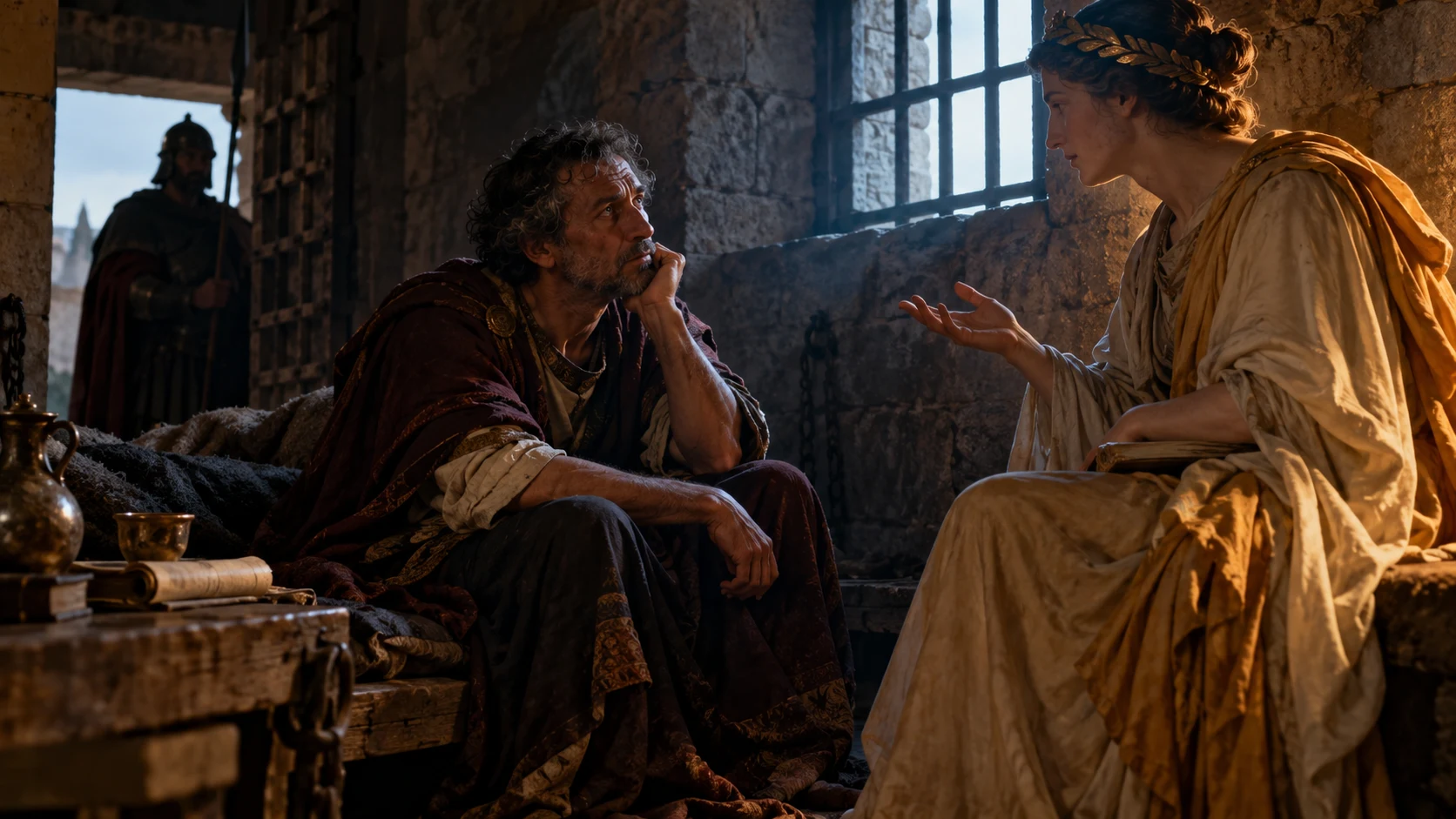
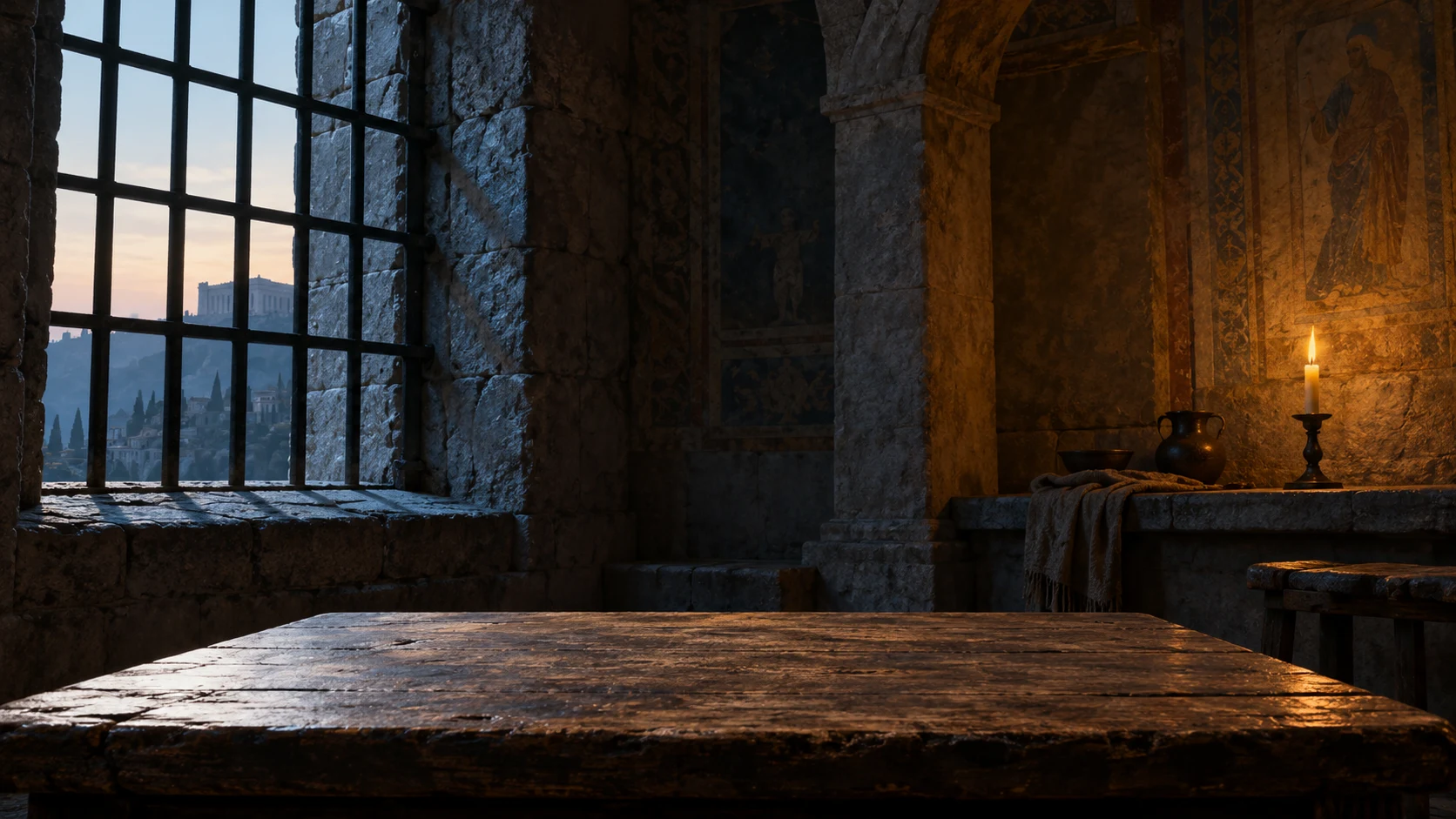
A seated prisoner turns toward a standing woman beneath a barred window.
PIPCUB CINEMATIC EDITIONS / PAPERBACK BOOKS

The Consolation of Philosophy

Boethius

Imprisoned and facing the collapse of his worldly position, Boethius encounters Philosophy in the form of a wise visitor.

$12.99

Printed for you. Shipping calculated at checkout.

Checkout opening soon. Shipping & delivery Returns
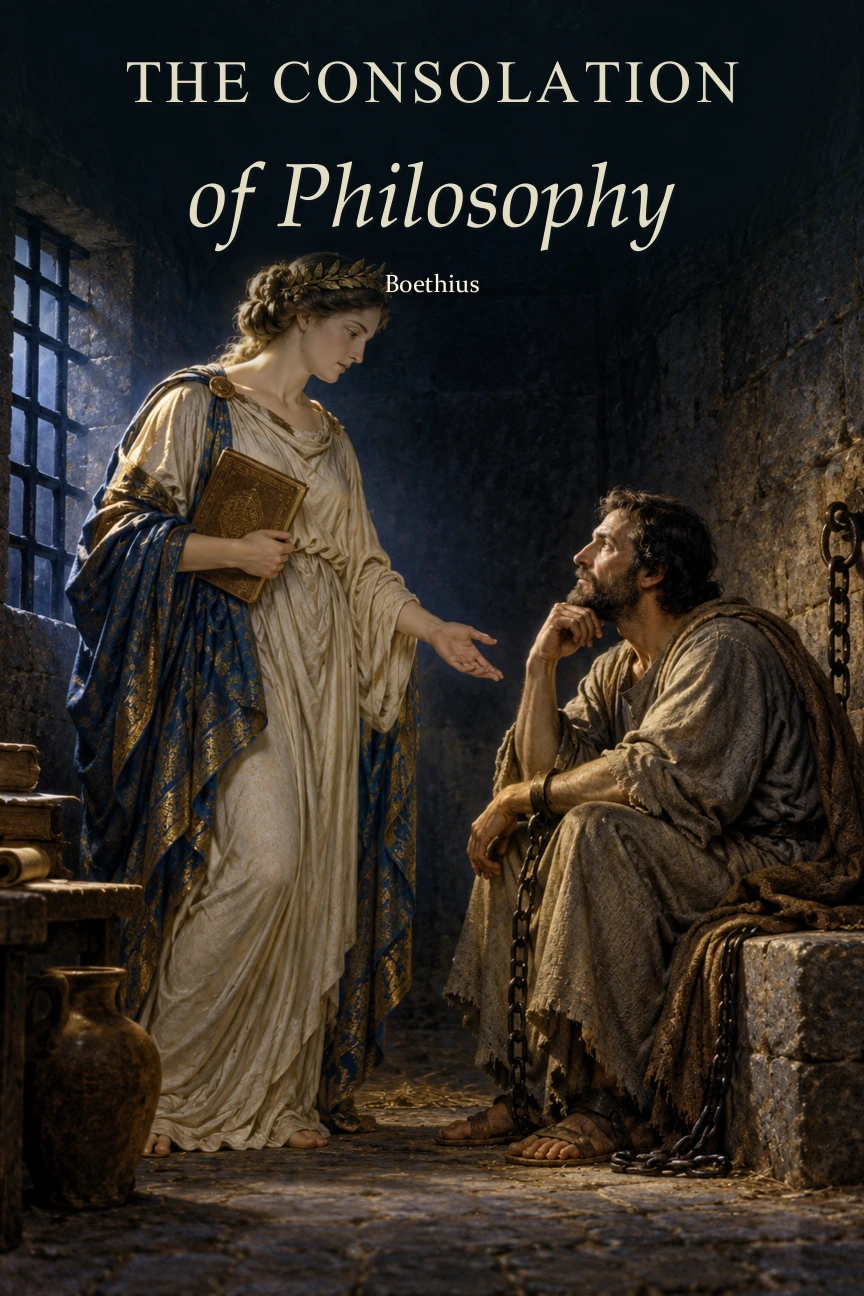
The Consolation of Philosophy — actual Pipcub paperback cover
SCROLL INTO THE STORYAN IMAGINED WORLD · ORIGINAL AI ART
A woman in pale robes speaks with a seated man while a guard waits at the cell door.

THE STORY

What remains when fortune turns away?

Imprisoned and facing the collapse of his worldly position, Boethius encounters Philosophy in the form of a wise visitor.
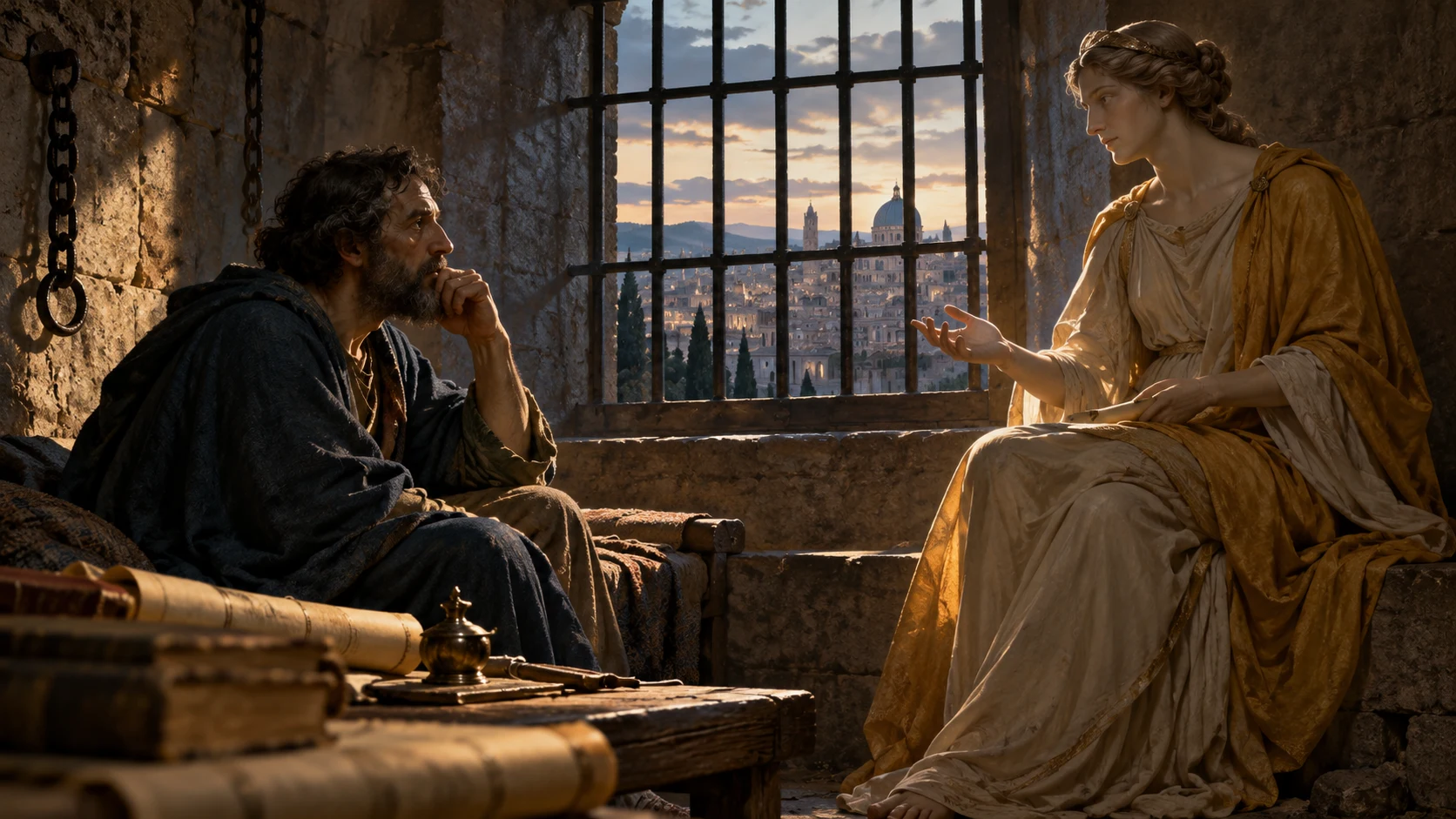
Rolled manuscripts lie in the foreground as the visitor gestures to the prisoner.

THE WORLD OF THE BOOK

The Consolation of Philosophy

Their dialogue moves through fortune, happiness, providence, and freedom. Prose and verse combine in a work that has offered readers intellectual companionship across centuries.
The Consolation of Philosophy front cover
Read the interior preview

LOOK INSIDE

Open a book.
Enter a world.

Preview six pages from this edition. Select a page to enlarge it, or use the arrows to keep reading.

Spread 1 of 3
The Consolation of Philosophy · PDF page 6
Actual interior PDF page 6 of The Consolation of Philosophy
Read accessible text

4 PROEM. Anicus Manlius Severinus Boethius lived in the last quarter of the fifth century A.D., and the first quarter of the sixth. He was growing to manhood, when Theodoric, the famous Ostrogoth, crossed the Alps and made himself master of Italy. Boethius belonged to an ancient family, which boasted a connection with the legendary glories of the Republic, and was still among the foremost in wealth and dignity in the days of Rome's abasement. His parents dying early, he was brought up by Symmachus, whom the age agreed to regard as of almost saintly character, and afterwards became his son-in-law. His varied gifts, aided by an excellent education, won for him the reputation of the most accomplished man of his time. He was orator, poet, musician, philosopher. It is his peculiar distinction to have handed on to the Middle Ages the tradition of Greek philosophy by his Latin translations of the works of Aristotle. Called early to a public career, the highest honours of the State came to him unsought. He was sole Consul in 510 A.D., and was ultimately raised by Theodoric to the dignity of Magister Officiorum, or head of the whole civil administration. He was no less happy in his domestic life, in the virtues of his wife, Rusticiana, and the fair promise of his two sons, Symmachus and Boethius; happy also in the society of a refined circle of friends. Noble, wealthy, accomplished, universally esteemed for his virtues, high in the favour of the Gothic King, he appeared to all men a signal example of the union of merit and good fortune. His felicity seemed to culminate in the year 522 A.D., when, by special and extraordinary favour, his two sons, young as they were for so exalted an honour, were created joint Consuls and rode to the senate-house attended by a throng of senators, and the acclamations of the multitude. Boethius himself, amid the general applause, delivered the public speech in the King's honour usual on such occasions. Within a year he was a solitary prisoner at Pavia, stripped of honours, wealth, and friends, with death hanging over him, and a terror worse than death, in the fear lest those dearest to him should be involved in the worst results of his downfall. It is in this situation that the opening of the 'Consolation of Philosophy' brings Boethius before us. He represents himself as seated in his

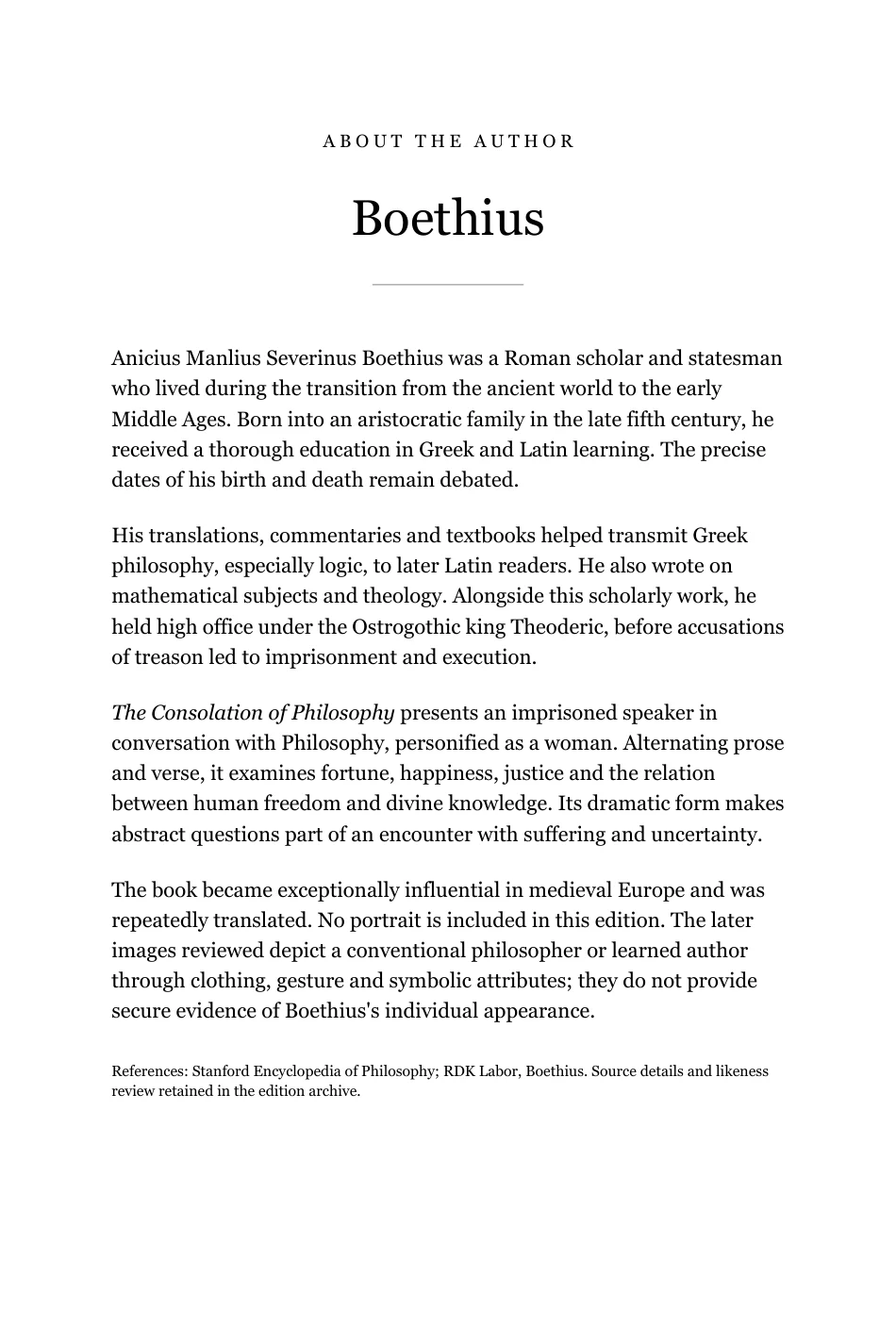
Author biography page from this edition · Boethius

ABOUT THE AUTHOR

Boethius

Anicius Manlius Severinus Boethius was a Roman scholar and statesman who lived during the transition from the ancient world to the early Middle Ages. Born into an aristocratic family in the late fifth century, he received a thorough education in Greek and Latin learning. The precise dates of his birth and death remain debated.

More about the author ↗

Author biography page from this edition

FREE TO READ

Take it with you.

The Consolation of Philosophy is in the public domain, so its words belong to everyone. Download our edition free. No account needed.

Read it in your browser ↗
Add it to your reading app
iPhone & iPad
Tap download, then open the file from Safari’s downloads, tap Share and choose Books. It stays in your Apple Books library.
Android
Tap download, open the file and choose Google Play Books. Or, in Play Books, go to Library, tap ⋮ and choose Upload files.
Kindle
Send the file to your Kindle library with Amazon’s Send to Kindle.
Kobo, Moon+ Reader and other apps
Open the downloaded file with the app, or use the app’s import option.

KEEP BROWSING

More from the library.

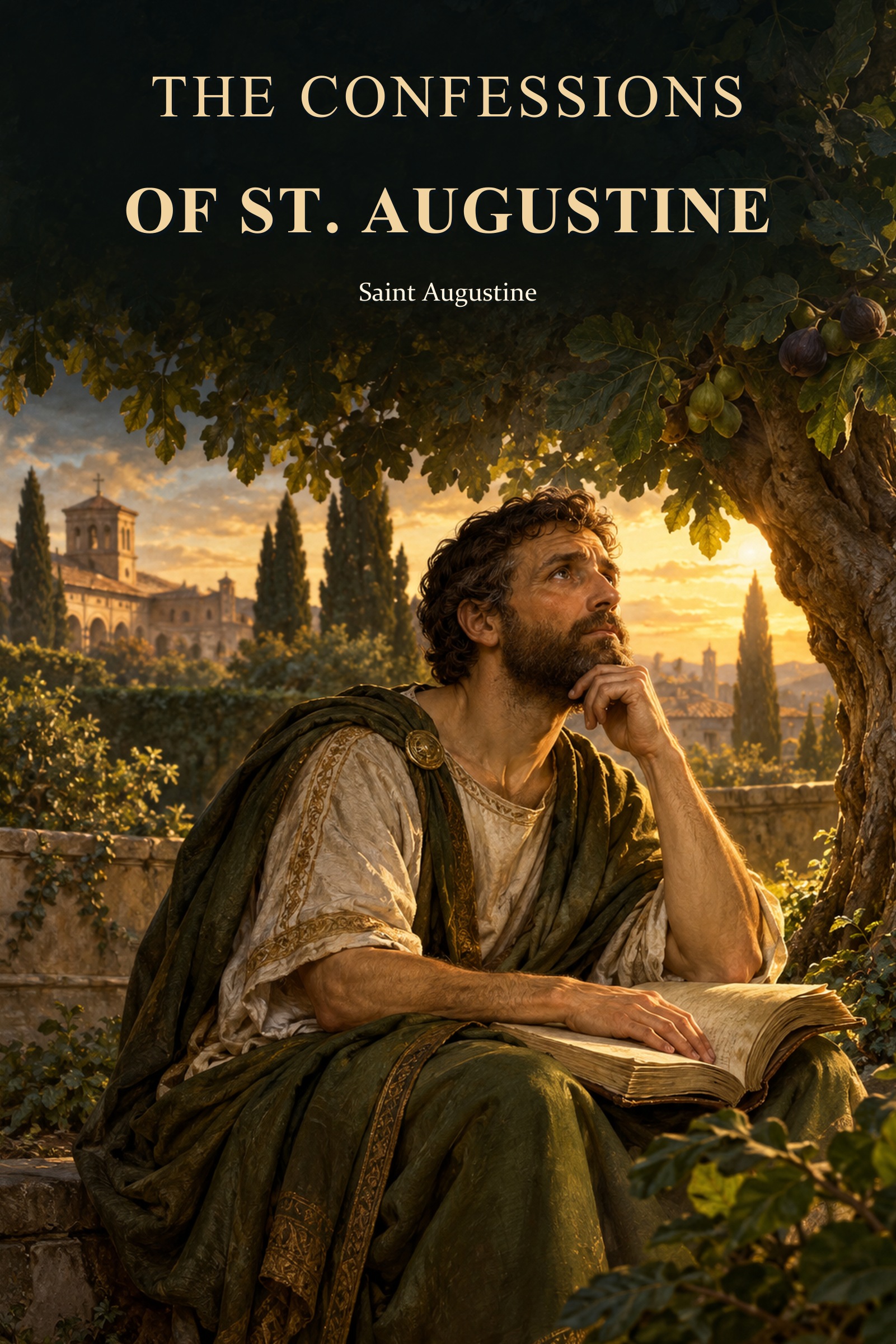
The Confessions of St. Augustine cover

The Confessions of St. Augustine

Saint Augustine

The Conjure Woman cover

The Conjure Woman

Charles W. Chesnutt

The Conquest of Happiness cover

The Conquest of Happiness

Bertrand Russell

The Copper House cover

The Copper House

Julius Regis

The Coral Island cover

The Coral Island

R. M. Ballantyne

The Corbin Necklace cover

The Corbin Necklace

Henry Kitchell Webster

Browse the complete library ↗
YOUR NEXT CHAPTER

Your book bag 0

A little escape. A story to keep.

Loading your book bag…