The biggest differences between the Wizard of Oz book and movie are these: in L. Frank Baum’s 1900 novel, Dorothy’s shoes are silver, Oz is a real place rather than a dream, there are two good witches instead of one, and the story keeps going after the Wizard leaves. The 1939 film, directed by Victor Fleming and starring Judy Garland, kept the shape of the journey and changed much of what happens along it.
Neither version is the “right” one. But if you only know the film, the book will surprise you: it is shorter, odder and, in places, a good deal more violent.
Wizard of Oz book vs. movie: the big differences
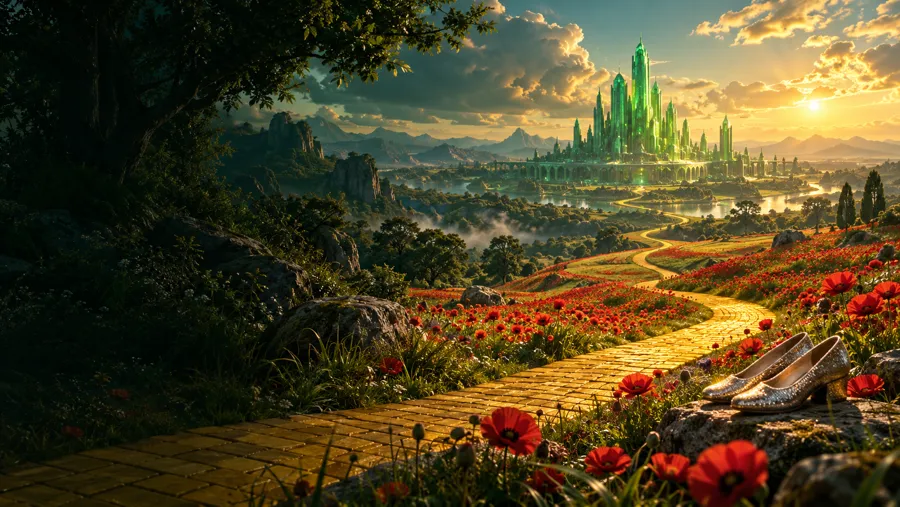
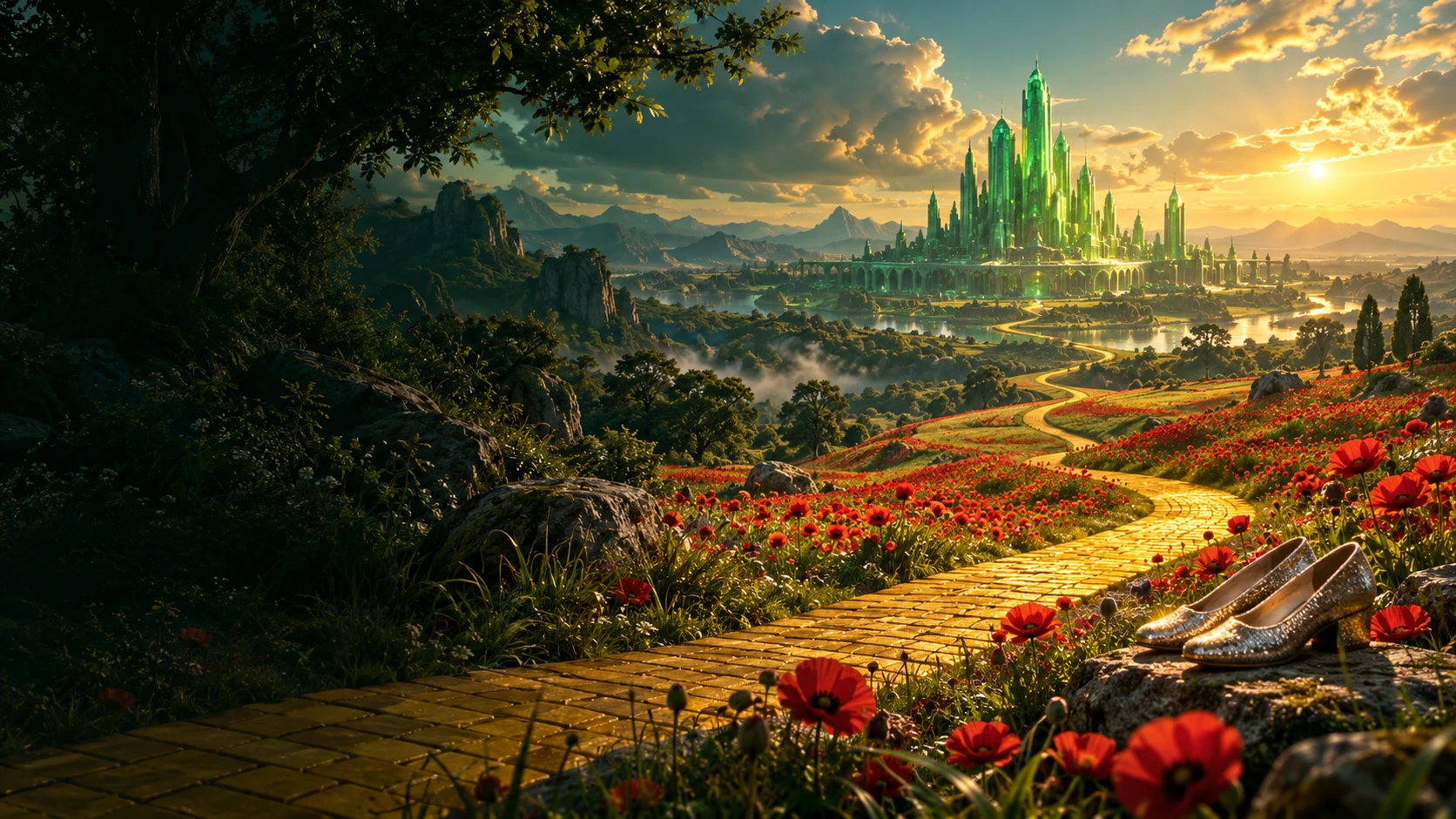
- Silver shoes, not ruby slippers. The colour was changed for the film, generally said to show off its Technicolor. In the book, Dorothy loses the shoes in the desert on her way home.
- Oz is real. The film makes Dorothy’s adventure a dream after a knock on the head. In the book she really goes, and in later books she goes back.
- Two good witches. The book’s Good Witch of the North greets Dorothy and kisses her forehead; Glinda, the Good Witch of the South, appears only at the end. The film merged them into one.
- No Miss Gulch. The spiteful neighbour, Professor Marvel and the three farmhands who reappear as Dorothy’s companions were all invented for the film. Baum’s Kansas is simply grey.
- Green spectacles. In the book, everyone in the Emerald City wears green glasses locked on by the Guardian of the Gates, and Baum leaves you wondering how green the city really is.
- The journey does not end with the Wizard. After he leaves in his balloon, the friends travel south to Glinda, past fighting trees, a country of living china people and the Hammer-Heads.
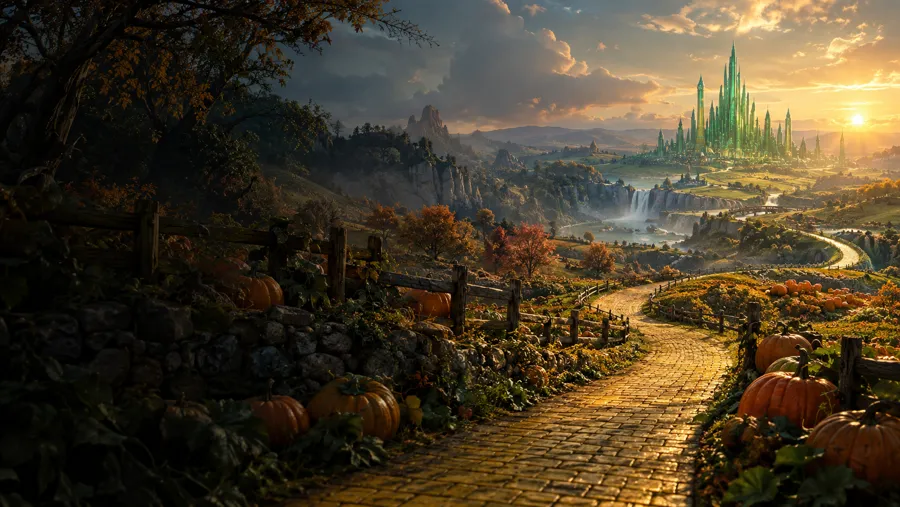
What the book has that the film leaves out
The film keeps the Scarecrow, the Tin Woodman, the Cowardly Lion and the Wicked Witch of the West, but much of Baum’s book never reached the screen. The Tin Woodman has a backstory, as a Munchkin woodman who loved a girl until a witch enchanted his axe. The travellers are chased by Kalidahs, beasts with bodies like bears and heads like tigers, and the Lion is rescued from the deadly poppy field by an army of field mice and their queen.
The Wicked Witch is different too. Baum’s witch has only one eye, but it is as powerful as a telescope, and she sends wolves, crows, bees and her Winkie soldiers against the travellers before she uses the Golden Cap to summon the Winged Monkeys. Baum gives her no green skin and no broomstick; those came later.
The book is also more violent. The Tin Woodman chops off the heads of forty wolves, the Scarecrow wrings the necks of forty crows, and on the road south the Lion kills a giant spider that has been terrorising a forest. Baum tells it all briskly, the way a fairy tale does, but it surprises readers who know only the film.
The film’s most famous idea is there in the book, though. Early on, Dorothy explains to the puzzled Scarecrow why anyone would want to go back to grey Kansas:
There is no place like home.
Dorothy, in L. Frank Baum, The Wonderful Wizard of Oz (1900)
What the 1939 film invented
Besides Miss Gulch and the dream, the film gave the story its songs, its switch from sepia Kansas to Technicolor Oz, and the ruby slippers. It also changed the Wizard’s trickery. In the book he appears to each traveller in a different form, a giant head, a lovely lady, a terrible beast and a ball of fire, before Toto knocks over a screen in a corner and reveals a little old man from Omaha.
Some of the film’s best moments make Baum’s ideas explicit. The book already suggests that the Scarecrow, the Tin Woodman and the Lion had brains, heart and courage all along; the film turns that into its emotional climax.
Other Oz films to compare
For an Oz film closer to Baum’s own world, try Return to Oz (1985), directed by Walter Murch, which draws on The Marvelous Land of Oz and Ozma of Oz. It is much darker in tone than the 1939 film, and it catches the strangeness of Baum’s later books in a way the earlier film never tried to. Sidney Lumet’s The Wiz (1978) and the two Wicked films (2024 and 2025) move further from the book, the latter by way of Gregory Maguire’s 1995 novel.
The Wonderful Wizard of Oz
1900. The book behind the film: shorter, stranger and more violent than you remember, with a whole second journey after the Wizard leaves.
The Marvelous Land of Oz
1904. The second Oz book, without Dorothy. A boy called Tip, Jack Pumpkinhead and a famous surprise; part of the source for Return to Oz.
Ozma of Oz
1907. Dorothy comes back, with Billina the hen and the Nome King; the other main source for Return to Oz.


Because Oz is real in the book, Dorothy can go back, and Baum sent her there again and again: there are fourteen Oz books in all. For the full story of the shoes, see Dorothy’s slippers were silver in the book, and for Baum’s other fantasies, L. Frank Baum wrote far more than Oz.
If you have only seen the film, read The Wonderful Wizard of Oz. It takes an afternoon, and you will never think about the Wicked Witch of the West in quite the same way again.
Questions readers ask
Is The Wizard of Oz movie the same as the book?
No. The 1939 film follows the book’s basic journey but changes a great deal: the silver shoes become ruby slippers, Oz becomes a dream, and characters such as Miss Gulch are invented.
Were the ruby slippers silver in the book?
Yes. In Baum’s 1900 novel, Dorothy’s shoes are silver. The film changed them to ruby red, generally said to make the most of Technicolor.
Is Oz a dream in the book?
No. In the book Dorothy really travels to Oz, and she returns there in later books in the series. The dream ending was added for the 1939 film.
Who directed The Wizard of Oz (1939)?
Victor Fleming is the credited director, though several other directors worked on the film before or after him.
 Dorothy and the Wizard in Oz130 pages · $11.99
 The Patchwork Girl of Oz178 pages · $13.99
 The Emerald City of Oz170 pages · $13.99
 The Road to Oz126 pages · $11.99