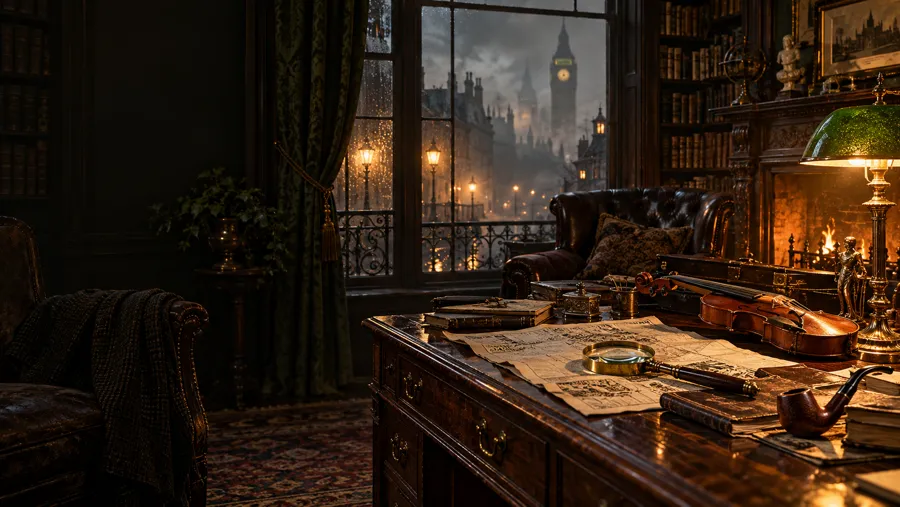
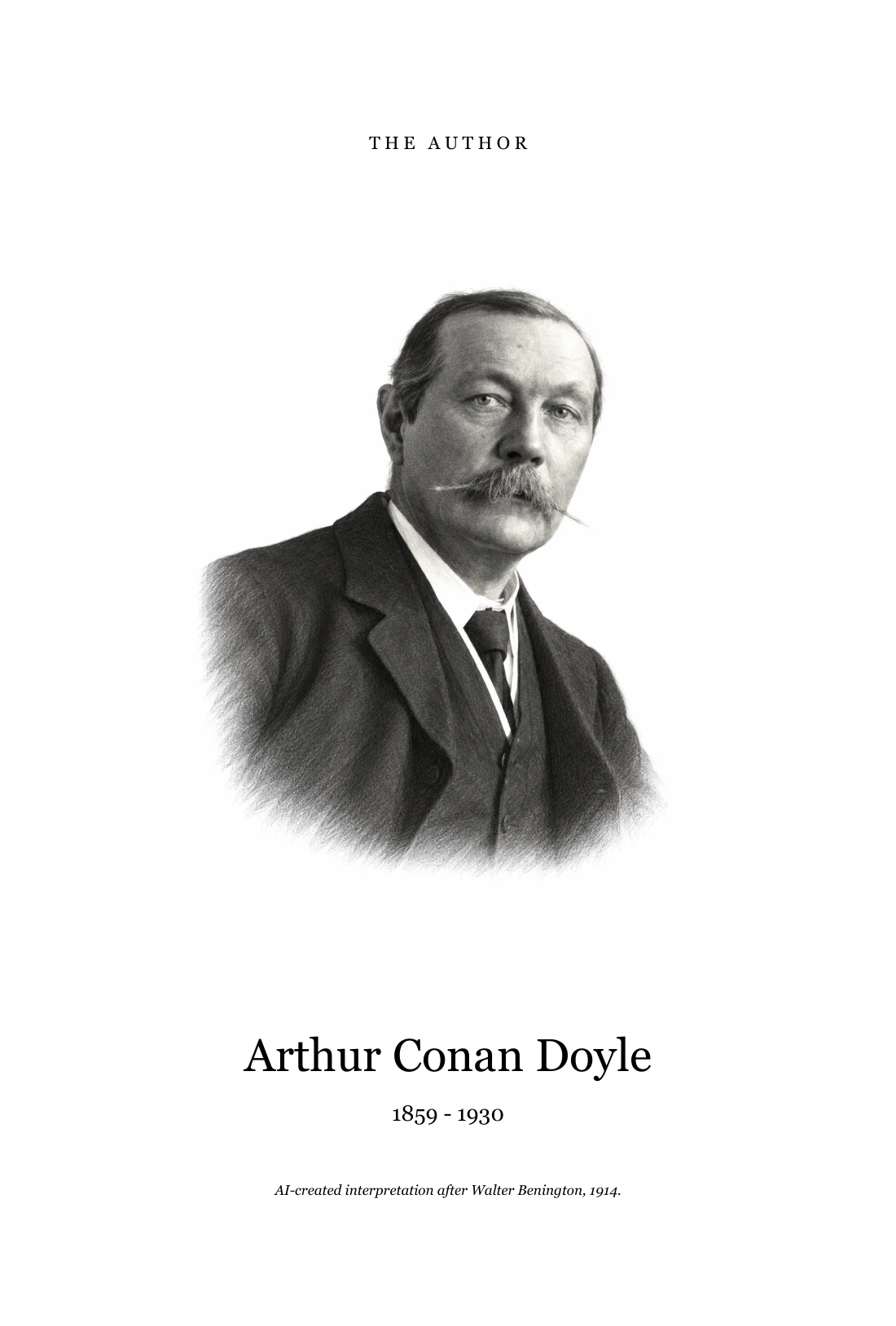
When the American actor William Gillette was writing a Sherlock Holmes play in the late 1890s, he cabled Doyle with a question: could he give the detective a love interest? Doyle told the story himself in his memoirs.
“May I marry Holmes?” was one cable which I received from him when in the throes of composition. “You may marry or murder or do what you like with him,” was my heartless reply.
Arthur Conan Doyle, Memories and Adventures (1924)
Nearly every Sherlock Holmes adaptation since has taken him at his word. Guinness World Records lists Holmes as the most portrayed human literary character in film and television, and the versions range from Victorian costume drama to wartime propaganda to modern London. Yet beneath all that variety, the adaptations keep borrowing from the same few books. Here is where they come from.
A short history of Sherlock Holmes adaptations
- 1899
Gillette’s play Sherlock Holmes opens on Broadway, popularising the curved pipe.
- 1900
Sherlock Holmes Baffled, a trick film lasting well under a minute, is the earliest known screen Holmes.
- 1921–23
Eille Norwood plays Holmes in 47 British silent films, 45 of them two-reel shorts.
- 1939
Basil Rathbone and Nigel Bruce begin fourteen films with The Hound of the Baskervilles.
- 1942–46
Universal moves Rathbone’s Holmes into the Second World War, fighting Nazi agents.
- 1984–94
Granada Television’s series with Jeremy Brett adapts 43 of Doyle’s 60 stories.
- 2009
Guy Ritchie’s Sherlock Holmes, with Robert Downey Jr. and Jude Law, sets a brawling Holmes loose in 1890 London.
- 2010–17
The BBC’s Sherlock, with Benedict Cumberbatch and Martin Freeman, sets the stories in present-day London.
- 2012–19
CBS’s Elementary moves Holmes to New York, with Lucy Liu as Dr Joan Watson.
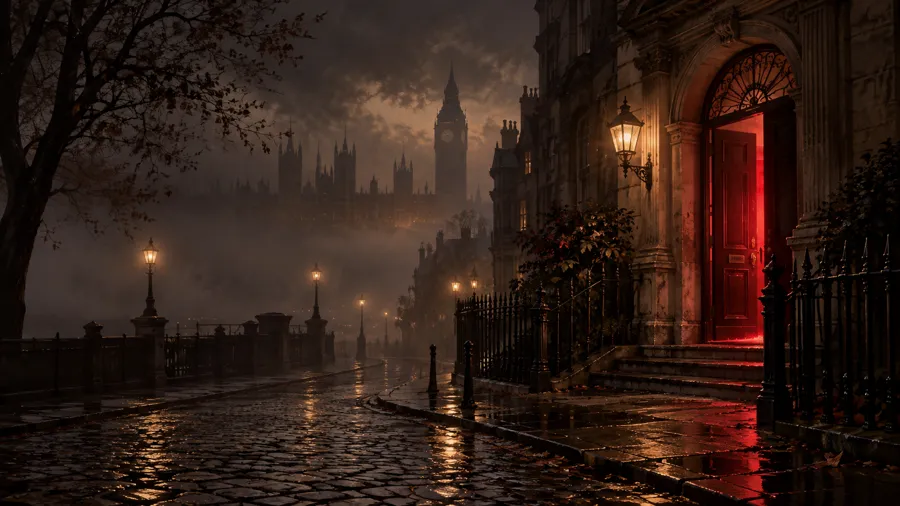
A Study in Scarlet: where every version begins
Holmes first appeared in Beeton’s Christmas Annual for 1887, and the first meeting with Watson is the scene adaptations return to most. “You have been in Afghanistan, I perceive,” Holmes says, in the same breath as “How are you?”, the moment they are introduced. When the BBC brought Holmes into the twenty-first century, the opening episode, “A Study in Pink” (2010), kept the Afghanistan detail: Martin Freeman’s Watson is an army doctor just back from the modern war there.
A Study in Scarlet
1887. The first meeting, the flat at Baker Street and Holmes’s first case. The second half is a long flashback set in Utah, quite unlike anything else in the canon.
The Hound of the Baskervilles
1902. One of the most filmed Holmes stories: a family curse, a moor and a gigantic hound. The perfect novel for a first-time reader.


The Hound of the Baskervilles, again and again
It was The Hound of the Baskervilles that 20th Century-Fox chose in 1939 to launch Basil Rathbone as Holmes, and Granada made it a feature-length special for Jeremy Brett in 1988. The BBC turned it into “The Hounds of Baskerville” in 2012, adding a Ministry of Defence testing site called Baskerville. Each version keeps the same core: a fog-bound landscape and a family legend that seems to be coming true. In the novel itself, Holmes is absent for a long stretch while Watson does the legwork on the moor. We won’t say what is behind the hound.
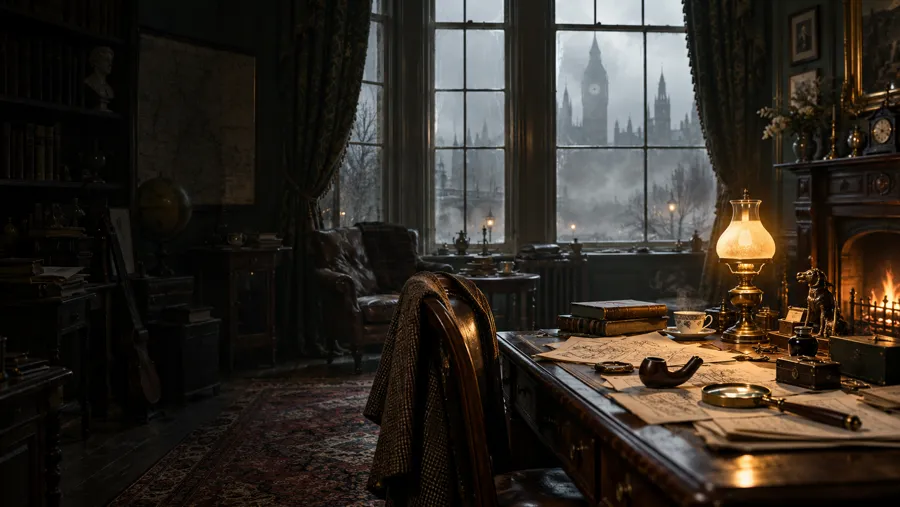
Which Sherlock Holmes stories are the films based on?
Beyond the novels, the short stories are where screenwriters go shopping. These are some of the clearest borrowings:
- “A Scandal in Bohemia” (The Adventures of Sherlock Holmes) gives every version Irene Adler, the woman who outwits Holmes. Granada opened its series with it in 1984; the BBC remade it as “A Scandal in Belgravia” in 2012.
- “The Five Orange Pips”, also from the Adventures, supplies the death-warning envelopes in Universal’s The House of Fear (1945).
- “The Musgrave Ritual” (The Memoirs of Sherlock Holmes), with its riddling family ceremony, is the basis of Sherlock Holmes Faces Death (1943).
- “The Final Problem”, also in the Memoirs, gives the BBC’s “The Reichenbach Fall” (2012) its title, after the Swiss falls where Holmes confronts Professor Moriarty.
- “The Adventure of the Dancing Men” and “The Adventure of the Six Napoleons” (The Return of Sherlock Holmes) lie behind Sherlock Holmes and the Secret Weapon (1943) and The Pearl of Death (1944).
- “His Last Bow”, Doyle’s own wartime Holmes story, was the starting point for Sherlock Holmes and the Voice of Terror (1942), the first of Universal’s wartime films.
The Adventures of Sherlock Holmes
1892. Twelve stories, including Irene Adler, the red-headed league and the speckled band. The collection that made Holmes a sensation in The Strand.
The Memoirs of Sherlock Holmes
1894. The Musgrave Ritual, Silver Blaze and the story Doyle wrote to finish Holmes off. Darker and stranger than the first collection.


What the adaptations added
Some of the most recognisable things about Holmes never came from Doyle. Gillette’s stage Holmes popularised the curved pipe; the deerstalker came from Sidney Paget’s illustrations in The Strand, not the text, although in “Silver Blaze” Watson does describe Holmes in an “ear-flapped travelling-cap”. And Holmes never says “Elementary, my dear Watson” in any of Doyle’s stories. He says “elementary”, and he says “my dear Watson”, but the famous phrase was put together by others.
For the full reading order, see the Sherlock Holmes books in order, and for the best short stories to try first, our pick of the Holmes stories. The detective’s great rival from across the Channel gets his own post in Arsène Lupin vs. Sherlock Holmes, and there is more on Arthur Conan Doyle beyond Baker Street.
Whichever Holmes you grew up with, he came from the same place. Start with A Study in Scarlet and watch him size up Watson in a single sentence.
Questions readers ask
Which Sherlock Holmes story has been adapted the most?
The Hound of the Baskervilles is among the most often filmed. Its versions include Basil Rathbone’s first Holmes film in 1939, a 1988 Granada special with Jeremy Brett and the BBC’s “The Hounds of Baskerville” in 2012.
Which Sherlock Holmes stories is the BBC’s Sherlock based on?
Each episode reworks a Doyle story. “A Study in Pink” comes from A Study in Scarlet, “A Scandal in Belgravia” from “A Scandal in Bohemia”, “The Hounds of Baskerville” from The Hound of the Baskervilles and “The Reichenbach Fall” takes its title from “The Final Problem”.
Did Sherlock Holmes ever say “Elementary, my dear Watson”?
Not in any story Doyle wrote. Holmes does call his conclusions “elementary” and addresses Watson as “my dear Watson”, but the combined phrase came from later adaptations.
Who played Sherlock Holmes most faithfully?
Jeremy Brett in Granada Television’s series (1984–1994) is often considered the most faithful, since the series adapted 43 of Doyle’s 60 stories and kept them in their Victorian setting.
 The Lost World180 pages · $13.99
 The Return of Sherlock Holmes298 pages · $16.99
 The Sign of the Four116 pages · $11.99
 The Valley of Fear164 pages · $12.99