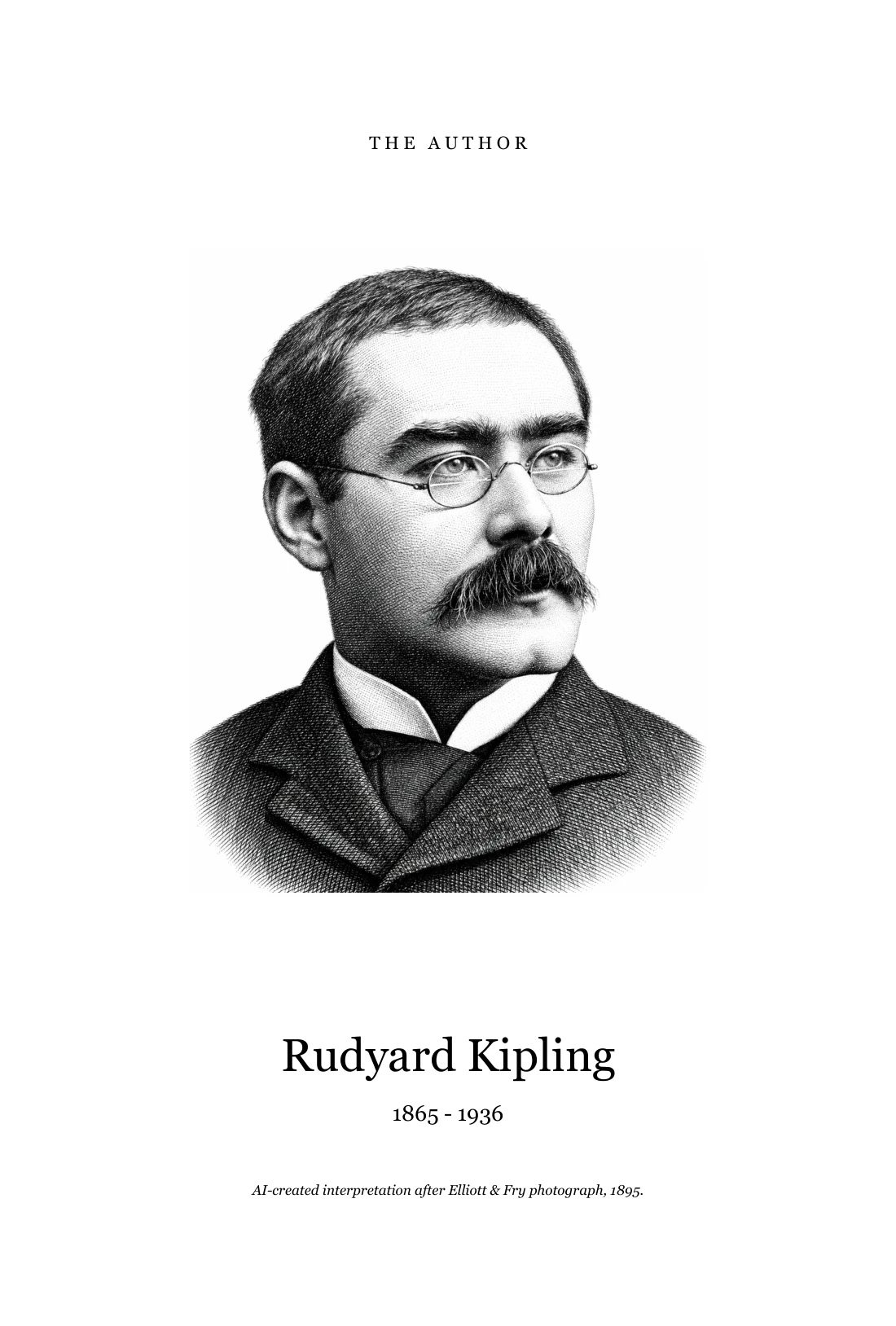
The first time readers met Mowgli, he was already a grown man. In “In the Rukh”, a story in Kipling’s 1893 collection Many Inventions, an English forest officer comes across a young man who can drive a bull nilghai through the forest like a buffalo and has four huge wolves for brothers. Only afterwards did Rudyard Kipling go back and tell how that boy came to be, and the telling took two books.
The Jungle Book came out in 1894 and The Second Jungle Book in 1895. Both were written while Kipling was living in Vermont, and both are collections of stories rather than novels. The second is not a spin-off or a gathering of leftovers. It holds five of the eight Mowgli stories in the pair, including the one that ends his time in the jungle for good.
What happens in The Second Jungle Book?
The first book is the one everybody half-knows: Mowgli adopted by the wolves, schooled by Baloo and Bagheera, kidnapped by the monkeys and finally rid of Shere Khan. It also wanders away from India altogether for “The White Seal”, and gives us Rikki-Tikki-Tavi and Toomai of the Elephants. Only three of its seven stories are about Mowgli.
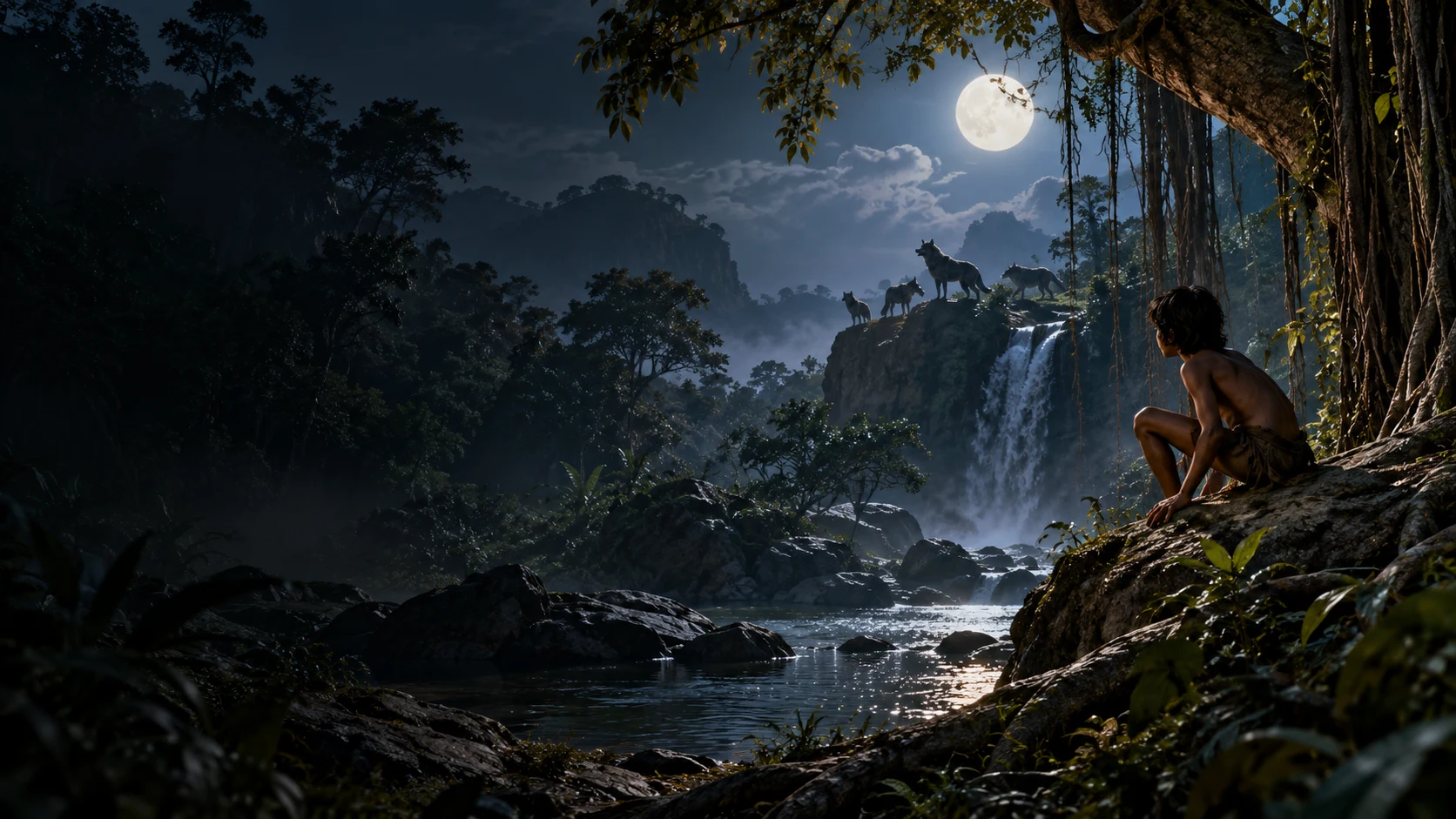
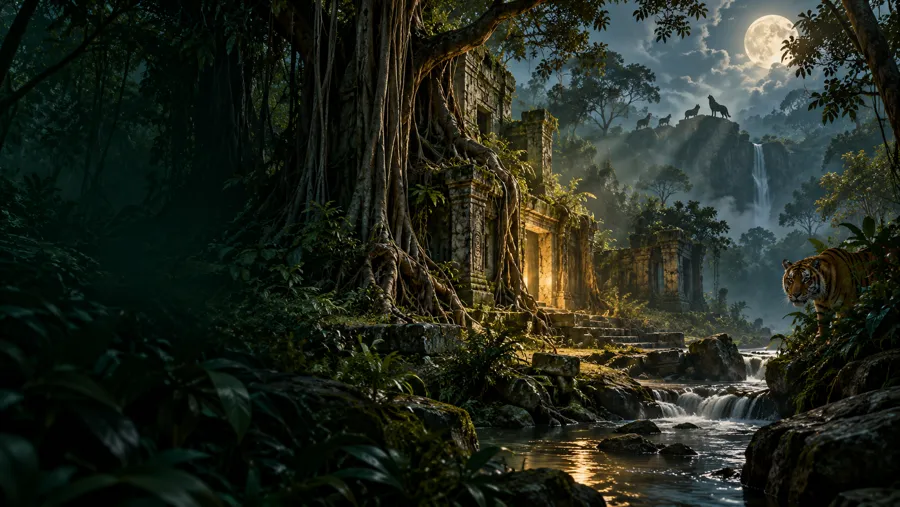
The Second Jungle Book gives him five. In “How Fear Came”, a drought forces every animal to share the last of the river under a Water Truce, and Hathi the elephant tells how the tiger got his stripes. In “Letting in the Jungle”, the villagers who once took Mowgli in turn on the woman who mothered him, and he answers by setting the whole jungle loose on their fields. “The King’s Ankus” is a dark little fable about treasure buried under the ruined city of the Cold Lairs. “Red Dog” is Kipling’s most thrilling battle scene, as a vast pack of dhole sweeps up from the Deccan and Kaa helps Mowgli plan a defence. And “The Spring Running” closes the cycle.
“I gave thee thy first milk; but Bagheera speaks truth: Man goes to Man at the last.”
Mother Wolf to Mowgli, “Letting in the Jungle”, The Second Jungle Book (1895)
Is The Second Jungle Book better than the first?
Plenty of Kipling’s admirers think so. The Mowgli stories here are longer, stranger and sadder. Mowgli is no longer a small boy being rescued; he is the Master of the Jungle, clever and sometimes cruel, and the book is honest about how uneasy a position that is. By the opening of “The Spring Running” he is, Kipling tells us, nearly seventeen, restless in a way he cannot name, and the animals who love him already know where that restlessness leads.
The three stories that leave Mowgli behind are just as good. “The Miracle of Purun Bhagat” follows a prime minister of an Indian state who gives up everything to become a wandering holy man in the Himalayas, where the animals become his friends. “The Undertakers” is a grim comedy in which a mugger crocodile, a jackal and an adjutant stork bicker on a riverbank. “Quiquern” travels to the Arctic, where a fourteen-year-old Inuit boy, Kotuko, hunts across the ice to save his starving people.
Should you read The Jungle Book first?
Yes, if you can. The stories in the second book lean on the first: the Council Rock, the wolf pack, Akela, Kaa and the Cold Lairs all carry weight they only earn in volume one. The first book’s Mowgli stories also come in order, so it makes sense to read them first and carry on.
- $12.99
The Jungle Book
1894. Three Mowgli stories, from the wolf council to the skin of Shere Khan, plus the mongoose, the seal and the elephant boy. Every tale ends with a song.
- $13.99
The Second Jungle Book
1895. The jungle at war and in drought, a holy man in the mountains, an Arctic hunt, and the spring that sends Mowgli back to his own kind.


Kipling never wrote a third Jungle Book, though all the Mowgli stories were later gathered in a single volume, All the Mowgli Stories (1933), with “In the Rukh” placed at the end where its chronology belongs. If you want the full arc, read the two Jungle Books and then hunt down that first story, which shows what became of the boy afterwards.

How the second book changes the Disney version
Disney’s 1967 cartoon is loosely based on the first book, and almost none of the second made it to the screen. That matters, because the second book is where Kipling’s jungle turns serious. In the film, Kaa is a villain; in “Red Dog” the old python is Mowgli’s wisest counsellor. In the film, Mowgli leaves the jungle because a girl sings by the river; in the book, his leaving is slow and painful, and he sobs as he takes leave of the creatures who raised him.
Like everything Kipling wrote, the books belong to the British Raj, and some of the human scenes, especially the villagers of “Letting in the Jungle”, are written from an outsider’s distance. Read them with that in mind, and with an eye for how much sympathy Kipling still gives to the people on the edge of his stories.
For the story of how both books were written in a New England winter, see Did you know Kipling wrote The Jungle Book in Vermont?, and for the rest of his work, Where to start with Kipling. Then start with Mowgli at the mouth of the wolves’ cave in The Jungle Book, and keep going until he walks out of the jungle at the end of The Second Jungle Book. The second goodbye is the one that stays with you.
Questions readers ask
How many Jungle Books are there?
Two. Rudyard Kipling published The Jungle Book in 1894 and The Second Jungle Book in 1895. Together they contain eight Mowgli stories and seven other tales.
Is The Second Jungle Book a sequel?
Yes. It continues Mowgli’s story from the first book through to his final departure from the jungle in “The Spring Running”, alongside three stories with other heroes.
What is the first Mowgli story?
The first Mowgli story Kipling wrote was “In the Rukh”, published in Many Inventions in 1893. It shows Mowgli as a young man, after the events of both Jungle Books.
 Kim286 pages · $16.99
 Captains Courageous146 pages · $12.99
 Just So Stories102 pages · $11.99
 Stalky & Co.194 pages · $13.99