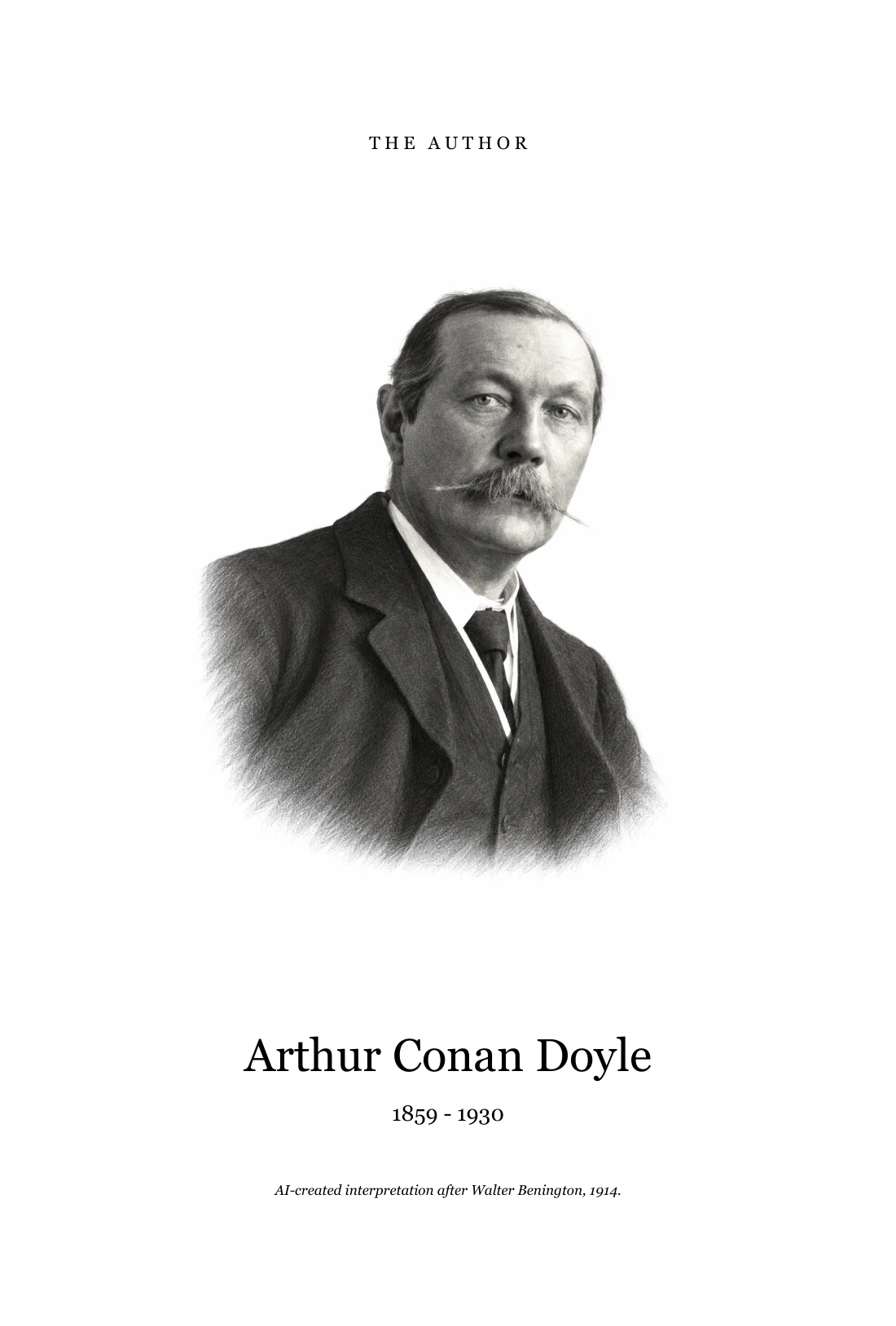
Arthur Conan Doyle once put on a disguise and had himself photographed as one of his own characters. The pictures were made in 1912 to promote The Lost World, the novel that introduced Professor Challenger, and they show the creator of Sherlock Holmes made up as his loudest, hairiest creation. That he wanted to become Challenger, even for an afternoon, says a good deal about how much fun he was having.
Challenger appears in three books and two later short stories. Read them in publication order: The Lost World (1912), The Poison Belt (1913), The Land of Mist (1926), then the stories “When the World Screamed” (1928) and “The Disintegration Machine” (1929). Each book stands alone, but the same small band of characters runs through them all.
How many Professor Challenger books are there?
- The Lost World (1912): Challenger leads an expedition to a South American plateau where prehistoric life survives.
- The Poison Belt (1913): Challenger predicts that the Earth is passing into a band of poisonous ether, and invites his friends round with oxygen.
- The Land of Mist (1926): Challenger’s daughter and the journalist Malone investigate the world of séances.
- “When the World Screamed” (1928) and “The Disintegration Machine” (1929): two short stories, usually collected with the novels.
- $13.99
The Lost World
1912. A young reporter, a peppery rival professor and an aristocratic big-game hunter follow Challenger up a cliff and into the Jurassic. The great one, and the template for every dinosaur adventure since.
- $10.99
The Poison Belt
1913. Short, eerie and strangely moving: five people in a sealed room in Sussex, watching through the window as something happens to the whole world. Science fiction as chamber piece.
- $14.99
The land of mist
1926. Doyle’s spiritualist novel, with Challenger as the furious sceptic. Read it as a portrait of what Doyle believed in his last years, as much as an adventure.


Who is Professor Challenger?
Our narrator, Edward Malone, is a young Irish reporter on the Daily Gazette who asks his news editor for a dangerous assignment and is told to try his luck with Challenger, a zoologist known for throwing journalists down the stairs. Challenger lives up to his reputation. Malone’s first sight of him is one of Doyle’s great comic portraits.
He had the face and beard which I associate with an Assyrian bull; the former florid, the latter so black as almost to have a suspicion of blue, spade-shaped and rippling down over his chest.
Arthur Conan Doyle, The Lost World (1912)
He is vain, violent, rude to everyone and right about almost everything, which is what makes him bearable. Where Holmes is cold and precise, Challenger roars. His opposite number on the expedition, Professor Summerlee, is a dry sceptic who disputes every claim, and their quarrels are half the pleasure of the book. Lord John Roxton, the hunter, completes the party.
The Lost World, and what came after
The Lost World ran in The Strand Magazine from April to November 1912 and was published as a book that October. It gave a name to a whole kind of story, and the story of how it reached Jurassic Park is told in Did you know Michael Crichton borrowed The Lost World from Conan Doyle?. For the rest of the genre, see Lost world novels.
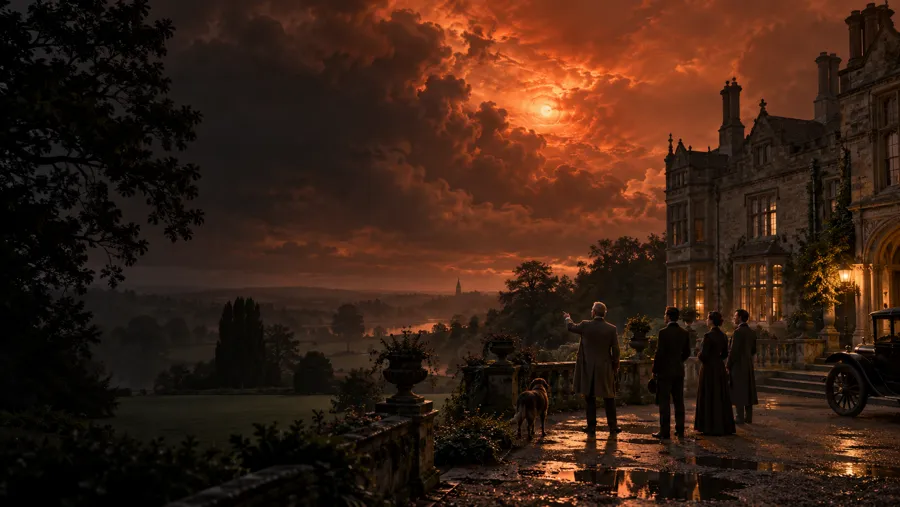
Doyle brought the team back just a year later for The Poison Belt. It is half the length and entirely different in mood. Challenger telegraphs Malone, Summerlee and Roxton to come to his house and bring oxygen, and they arrive to find him convinced that the planet is entering a belt of poisonous ether. Most of the novella takes place in one sealed room. It is closer to H. G. Wells than to the jungle, and the tension of its middle chapters is hard to shake.
The Land of Mist: Challenger and the spirits
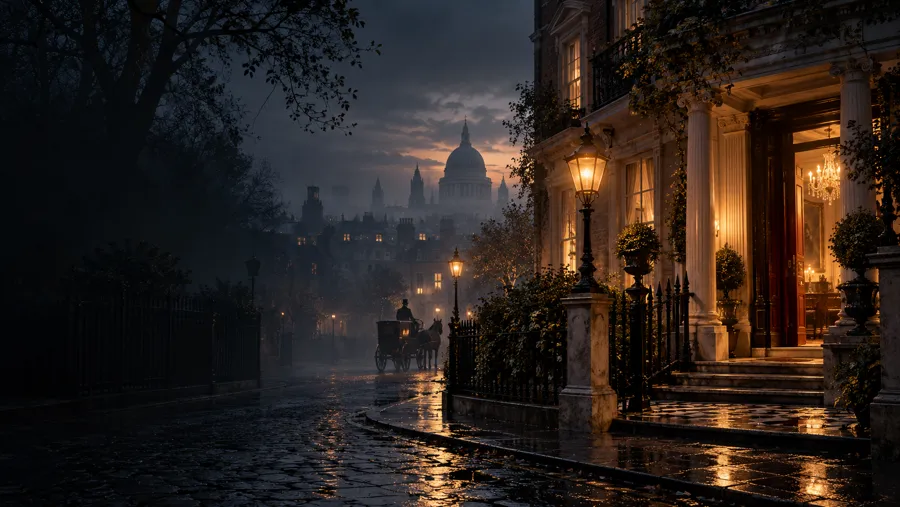
Thirteen years later, Doyle’s life had changed. The war years had taken his son, his brother and two nephews, and he had become one of the best-known champions of spiritualism in the world. The Land of Mist, serialised in The Strand from July 1925 and published in 1926, sends Malone and Challenger’s daughter, Enid, into séance rooms and spiritualist churches to write newspaper features, and slowly they become believers. Challenger, the materialist, resists.
It is the odd one out, a novel with a cause, and it has less adventure than the first two. But it is fascinating as a record of what Doyle felt, and Challenger’s bluster remains good company even when the book is arguing against him.
Do you need to read The Lost World first?
Yes, if you can. The Poison Belt assumes you know the four companions from the plateau, and the jokes land harder if you have watched Challenger and Summerlee bicker their way through a jungle. The Land of Mist stands more easily alone, but the earlier books give it its weight.
Challenger on screen
The 1925 silent film of The Lost World, directed by Harry O. Hoyt, starred Wallace Beery as Challenger and is remembered above all for Willis O’Brien’s stop-motion dinosaurs, a rehearsal for his work on King Kong. Later screen Challengers have included Claude Rains, John Rhys-Davies and Bob Hoskins.
For Doyle’s other heroes, see Brigadier Gerard, his vain Napoleonic cavalryman, and Did you know Arthur Conan Doyle didn’t think Sherlock Holmes was his best work?. Holmes himself is mapped in Sherlock Holmes in order.
Start with Malone’s ill-advised interview and a door flung open. The Lost World is a quick, joyful read, and by the time the expedition reaches the foot of the plateau you will be on Challenger’s side, however much he shouts.
Questions readers ask
How many Professor Challenger books are there?
There are three novels, The Lost World (1912), The Poison Belt (1913) and The Land of Mist (1926), plus two short stories, When the World Screamed (1928) and The Disintegration Machine (1929).
What is the sequel to The Lost World by Arthur Conan Doyle?
The Poison Belt (1913) is the direct sequel, reuniting Challenger, Malone, Summerlee and Lord John Roxton as the Earth passes through a belt of poisonous ether.
Who was Professor Challenger based on?
Conan Doyle said he drew some of Challenger’s peculiarities from William Rutherford, a physiology professor who taught him at Edinburgh when he studied medicine there.
 The Adventures of Sherlock Holmes254 pages · $15.99
 The Hound of the Baskervilles154 pages · $12.99
 A Study in Scarlet112 pages · $11.99
 The Memoirs of Sherlock Holmes252 pages · $15.99