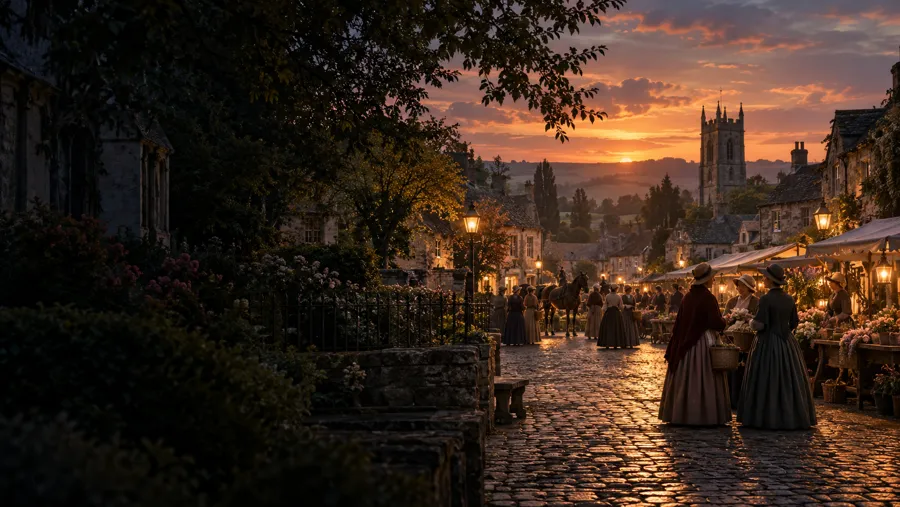
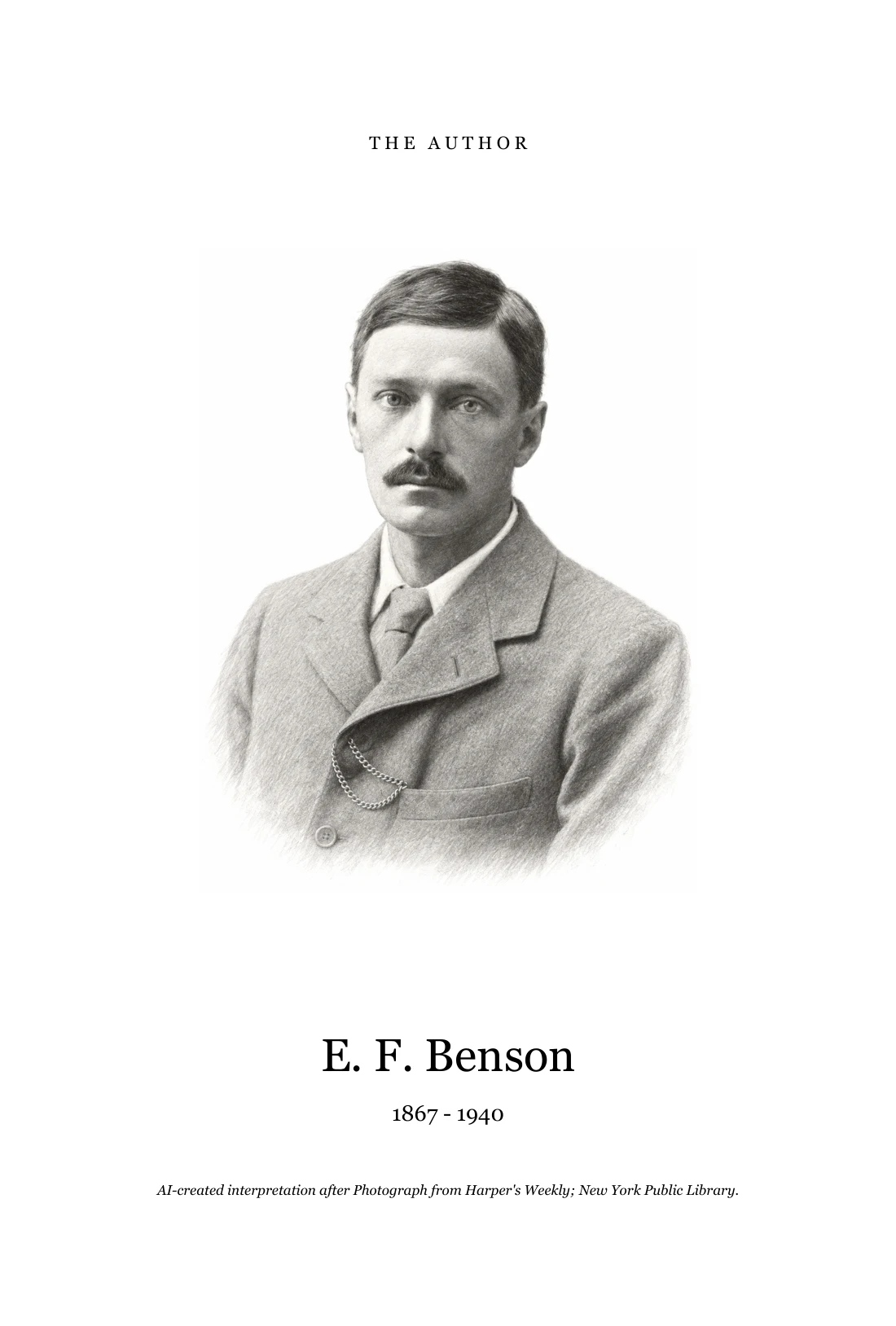
Lamb House in Rye had a garden room with a broad bow window looking straight down a cobbled street, and E. F. Benson, who lived there, turned it into the most feared lookout in English comedy. In the brief preface to Miss Mapp, signed from that address, he claims to have lingered at the window “from which Miss Mapp so often and so ominously looked forth” and to have seen nobody in the street who even remotely resembled the objects of her vigilance. It may be the least convincing disclaimer in English fiction.
Benson’s house became Mapp’s house, Mallards. His town became Tilling. And his window became the place where Elizabeth Mapp sits each morning noting who is buying what, and drawing the worst conclusions.
The Mapp and Lucia books in order
There are six novels, published between 1920 and 1939. The first three keep the two heroines apart; the last three set them loose on each other.
- Queen Lucia (1920): Lucia rules the arty village of Riseholme.
- Miss Mapp (1922): Mapp rules the seaside town of Tilling.
- Lucia in London (1927): Lucia tries her methods on Mayfair.
- Mapp and Lucia (1931): Lucia rents Mallards for the summer, and war is declared.
- Lucia’s Progress (1935), published in the US as The Worshipful Lucia.
- Trouble for Lucia (1939).
Benson also wrote two short stories set in the same world, “The Male Impersonator” and “Desirable Residences”. The first is often printed at the end of Miss Mapp.

Where to start: Queen Lucia or Miss Mapp?
Start with Queen Lucia. Publication order is the right order, and the first book is the gentlest introduction to Benson’s method, in which a cancelled tea party carries the weight of a constitutional crisis.
Mrs Emmeline Lucas, known to all as Lucia, is the self-appointed arbiter of culture in Riseholme. She sprinkles her conversation with scraps of Italian, arranges her garden with flowers from Shakespeare, and gives moonlit recitals of Beethoven to friends who know better than to leave early. Her loyal lieutenant is Georgie Pillson, a bachelor with a passion for embroidery and a toupet on order. The plot, such as it is, follows a fashionable guru, a Russian medium and a visiting opera singer, each of whom Lucia must either annex or survive.
“Until then, she would assuredly stop at the end of the first movement in these moonlit seances, and say that the other two were more like morning and afternoon.”
On Lucia and the Moonlight Sonata, Queen Lucia (1920)
Miss Mapp moves to Tilling and a sharper, more spiteful comedy. Mapp is introduced as a woman who “might have been forty, and she had taken advantage of this opportunity by being just a year or two older.” Around her revolve the Tillingites: Diva Plaistow, her rival in dressmaking; Major Benjy Flint and Captain Puffin, forever squabbling over golf and whisky; and Quaint Irene, the town’s bohemian painter. Wars break out over bridge, over a hoarded store of provisions, and over whether to keep summer time.
- $14.99
Queen Lucia
1920. The book that made Benson’s name all over again: village snobbery treated with the seriousness of grand opera. Lucia at her most magnificent and least self-aware.
- $14.99
Miss Mapp
1922. Tilling and its queen, observed from behind the curtains of the garden room. Benson’s most malicious book, and possibly his funniest.


Who were Mapp and Lucia based on?
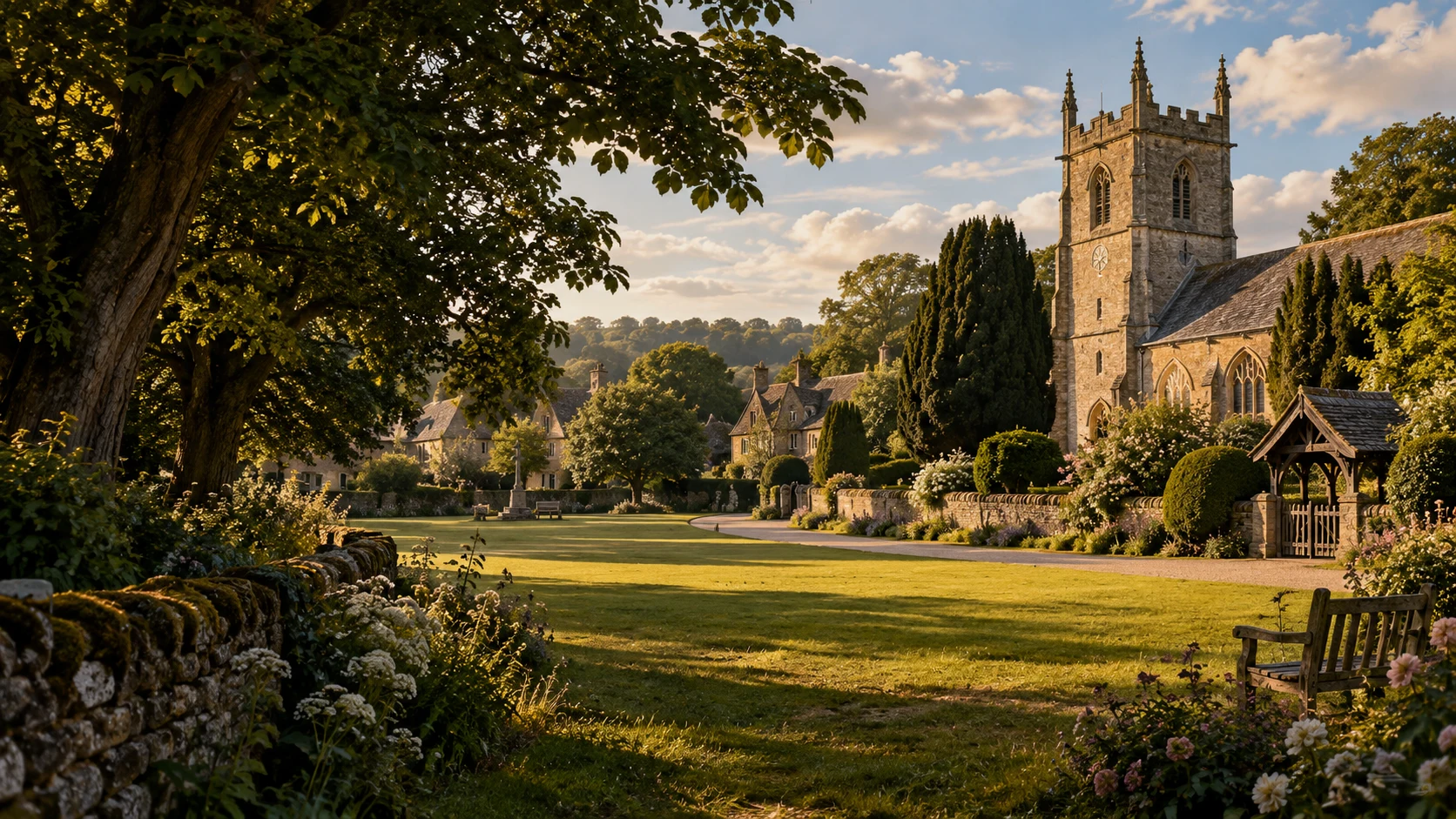
Tilling is Rye, East Sussex, down to the cobbles, and Mallards is Lamb House, which had been the home of Henry James before Benson took it on. Benson later served as mayor of Rye, a career move he eventually handed to Lucia too. Riseholme is usually identified with the Cotswold village of Broadway.
Lucia herself is often said to owe a good deal to the best-selling novelist Marie Corelli, a one-time acquaintance of Benson’s who also affected Italian, held musical evenings and appointed herself a guardian of Shakespeare’s Stratford. Mapp seems to have grown out of the morning crowds in Rye’s High Street.
Mapp and Lucia on television
Both screen versions skip straight to the fourth book, when the two women meet. London Weekend Television’s series for Channel 4, broadcast in 1985 and 1986, starred Geraldine McEwan as Lucia, Prunella Scales as Mapp and Nigel Hawthorne as Georgie, and was filmed in Rye. The BBC returned to Tilling in December 2014 with a three-part version adapted by Steve Pemberton, who also played Georgie, opposite Anna Chancellor and Miranda Richardson.
If you came to the books from either series, Queen Lucia and Miss Mapp will feel like prequels you never knew existed. Lucia’s husband Peppino is still alive, Georgie is still in Riseholme, and Mapp has not yet met the one woman in England capable of out-manoeuvring her.
Are the Mapp and Lucia books worth reading today?
They are small books about small things, and Benson knew it. What makes them last is the precision. Every lie is noticed, every concession remembered, and the narrator never quite takes sides. They are ideal for anyone who loves P. G. Wodehouse but wants the women to be in charge, and they belong on the same shelf as the other entries in the funniest classic novels.
Begin on a hot July morning in Riseholme, as Lucia steps off the train from London and sends her luggage on ahead without her, so that the whole village can wonder where she is. Queen Lucia has arrived, and nothing will be the same.
Questions readers ask
What order should you read the Mapp and Lucia books in?
Read them in publication order: Queen Lucia (1920), Miss Mapp (1922), Lucia in London (1927), Mapp and Lucia (1931), Lucia’s Progress (1935) and Trouble for Lucia (1939).
How many Mapp and Lucia books are there?
E. F. Benson wrote six Mapp and Lucia novels, plus two short stories, “The Male Impersonator” and “Desirable Residences”. Other writers have since added pastiches.
Where is Tilling in Mapp and Lucia?
Tilling is a fictional version of Rye in East Sussex, where Benson lived at Lamb House. Mapp’s house, Mallards, is modelled on Lamb House itself.
Do you need to read Queen Lucia before Mapp and Lucia?
It helps. The first three books introduce the two heroines separately, so by the time they meet in the fourth you know exactly what each is capable of.