The note is unusually frank. When the novel ran as a magazine serial, it explains, so much had to be cut that the character and atmosphere were lost. Publishing the whole thing meant publishing a great deal more, and during the writing the story had developed into “what might be regarded as two novels”, each dealing with a different age. So the publishers, Frederick A. Stokes of New York, split it. The first book carries its people up to the summer of 1914. The second takes them into the world the war made.
That second book is Robin, also published in 1922. If you have read The Head of the House of Coombe and wondered why it ends where it does, Robin is the answer, and the two are best read back to back as one long novel.
What is The Head of the House of Coombe about?
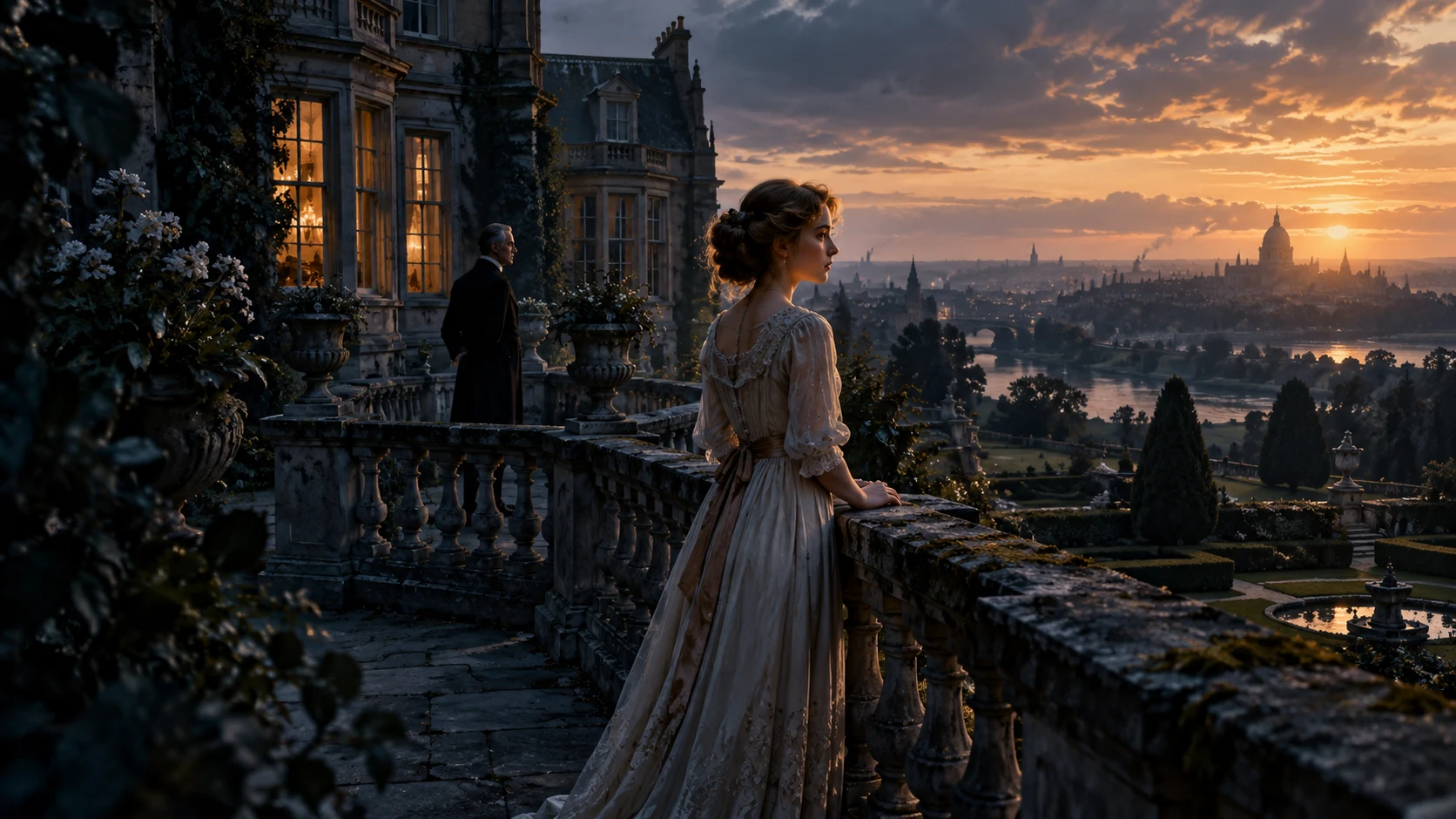
The title is a joke. Lord Coombe, a marquis with a reputation for wickedness and, the novel tells us, the best-dressed man in London, calls himself the Head of the House with heavy irony, because the phrase once meant duty, church on Sunday and setting an example to one’s tenants.
The Head of the House of Coombe was not a title to be found in Burke or Debrett. It was a fine irony of the Head’s own and having been accepted by his acquaintances was not infrequently used by them in their light moments in the same spirit.
Frances Hodgson Burnett, The Head of the House of Coombe (1922)
Coombe is drawn into the circle of Feather, a lovely, empty-headed young widow, and quietly takes over her bills. Feather has a small daughter, Robin, whom she barely notices; the child is left to a careless nurse and thinks of her own mother only as “the Lady Downstairs”. Robin’s one friend, a little boy called Donal, is taken away from her, and she grows up blaming Coombe for it. Coombe, for reasons the novel reveals only gradually, watches over her all the same.
It is a society novel on a large canvas, full of Edwardian drawing rooms, and it carries a strong argument about the years before 1914. Burnett, writing after the war, keeps pointing to the forces gathering in Europe, and her portrait of a predatory German count is a caricature of its time.

What happens in Robin?
Robin follows the same characters, Coombe, Feather, the grown-up Robin and Donal, into the war years. The publishers promised a story set in “a world transformed by tragedy”, and the war is never far from its pages. To say more would give away the turns that make the pair worth reading, but the questions the first book leaves open are answered here.
It opens at dawn, as Donal Muir walks home across London from a dance given by the old Dowager Duchess of Darte, where he has danced with Robin and slipped away with her into the conservatory. In the middle of that same evening Lord Coombe arrived with the news of an assassination at Sarajevo. The young people barely registered it. The Duchess and Coombe, who had watched the danger growing in Europe for years, understood at once what it meant, and the rest of the novel lives in the shadow of that night. The second chapter even turns aside to imagine the diary an ordinary Londoner might have begun on 29 June 1914 and kept, day by day, until 1918.
The Head of the House of Coombe and Robin, in order
- $17.99
The Head of the House of Coombe
1922. A cynical marquis, a frivolous widow and a neglected little girl, in a London that does not know it is about to end. Stops on the eve of the First World War.
- $16.99
Robin
1922. The same people in a changed world. Robin grows up, and the secrets of the first book come home. Read it straight after.



Can you read Robin on its own?
You can, but you should not. Robin assumes you know why Coombe matters to the girl, what happened with Donal and what Feather is like, and much of its force comes from that history. Treat the two as volumes one and two of a single story.
They also sit well beside Burnett’s other novels for adults. The Shuttle, about American heiresses marrying into English aristocracy, and T. Tembarom, about a New York newsboy who inherits an English estate, share their interest in class and money on both sides of the Atlantic. For her career as a whole, see Did you know Frances Hodgson Burnett wrote mostly for adults? and Did you know Frances Hodgson Burnett grew up in Tennessee? For more grand houses on the edge of change, try Books like Downton Abbey.
Read them as Burnett meant them, as one story in two volumes: The Head of the House of Coombe first, with Robin close at hand for when the summer of 1914 arrives.
Questions readers ask
Is there a sequel to The Head of the House of Coombe?
Yes. Robin (1922) continues the story of Lord Coombe, Feather, Robin and Donal through the First World War. The publishers explained that the novel had grown into two books.
Which comes first, Robin or The Head of the House of Coombe?
The Head of the House of Coombe comes first. It ends in the summer of 1914, and Robin picks up from there.
Why was The Head of the House of Coombe split into two books?
According to the publishers’ note at the end of the first book, the full story had developed into what amounted to two novels about two different eras, so it was issued as two separate volumes.
Who is Lord Coombe?
Lord Coombe is a wealthy, cynical marquis known as the best-dressed man in London, who calls himself the Head of the House of Coombe as a private joke and takes a hidden interest in the neglected Robin.
 The Secret Garden210 pages · $14.99
 A Little Princess168 pages · $13.99
 The Lost Prince256 pages · $15.99
 Little Lord Fauntleroy158 pages · $12.99