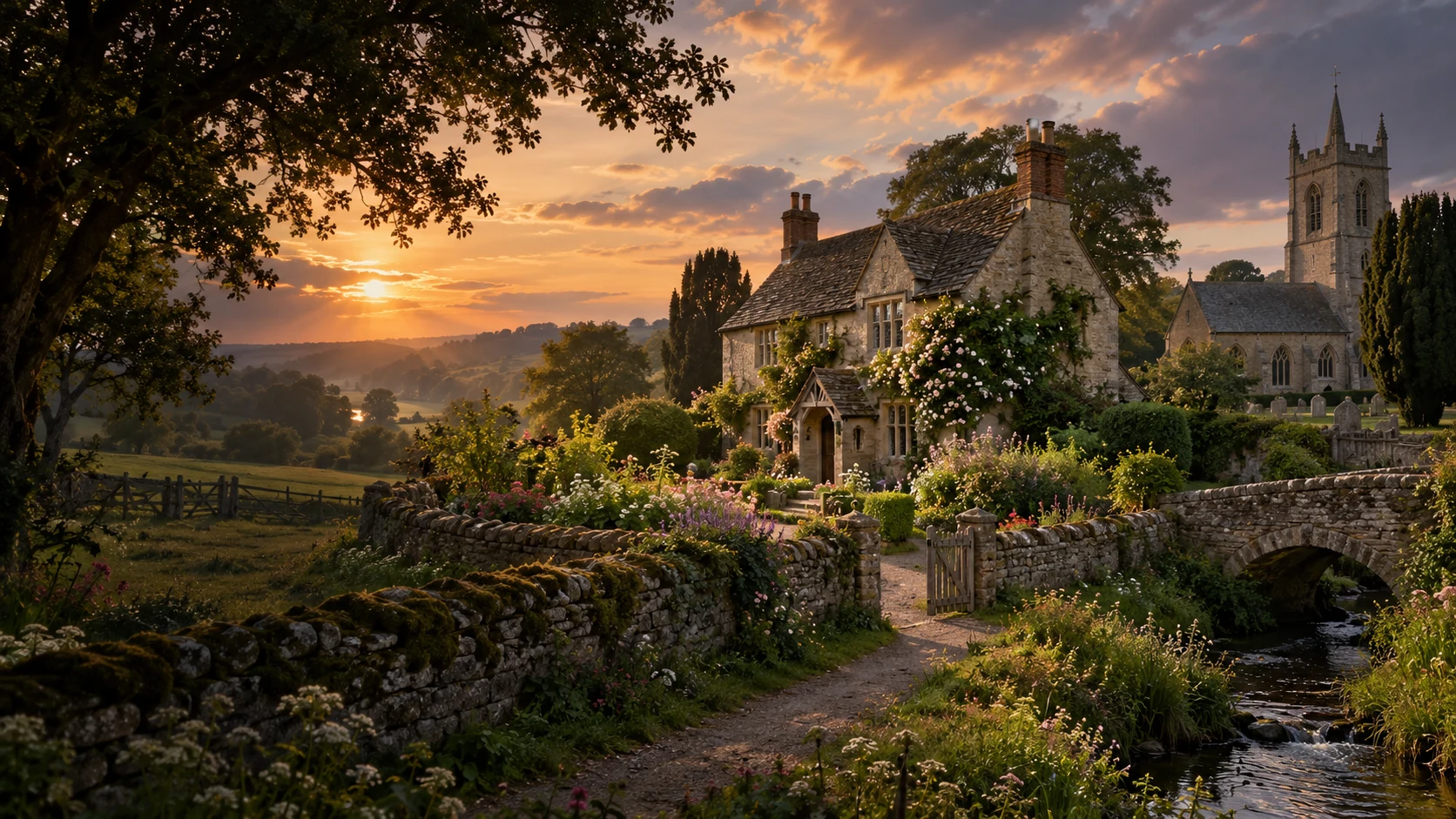
An eighteenth-century English village vicarage with a cottage garden and modest church
PIPCUB CINEMATIC EDITIONS / PAPERBACK BOOKS

The Vicar of Wakefield

Oliver Goldsmith

The Reverend Primrose believes in the comforts of family, virtue, and modest contentment.

$13.99

Printed for you. Shipping calculated at checkout.

Checkout opening soon. Shipping & delivery Returns
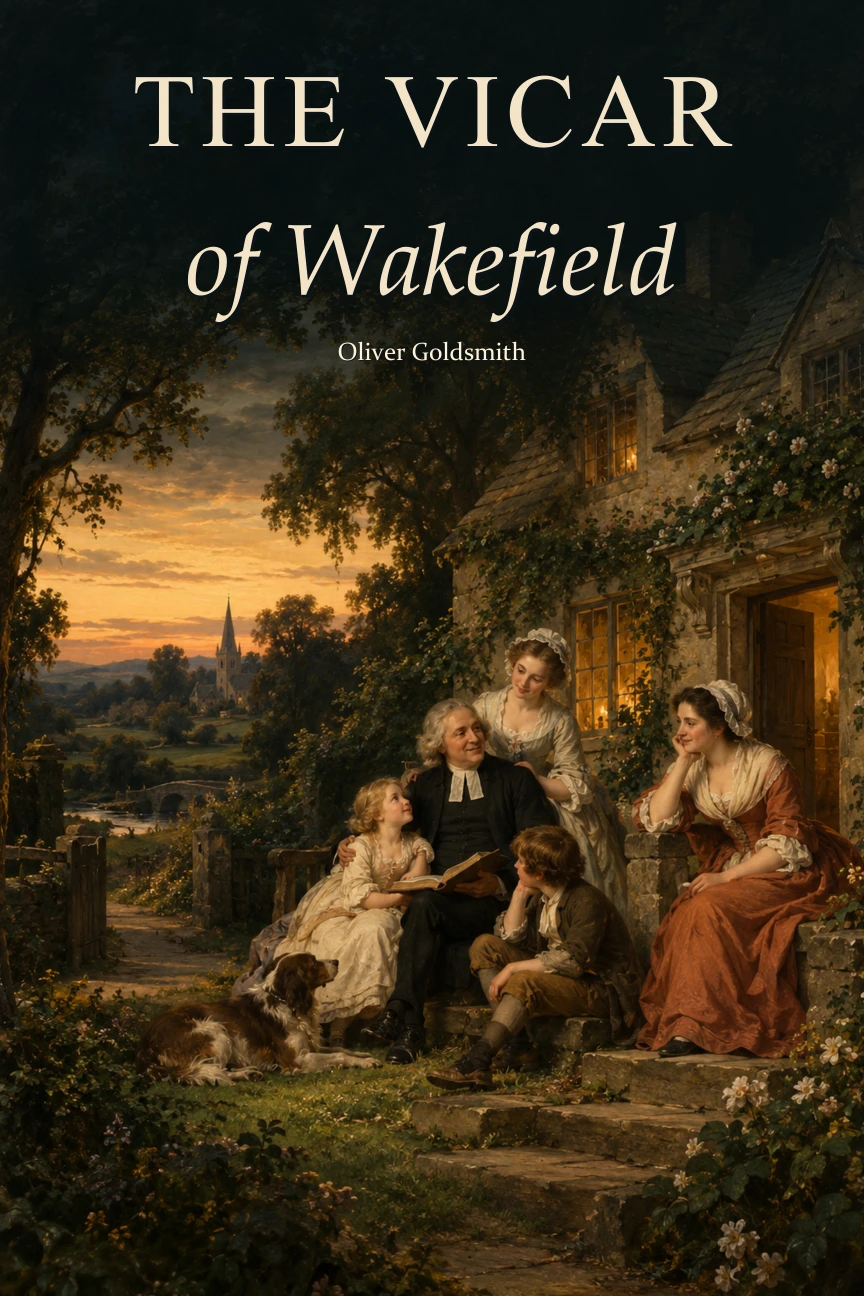
The Vicar of Wakefield — actual Pipcub paperback cover
SCROLL INTO THE STORYAN IMAGINED WORLD · ORIGINAL AI ART
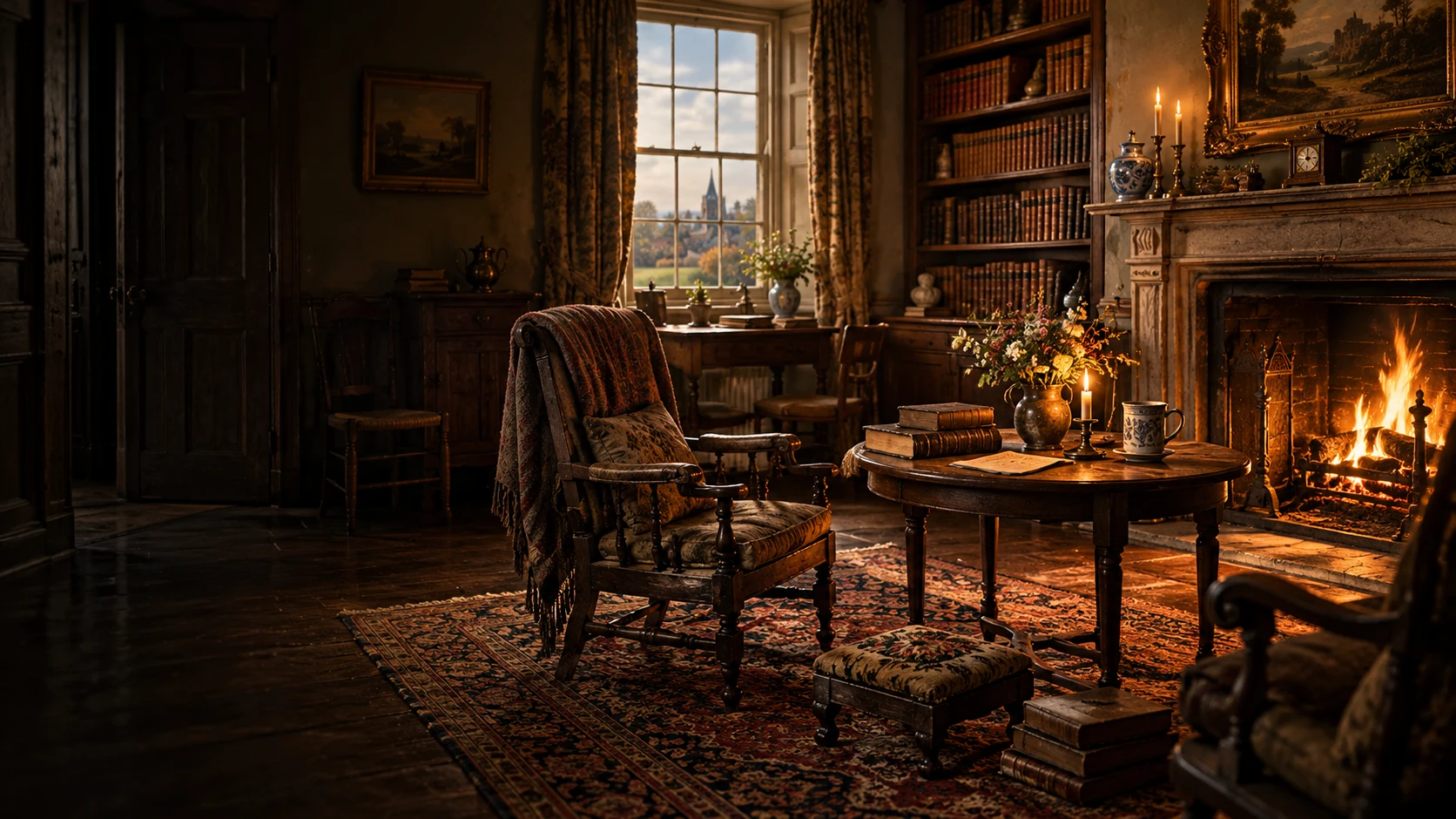
A modest Georgian family parlour with worn chairs, bookshelves and a glowing hearth

THE STORY

A family's fortune is put to the test.

The Reverend Primrose believes in the comforts of family, virtue, and modest contentment.

An English country lane bordered by wildflowers and an orchard under evening light

THE WORLD OF THE BOOK

A household put to the test.

A succession of misfortunes challenges each conviction, drawing his household into a world less trustworthy than it first appears. Goldsmith's novel mixes irony, feeling, and reversals of fortune.
The Vicar of Wakefield front cover
Read the interior preview

LOOK INSIDE

Open a book.
Enter a world.

Preview six pages from this edition. Select a page to enlarge it, or use the arrows to keep reading.

Spread 1 of 3
The Vicar of Wakefield · PDF page 6
Actual interior PDF page 6 of The Vicar of Wakefield
Read accessible text

4 at the colours of a tulip, or the wing of a butterfly, so I was by nature an admirer of happy human faces. However, when any one of our relations was found to be a person of very bad character, a troublesome guest, or one we desired to get rid of, upon his leaving my house, I ever took care to lend him a riding coat, or a pair of boots, or sometimes an horse of small value, and I always had the satisfaction of finding he never came back to return them. By this the house was cleared of such as we did not like; but never was the family of Wakefield known to turn the traveller or the poor dependent out of doors. Thus we lived several years in a state of much happiness, not but that we sometimes had those little rubs which Providence sends to enhance the value of its favours. My orchard was often robbed by school-boys, and my wife’s custards plundered by the cats or the children. The ’Squire would sometimes fall asleep in the most pathetic parts of my sermon, or his lady return my wife’s civilities at church with a mutilated curtesy. But we soon got over the uneasiness caused by such accidents, and usually in three or four days began to wonder how they vext us. My children, the offspring of temperance, as they were educated without softness, so they were at once well formed and healthy; my sons hardy and active, my daughters beautiful and blooming. When I stood in the midst of the little circle, which promised to be the supports of my declining age, I could not avoid repeating the famous story of Count Abensberg, who, in Henry II’s progress through Germany, while other courtiers came with their treasures, brought his thirty-two children, and presented them to his sovereign as the most valuable offering he had to bestow. In this manner, though I had but six, I considered them as a very valuable present made to my country, and consequently looked upon it as my debtor. Our eldest son was named George, after his uncle, who left us ten thousand pounds. Our second child, a girl, I intended to call after her aunt Grissel; but my wife, who during her pregnancy had been reading romances, insisted upon her being called Olivia. In less than another year we had another daughter, and now I was determined that Grissel should be her name; but a rich relation taking a fancy to stand godmother, the girl was, by her directions, called Sophia; so that we had two romantic names in the family; but I solemnly

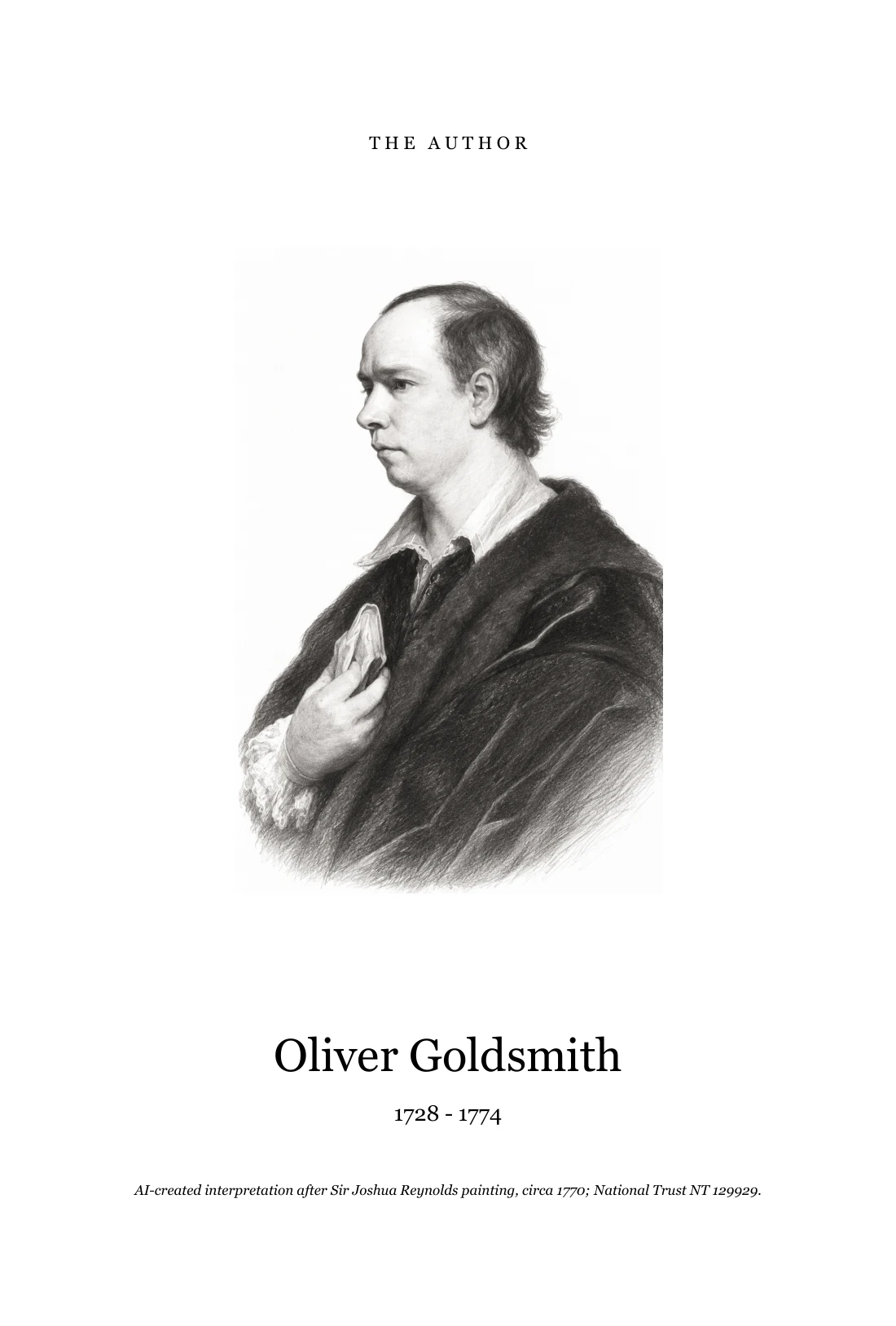
Oliver Goldsmith portrait page from this edition

ABOUT THE AUTHOR

Oliver Goldsmith

Oliver Goldsmith was an Irish writer, born in 1728, whose career in London encompassed poetry, fiction, drama and literary work undertaken for publishers. His reputation rests on a remarkably varied body of writing, ranging from comic performance to reflections on the losses accompanying social change.

More about the author ↗

Discover the author behind the story. This portrait and biography are included in your edition.

FREE TO READ

Take it with you.

The Vicar of Wakefield is in the public domain, so its words belong to everyone. Download our edition free. No account needed.

Read it in your browser ↗
Add it to your reading app
iPhone & iPad
Tap download, then open the file from Safari’s downloads, tap Share and choose Books. It stays in your Apple Books library.
Android
Tap download, open the file and choose Google Play Books. Or, in Play Books, go to Library, tap ⋮ and choose Upload files.
Kindle
Send the file to your Kindle library with Amazon’s Send to Kindle.
Kobo, Moon+ Reader and other apps
Open the downloaded file with the app, or use the app’s import option.

KEEP BROWSING

More from the library.

The Vampyre cover

The Vampyre

John William Polidori

The Varieties of Religious Experience: A Study in Human Nature cover

The Varieties of Religious Experience: A Study in Human Nature

William James

The Velveteen Rabbit cover

The Velveteen Rabbit

Margery Williams

The Village Book cover

The Village Book

Henry Williamson

The Violet Fairy Book cover

The Violet Fairy Book

Andrew Lang, editor

The Virgin Birth of Christ cover

The Virgin Birth of Christ

J. Gresham Machen

Browse the complete library ↗
YOUR NEXT CHAPTER

Your book bag 0

A little escape. A story to keep.

Loading your book bag…