A French provincial town beneath wooded hills in the 1820s
PIPCUB CINEMATIC EDITIONS / PAPERBACK BOOKS

The Red and the Black

Stendhal

Julien Sorel seeks to rise beyond his provincial origins through intellect, calculation and dangerous romantic attachments.

$21.99

Printed for you. Shipping calculated at checkout.

Checkout opening soon. Shipping & delivery Returns

The Red and the Black — actual Pipcub paperback cover
SCROLL INTO THE STORYAN IMAGINED WORLD · ORIGINAL AI ART
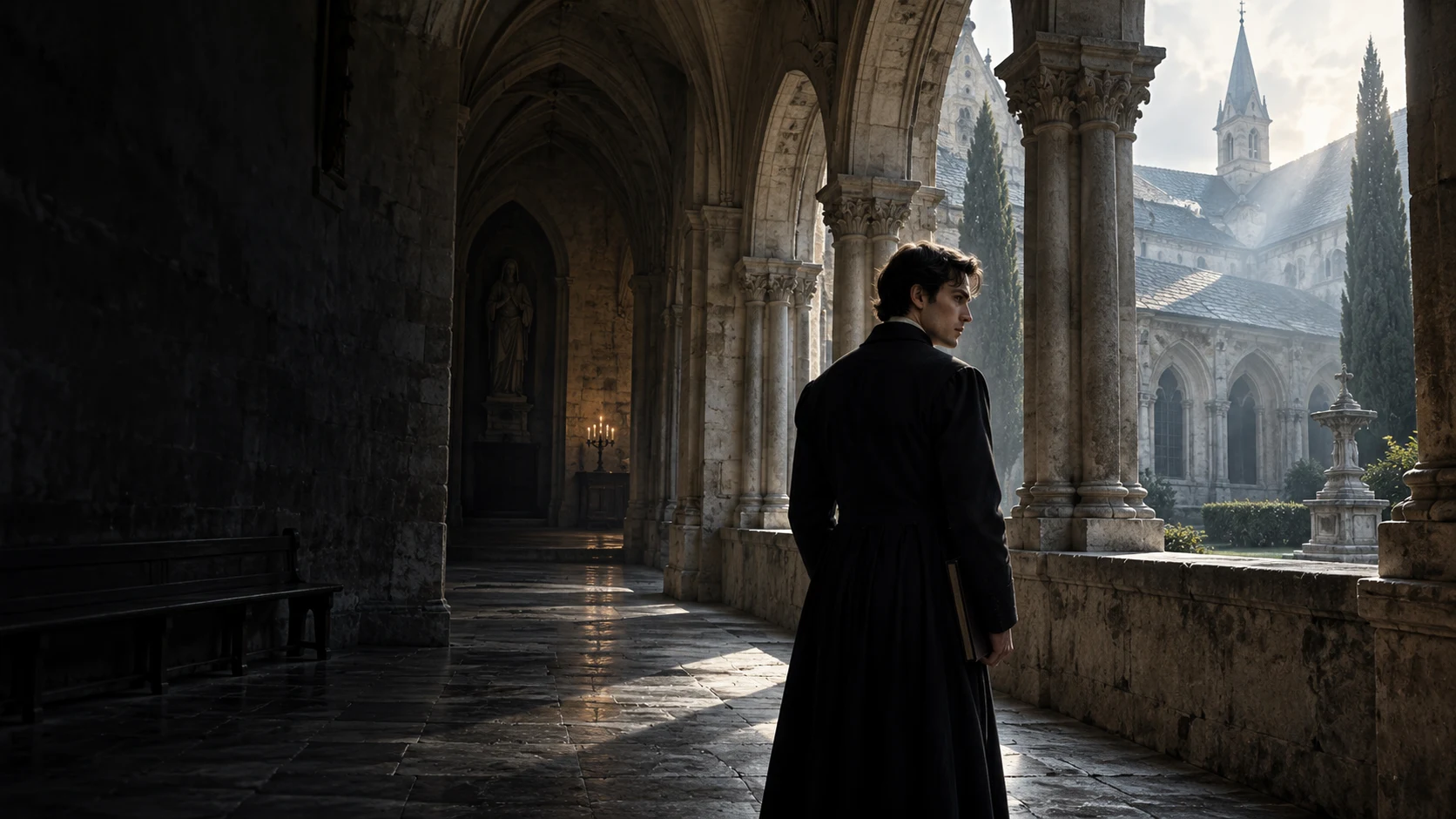
An austere seminary cloister with tall stone arches and cold morning light

THE STORY

Ambition in two colors.

Julien Sorel seeks to rise beyond his provincial origins through intellect, calculation and dangerous romantic attachments.

An elegant Paris aristocratic salon with candlelit mirrors

THE WORLD OF THE BOOK

From province to salon.

Austere rooms and aristocratic houses map the pressures of class, desire and ambition.
The Red and the Black front cover
Read the interior preview

LOOK INSIDE

Open a book.
Enter a world.

Preview six pages from this edition. Select a page to enlarge it, or use the arrows to keep reading.

Spread 1 of 3
The Red and the Black · PDF page 12
Actual interior PDF page 12 of The Red and the Black
Read accessible text

10 hundred feet above its fortifications, which were built long ago by the Spaniards, and are now in ruins. Verrières is sheltered on the north by a high mountain which is one of the branches of the Jura. The jagged peaks of the Verra are covered with snow from the beginning of the October frosts. A torrent which rushes down from the mountains traverses Verrières before throwing itself into the Doubs, and supplies the motive power for a great number of saw mills. The industry is very simple, and secures a certain prosperity to the majority of the inhabitants who are more peasant than bourgeois. It is not, however, the wood saws which have enriched this little town. It is the manufacture of painted tiles, called Mulhouse tiles, that is responsible for that general affluence which has caused the façades of nearly all the houses in Verrières to be rebuilt since the fall of Napoleon. One has scarcely entered the town, before one is stunned by the din of a strident machine of terrifying aspect. Twenty heavy hammers which fall with a noise that makes the paved floor tremble, are lifted up by a wheel set in motion by the torrent. Each of these hammers manufactures every day I don’t know how many thousands of nails. The little pieces of iron which are rapidly transformed into nails by these enormous hammers, are put in position by fresh pretty young girls. This labour so rough at first sight is one of the industries which most surprises the traveller who penetrates for the first time the mountains which separate France and Helvetia. If when he enters Verrières, the traveller asks who owns this fine nail factory which deafens everybody who goes up the Grande-Rue, he is answered in a drawling tone “Eh! it belongs to M. the Mayor.” And if the traveller stops a few minutes in that Grande-Rue of Verrières which goes on an upward incline from the bank of the Doubs to nearly as far as the summit of the hill, it is a hundred to one that he will see a big man with a busy and important air. When he comes in sight all hats are quickly taken off. His hair is grizzled and he is dressed in grey. He is a Knight of several Orders, has a large forehead and an aquiline nose, and if you take him all round, his features are not devoid of certain regularity. One might even think on the first inspection that it combines with the dignity of the village mayor that particular kind of comfortableness which is appropriate to the age of forty-eight or fifty. But soon the traveller from Paris will be shocked by a certain air of self-satisfaction and self-complacency mingled with an almost indefinable narrowness and lack of inspiration. One realises at last that this man’s talent is limited to seeing that he is paid exactly

Stendhal portrait page from this edition

ABOUT THE AUTHOR

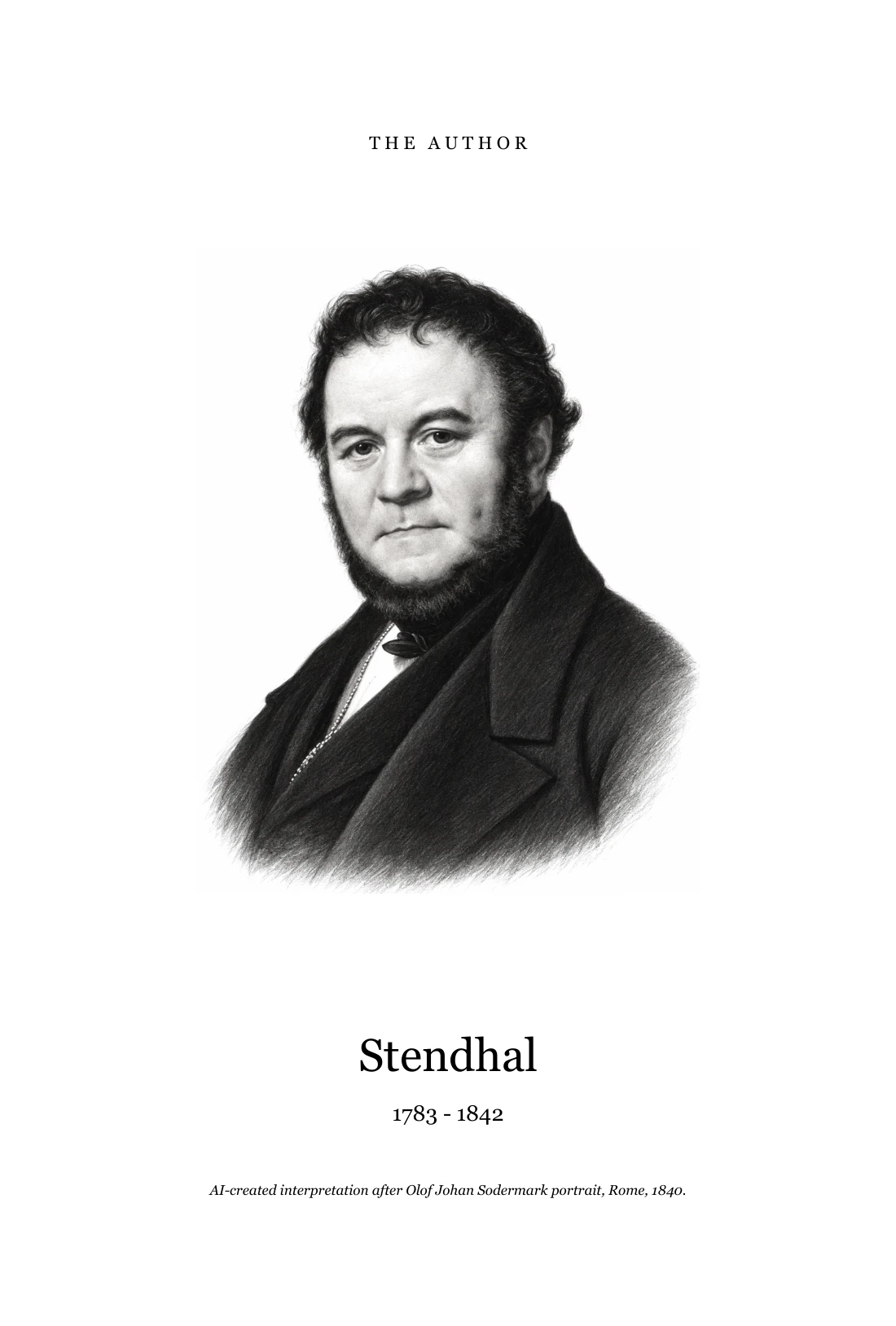
Stendhal

Stendhal was the pen name of Marie-Henri Beyle, a French writer born in 1783. He is best known for novels that examine ambition, desire and the difficulty of understanding one's own motives. His narrators move closely alongside characters while retaining an alert sense of irony about the stories those characters tell themselves.

More about the author ↗

Discover the author behind the story. This portrait and biography are included in your edition.

FREE TO READ

Take it with you.

The Red and the Black is in the public domain, so its words belong to everyone. Download our edition free. No account needed.

Read it in your browser ↗
Add it to your reading app
iPhone & iPad
Tap download, then open the file from Safari’s downloads, tap Share and choose Books. It stays in your Apple Books library.
Android
Tap download, open the file and choose Google Play Books. Or, in Play Books, go to Library, tap ⋮ and choose Upload files.
Kindle
Send the file to your Kindle library with Amazon’s Send to Kindle.
Kobo, Moon+ Reader and other apps
Open the downloaded file with the app, or use the app’s import option.

KEEP BROWSING

More from the library.

The Raven cover

The Raven

Edgar Allan Poe

The Real Adventure cover

The Real Adventure

Henry Kitchell Webster

The Real War, 1914-1918 cover

The Real War, 1914-1918

B. H. Liddell Hart

The Red Badge of Courage cover

The Red Badge of Courage

Stephen Crane

The Red Fairy Book cover

The Red Fairy Book

Andrew Lang

The Red House Mystery cover

The Red House Mystery

A. A. Milne

Browse the complete library ↗
YOUR NEXT CHAPTER

Your book bag 0

A little escape. A story to keep.

Loading your book bag…