This edition follows the 1905 Harvard Oriental Series printing. It includes the editor’s note, Ryder’s preface and introduction, the prologue, all ten acts, the epilogue, and the historical list of passages where the translation departs from Parab’s text. The author section explains the traditional attribution and includes a portrait of the translator.
This edition follows the 1905 Harvard Oriental Series printing. It includes the editor’s note, Ryder’s preface and introduction, the prologue, all ten acts, the epilogue, and the historical list of passages where the translation departs from Parab’s text. The author section explains the traditional attribution and includes a portrait of the translator.
THE WORLD OF THE BOOK
The Little Clay Cart [Mṛcchakaṭika]
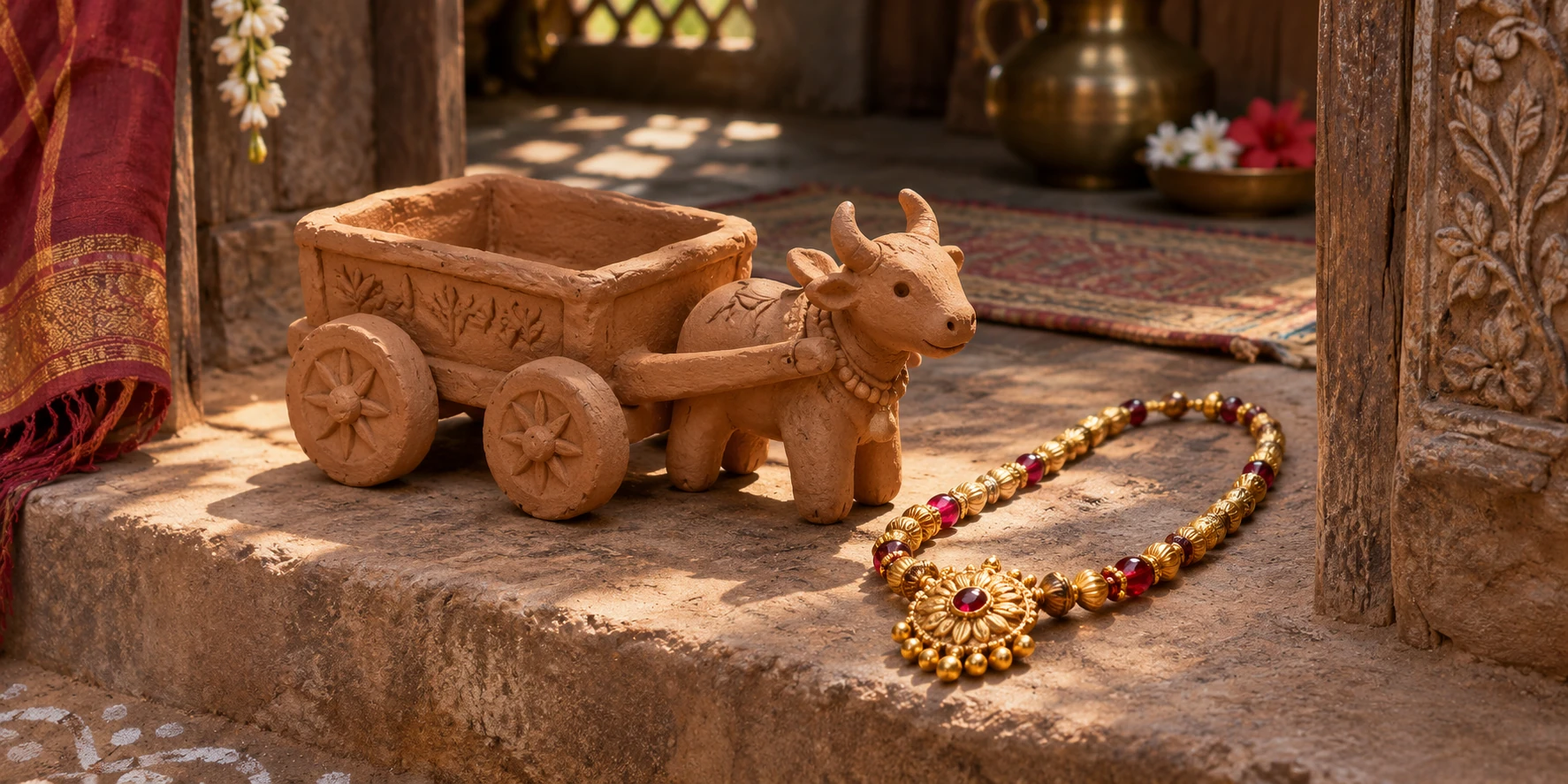
Tiny clay toy cart on an unpainted threshold beside one strand of jewelry, book’s central exchange.
Read the interior preview
LOOK INSIDE
Open a book. Enter a world.
Preview six pages from this edition. Select a page to enlarge it, or use the arrows to keep reading.
Spread 1 of 3
ABOUT THE AUTHOR
Śūdraka
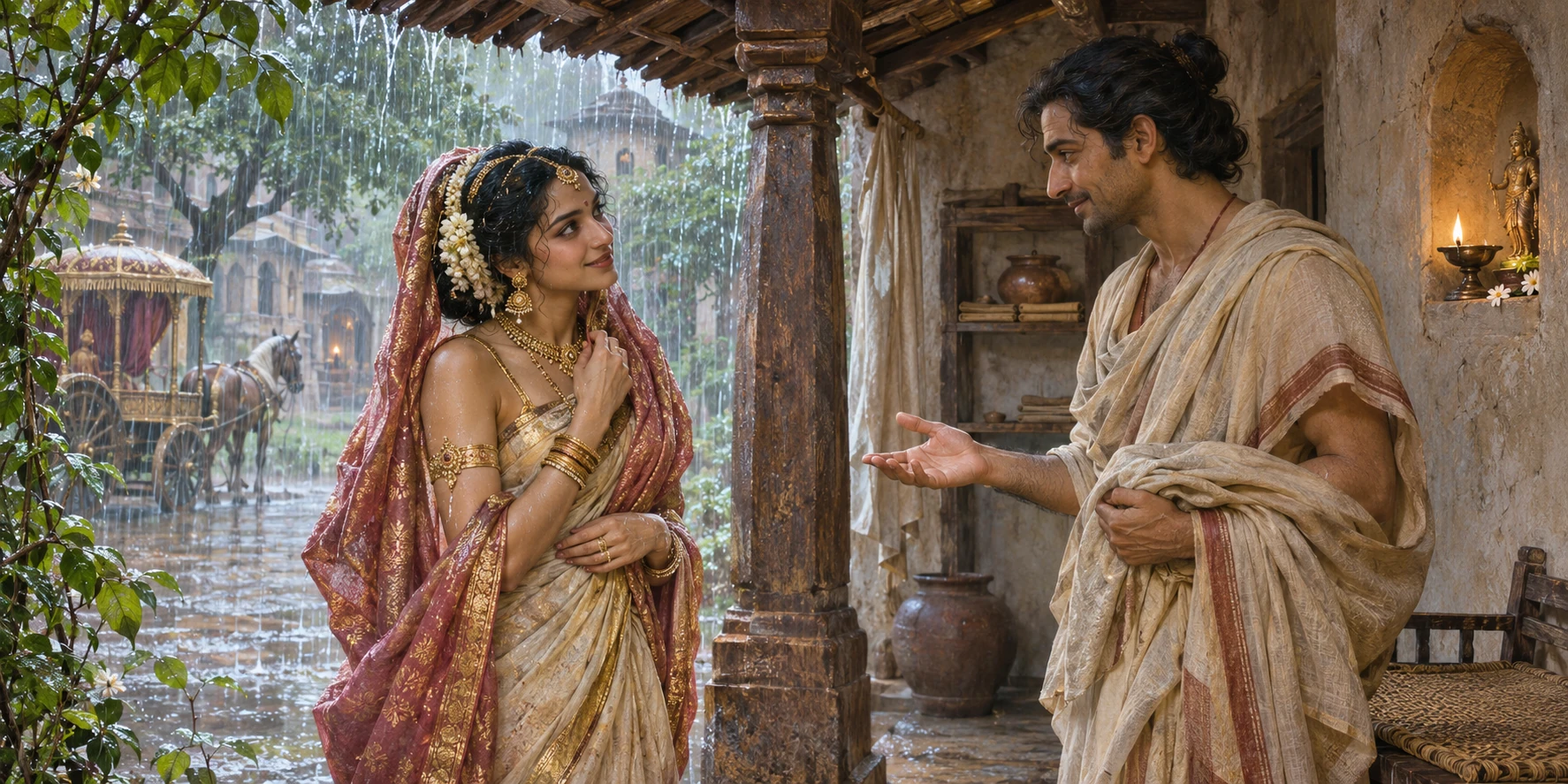
The Little Clay Cart is traditionally attributed to King Shūdraka. The identity and date of its author remain uncertain. The drama follows the merchant Charudatta and the courtesan Vasantasena, whose private fortunes become entangled with affairs of state. Its streets, houses, gambling rooms, and court give an unusually broad view of city life.