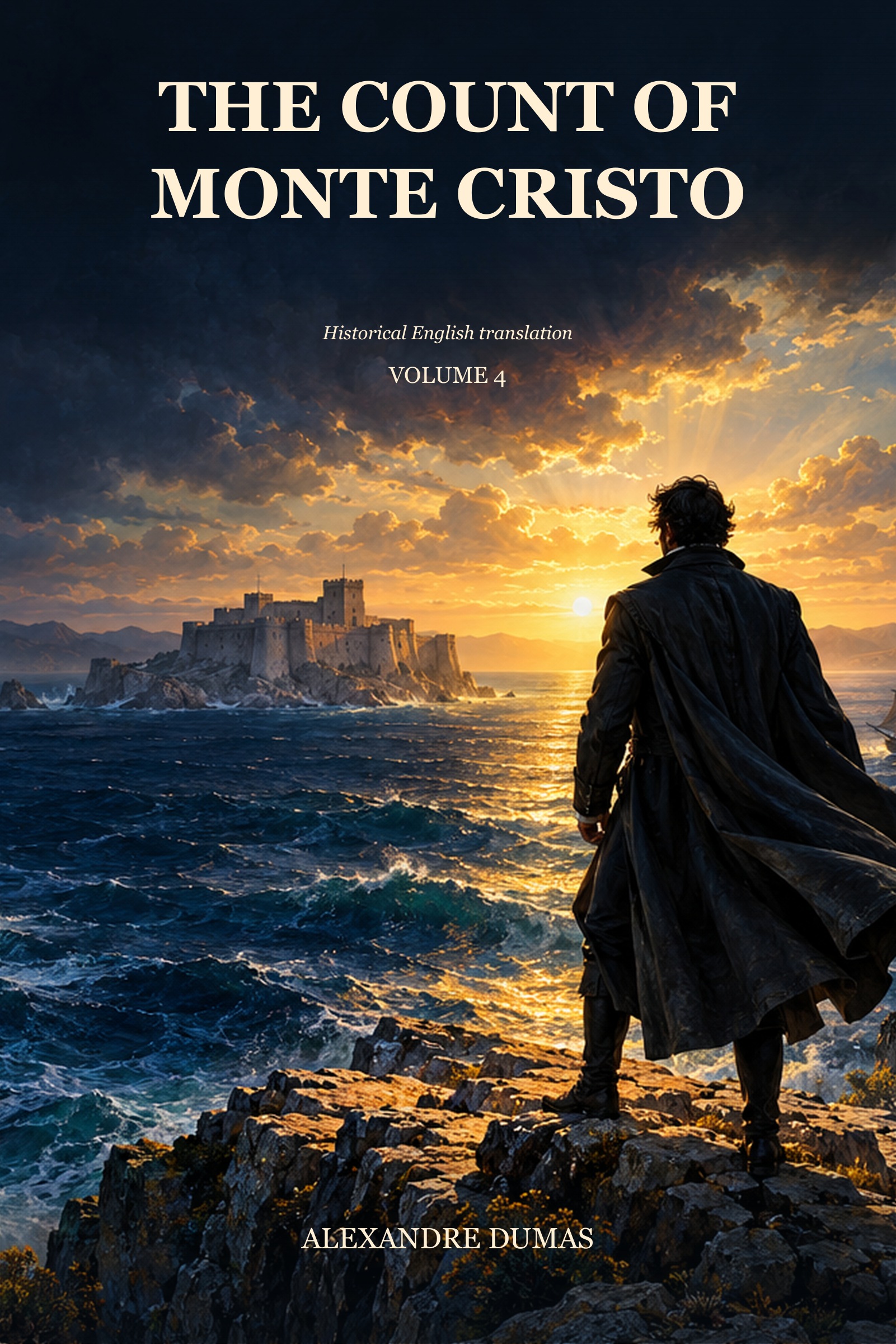
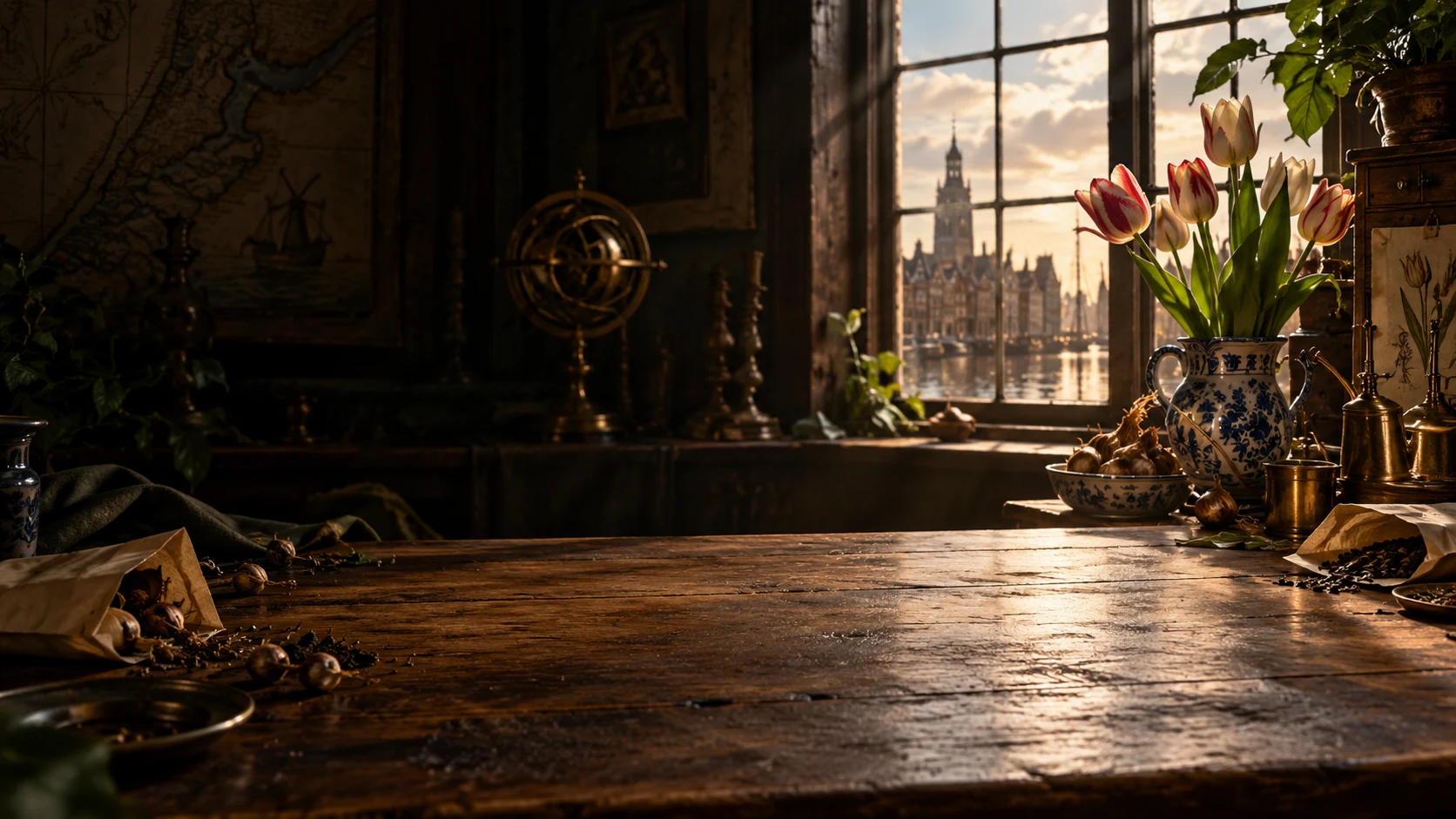
A seventeenth-century Dutch canal town with tulip gardens at sunrise
PIPCUB CINEMATIC EDITIONS / PAPERBACK BOOKS

The Black Tulip

Alexandre Dumas

In the seventeenth-century Netherlands, a rare tulip becomes entangled with political suspicion, imprisonment and devotion.

$14.99

Printed for you. Shipping calculated at checkout.

Checkout opening soon. Shipping & delivery Returns
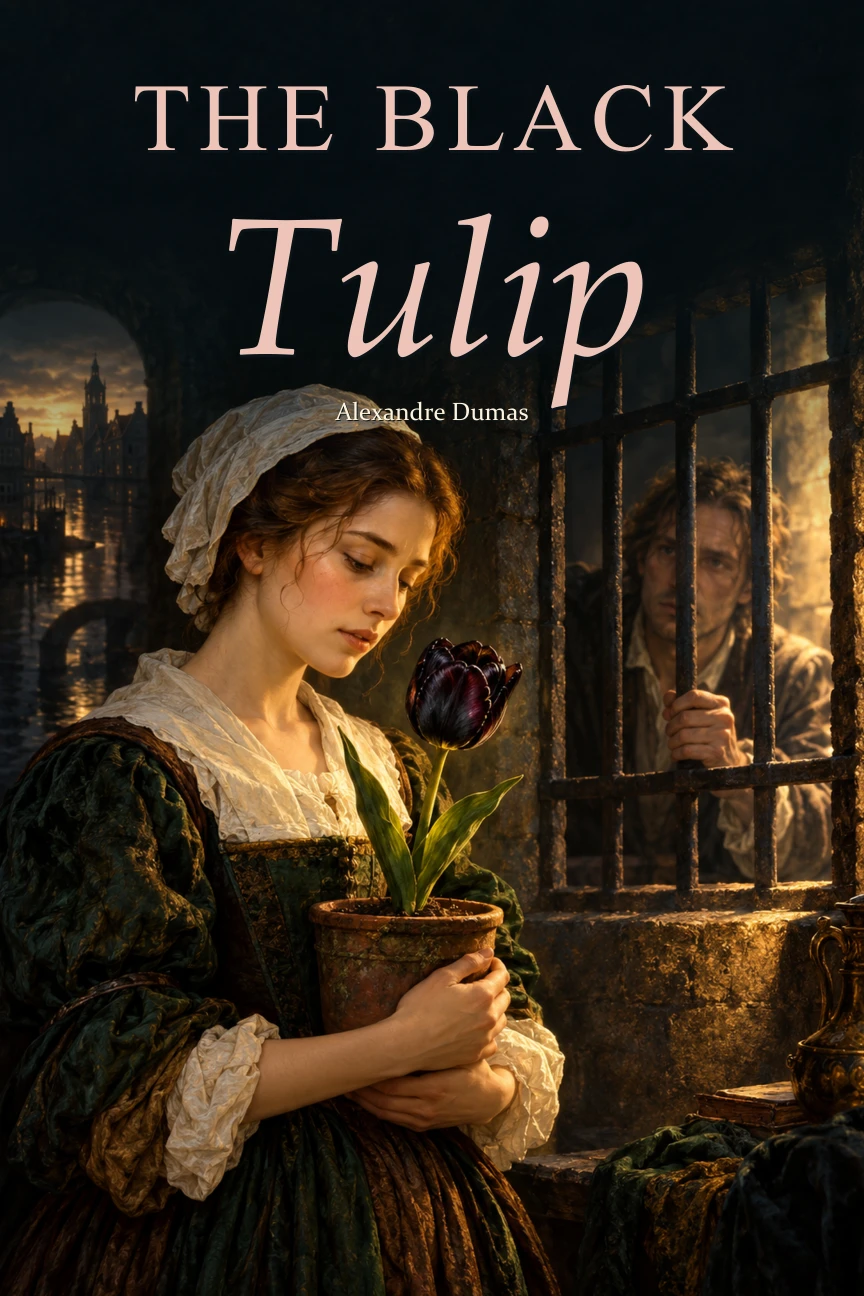
The Black Tulip — actual Pipcub paperback cover
SCROLL INTO THE STORYAN IMAGINED WORLD · ORIGINAL AI ART
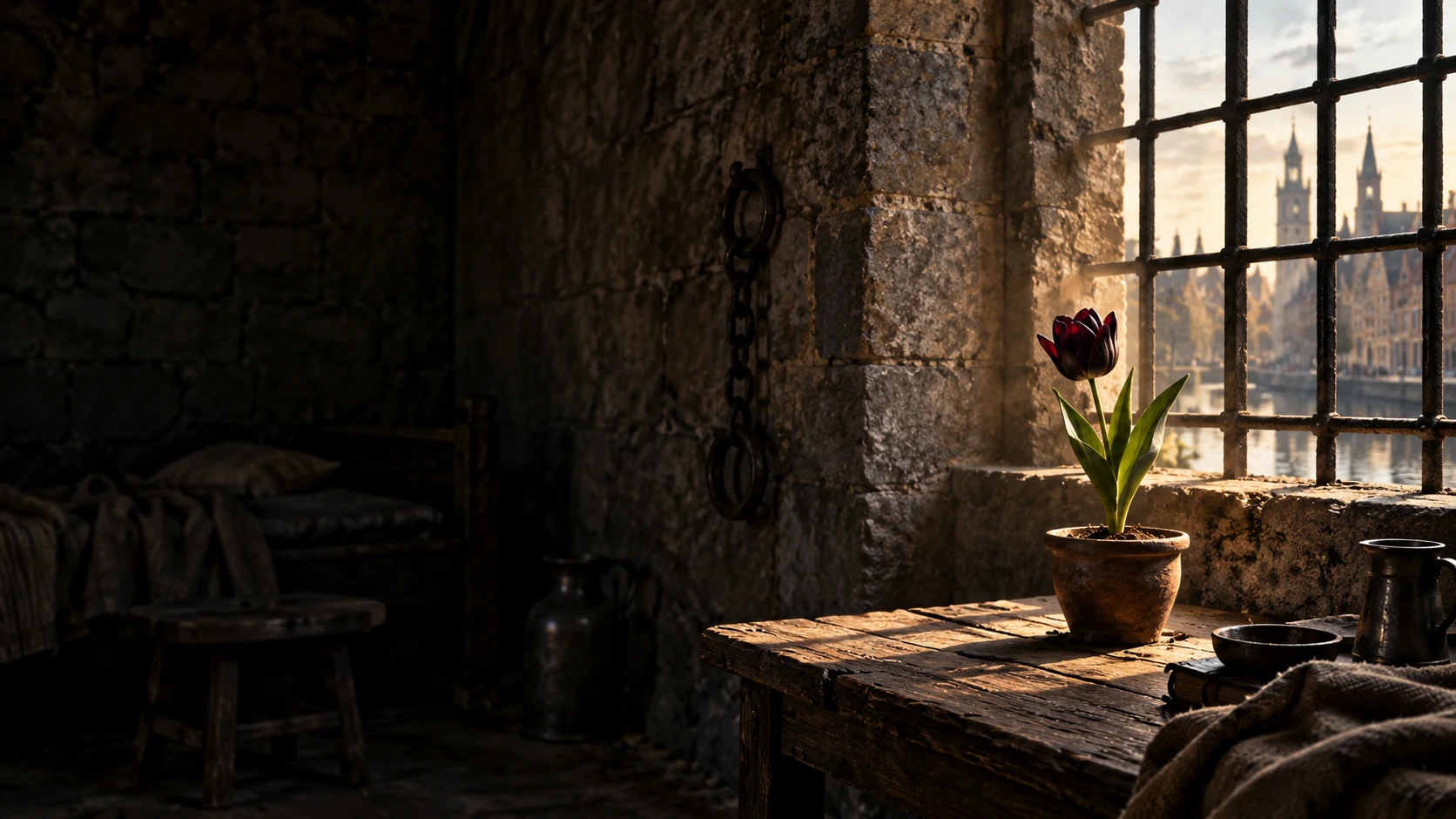
A stone prison room with a tiny potted dark tulip near the window

THE STORY

A flower worth everything.

In the seventeenth-century Netherlands, a rare tulip becomes entangled with political suspicion, imprisonment and devotion.
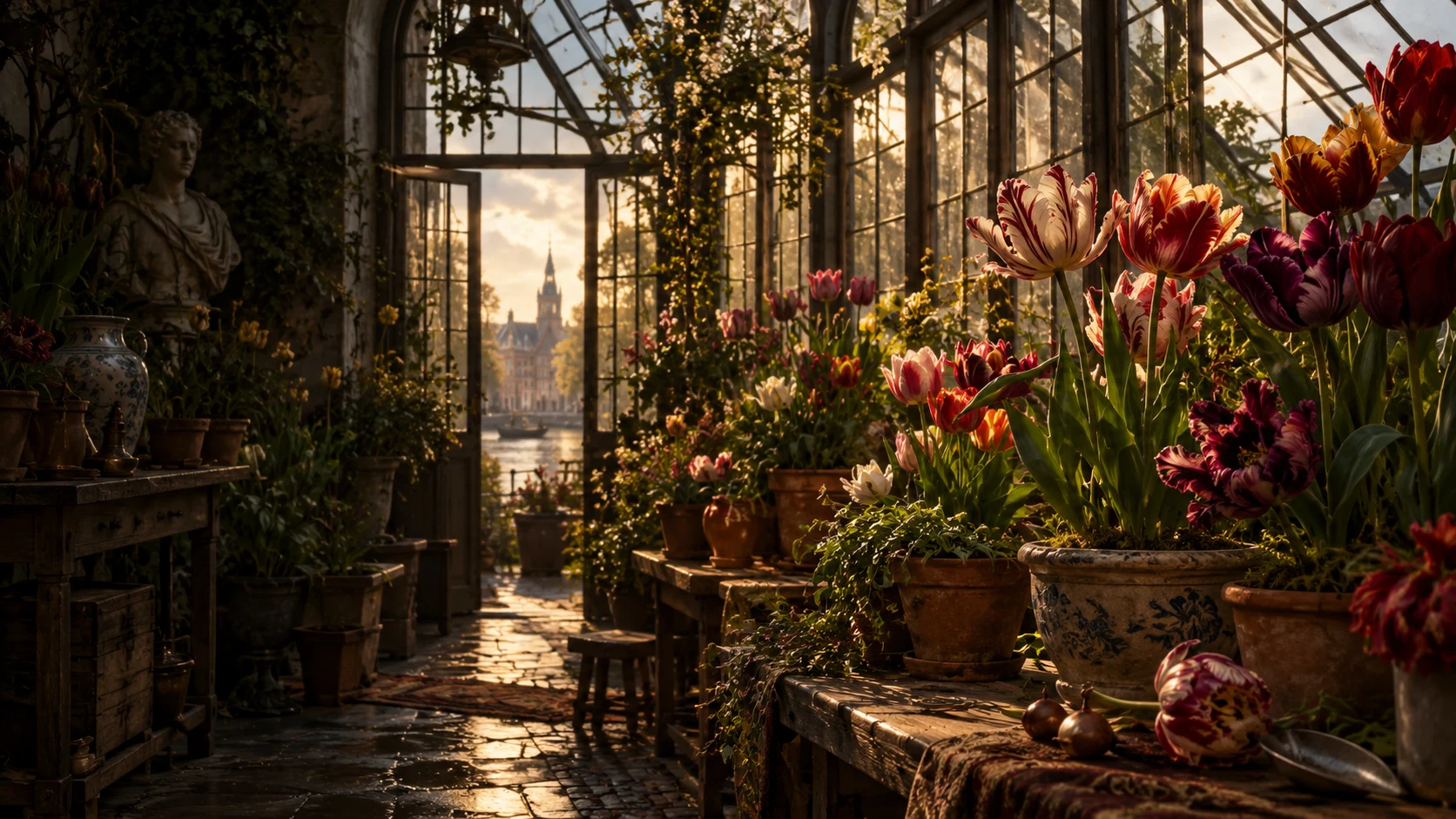
A historic Dutch greenhouse filled with richly colored tulips

THE WORLD OF THE BOOK

Within the prison walls.

The patient cultivation of a flower becomes an act of hope under confinement.
The Black Tulip front cover
Read the interior preview

LOOK INSIDE

Open a book.
Enter a world.

Preview six pages from this edition. Select a page to enlarge it, or use the arrows to keep reading.

Spread 1 of 3

The Black Tulip · PDF page 4
Actual interior PDF page 4 of The Black Tulip
Read accessible text

2 Chapter 1. A Grateful People On the 20th of August, 1672, the city of the Hague, always so lively, so neat, and so trim that one might believe every day to be Sunday, with its shady park, with its tall trees, spreading over its Gothic houses, with its canals like large mirrors, in which its steeples and its almost Eastern cupolas are reflected,—the city of the Hague, the capital of the Seven United Provinces, was swelling in all its arteries with a black and red stream of hurried, panting, and restless citizens, who, with their knives in their girdles, muskets on their shoulders, or sticks in their hands, were pushing on to the Buytenhof, a terrible prison, the grated windows of which are still shown, where, on the charge of attempted murder preferred against him by the surgeon Tyckelaer, Cornelius de Witt, the brother of the Grand Pensionary of Holland was confined. If the history of that time, and especially that of the year in the middle of which our narrative commences, were not indissolubly connected with the two names just mentioned, the few explanatory pages which we are about to add might appear quite supererogatory; but we will, from the very first, apprise the reader—our old friend, to whom we are wont on the first page to promise amusement, and with whom we always try to keep our word as well as is in our power—that this explanation is as indispensable to the right understanding of our story as to that of the great event itself on which it is based. Cornelius de Witt, Ruart de Pulten, that is to say, warden of the dikes, ex-burgomaster of Dort, his native town, and member of the Assembly of the States of Holland, was forty-nine years of age, when the Dutch people, tired of the Republic such as John de Witt, the Grand Pensionary of Holland, understood it, at once conceived a most violent affection for the Stadtholderate, which had been abolished for ever in Holland by the “Perpetual Edict” forced by John de Witt upon the United Provinces. As it rarely happens that public opinion, in its whimsical flights, does not identify a principle with a man, thus the people saw the personification of the Republic in the two stern figures of the brothers De Witt, those Romans of Holland, spurning to pander to

Alexandre Dumas portrait page from this edition

ABOUT THE AUTHOR

Alexandre Dumas

Alexandre Dumas was a French novelist and playwright whose historical adventures became some of the most widely read works of French literature. He is often called Dumas pere to distinguish him from his son, also a writer. His father, Thomas-Alexandre Dumas, was a general whose own life connected France with the Caribbean.

More about the author ↗

Discover the author behind the story. This portrait and biography are included in your edition.

FREE TO READ

Take it with you.

The Black Tulip is in the public domain, so its words belong to everyone. Download our edition free. No account needed.

Read it in your browser ↗
Add it to your reading app
iPhone & iPad
Tap download, then open the file from Safari’s downloads, tap Share and choose Books. It stays in your Apple Books library.
Android
Tap download, open the file and choose Google Play Books. Or, in Play Books, go to Library, tap ⋮ and choose Upload files.
Kindle
Send the file to your Kindle library with Amazon’s Send to Kindle.
Kobo, Moon+ Reader and other apps
Open the downloaded file with the app, or use the app’s import option.

KEEP BROWSING

More from the library.

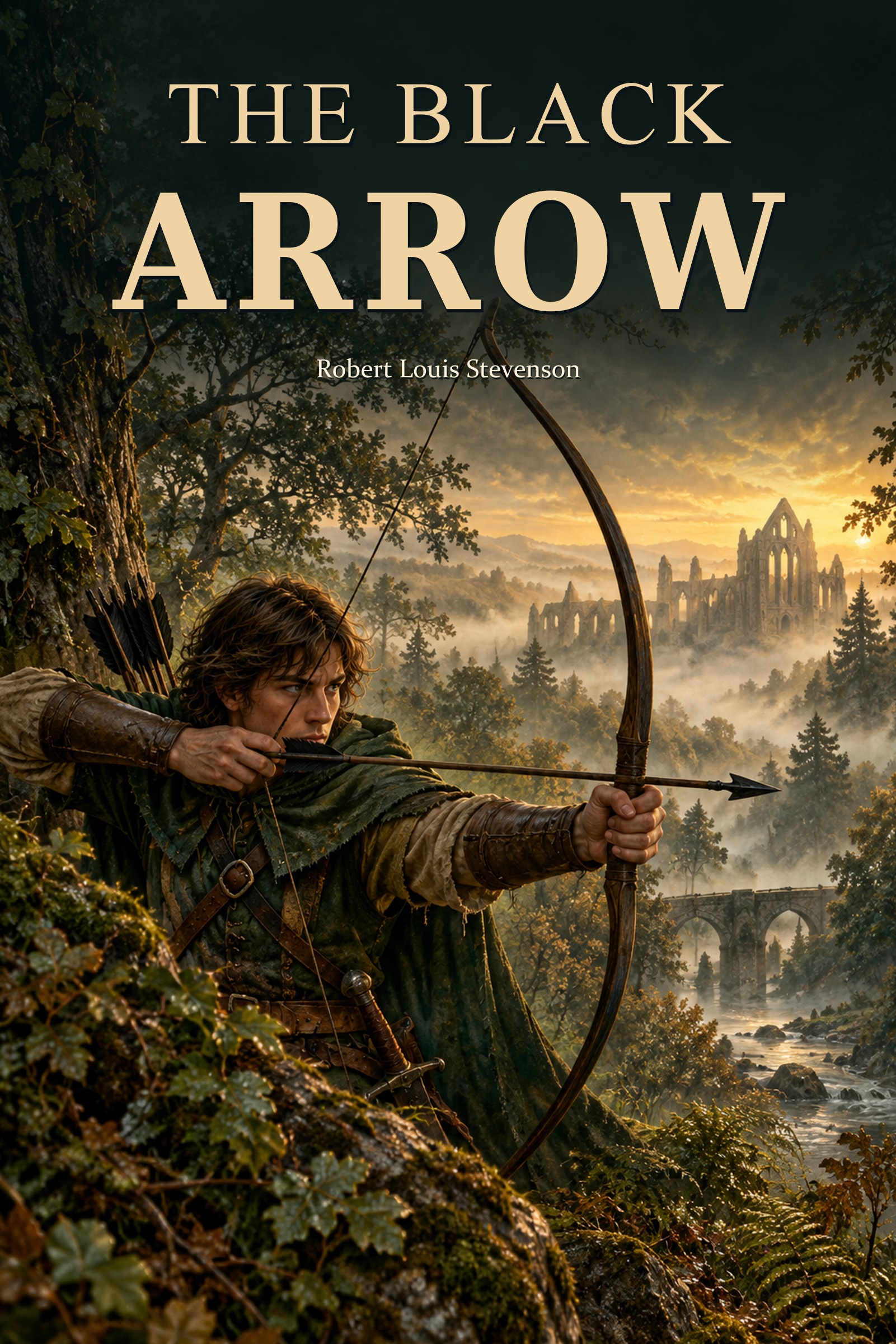
The Black Arrow cover

The Black Arrow

Robert Louis Stevenson

The Black Moth: A Romance of the XVIIIth Century cover

The Black Moth: A Romance of the XVIIIth Century

Georgette Heyer

The Black Pearl cover

The Black Pearl

Marie Lion

The Blacker the Berry cover

The Blacker the Berry

Wallace Thurman

The Blithedale Romance cover

The Blithedale Romance

Nathaniel Hawthorne

The Blood of the Conquerors cover

The Blood of the Conquerors

Harvey Fergusson

Browse the complete library ↗
YOUR NEXT CHAPTER

Your book bag 0

A little escape. A story to keep.

Loading your book bag…