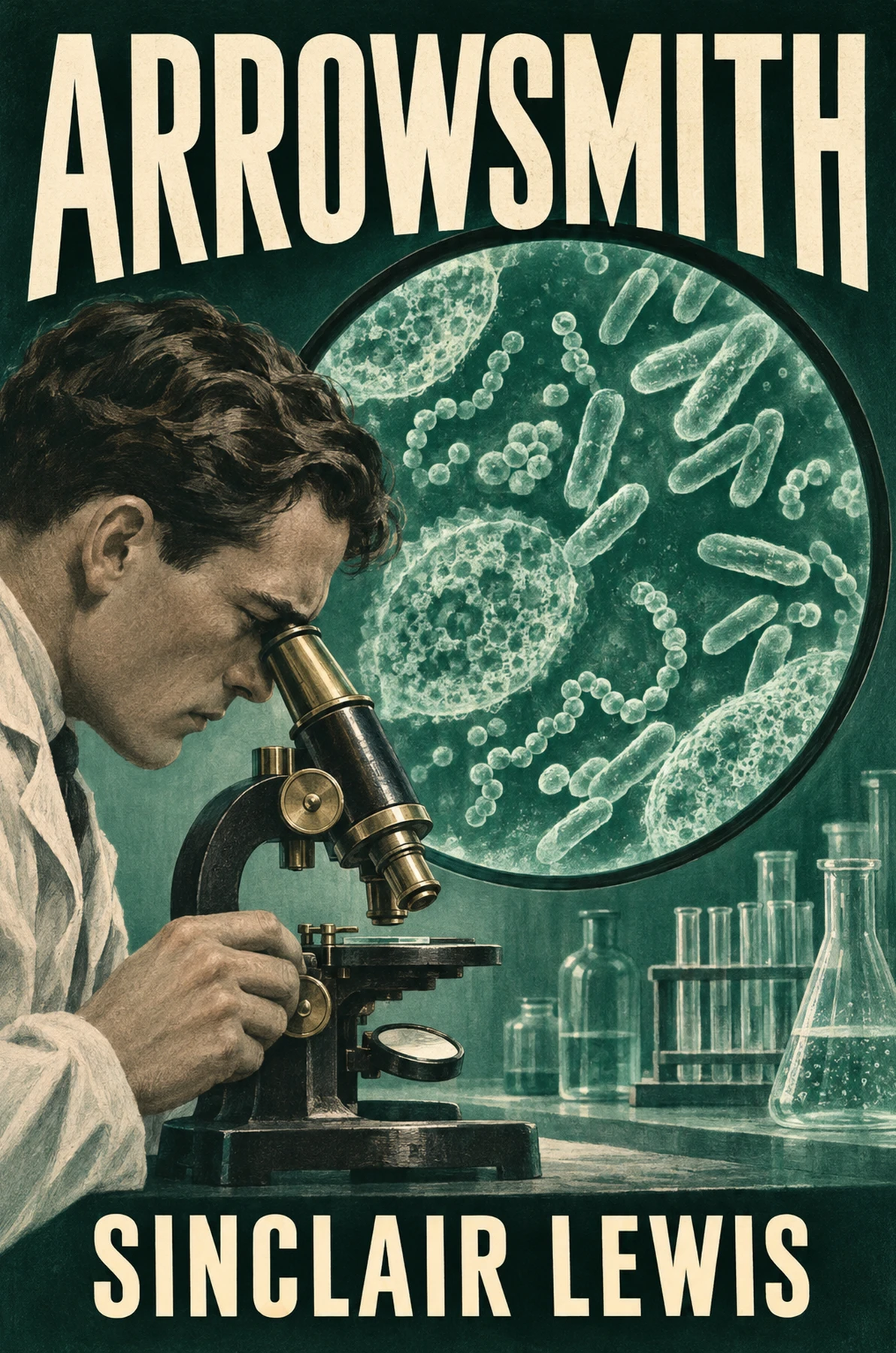
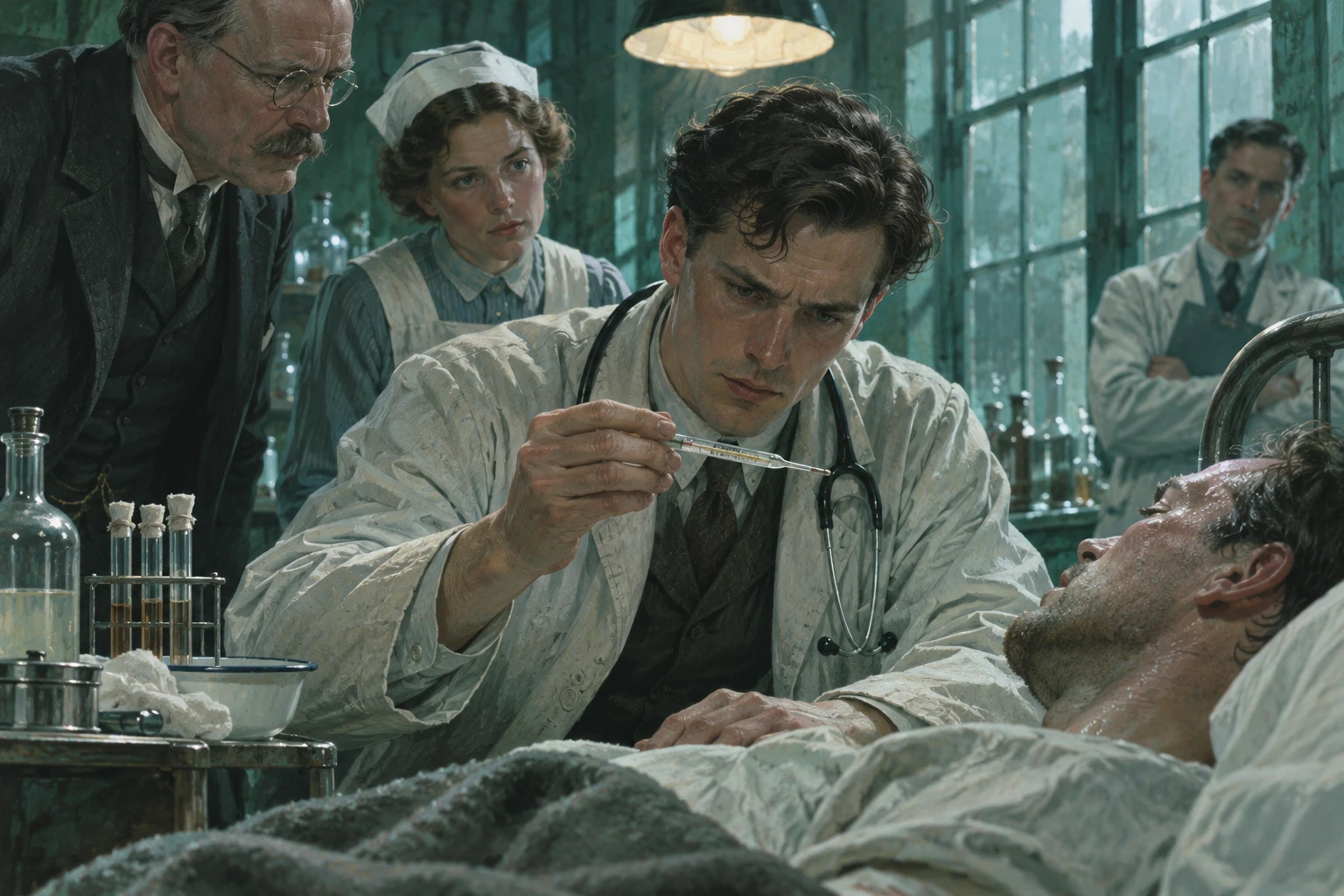
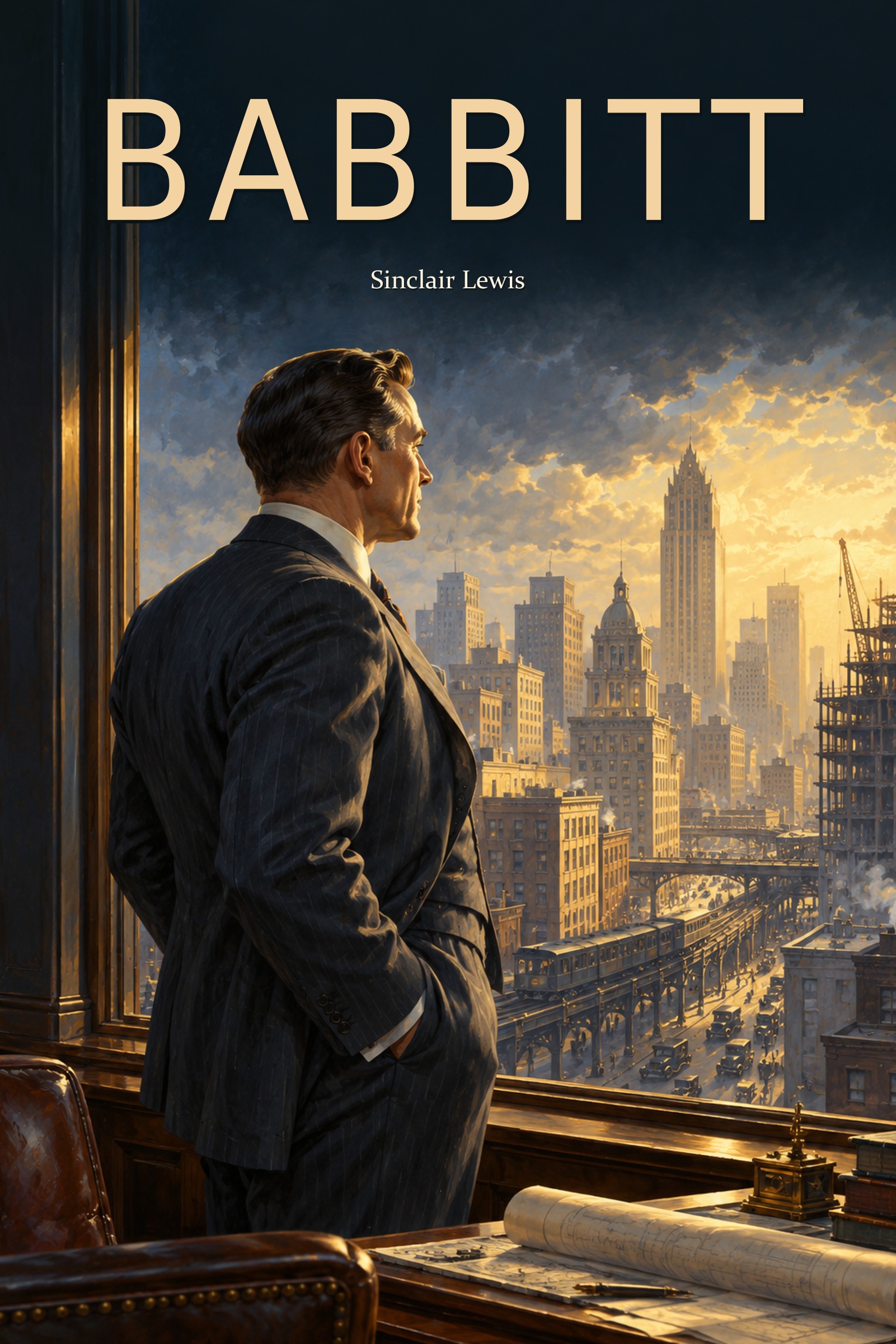
THE STORY
How much will a scientist give up for the truth?
Martin Arrowsmith follows medicine from the classroom to the laboratory and the public stage. Sinclair Lewis tests his doctor’s ideals against ambition, institutional pressure and the urgent demands of patients.
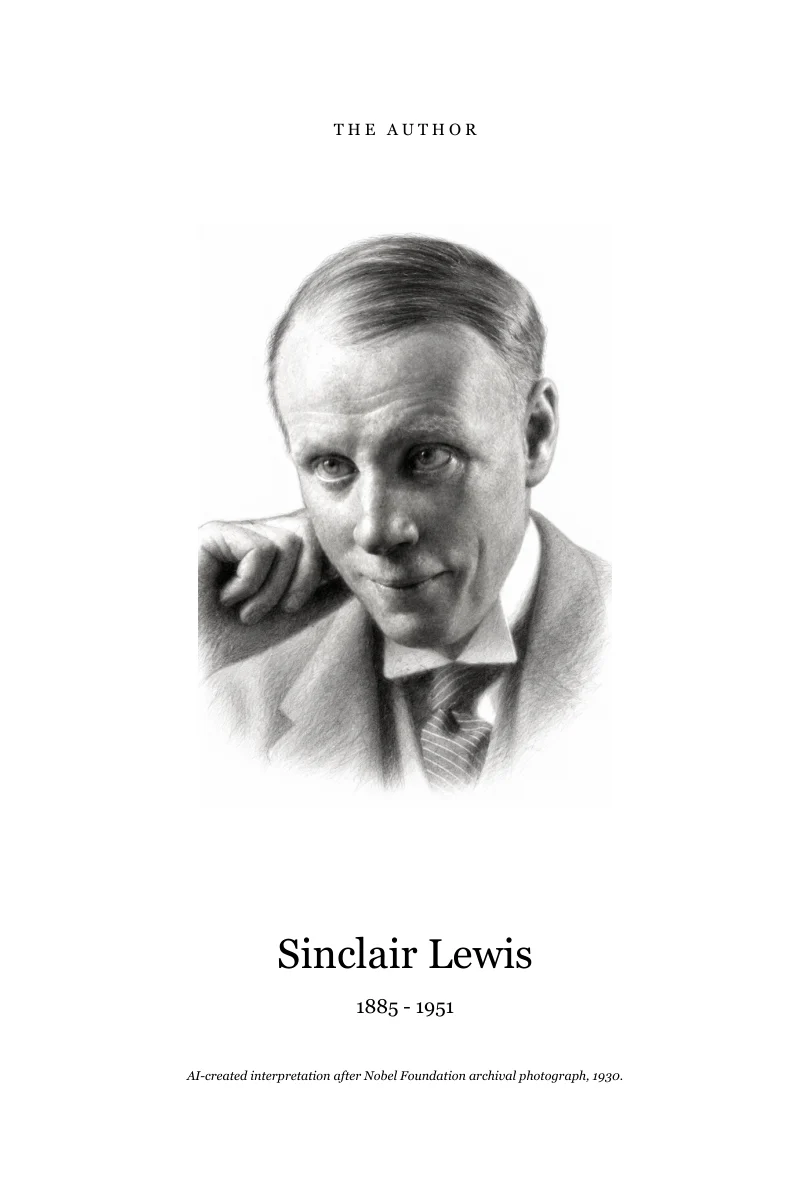
ABOUT THE AUTHOR
Sinclair Lewis
Sinclair Lewis was an American novelist and social critic, born in Sauk Centre, Minnesota. He attended Yale and worked in publishing and journalism before achieving wide recognition as a novelist. His experience of small-town life supplied material for fiction that scrutinised the promises and pressures of American respectability. Main Street, published in 1920, brought him a large readership. It was followed by Babbitt in 1922, Arrowsmith in 1925 and Elmer Gantry in 1927. These novels examine different institutions and occupations, from business and civic life to medicine and organised religion. In 1930 Lewis became the first American to receive the Nobel Prize in Literature. His later work included It Can't Happen Here, a novel imagining the rise of authoritarian government in the United States. He continued writing until the final years of his life and died in Rome in 1951. His satire depends on the language of ordinary social exchange: slogans, salesmanship, professional jargon and reassuring conventional opinions. Characters often seek both independence and the approval of their neighbours. The friction between those desires gives his portraits of ambition and conformity their force, while his attention to working lives makes social criticism concrete. Biographical references: Sinclair Lewis Society, Illinois State University; Wikipedia. Portrait source: Nobel Foundation archival photograph, 1930. Full source records retained in the edition archive.
More about the author ↗Portrait page from this Pipcub edition