THE LIFE
About Herman Melville
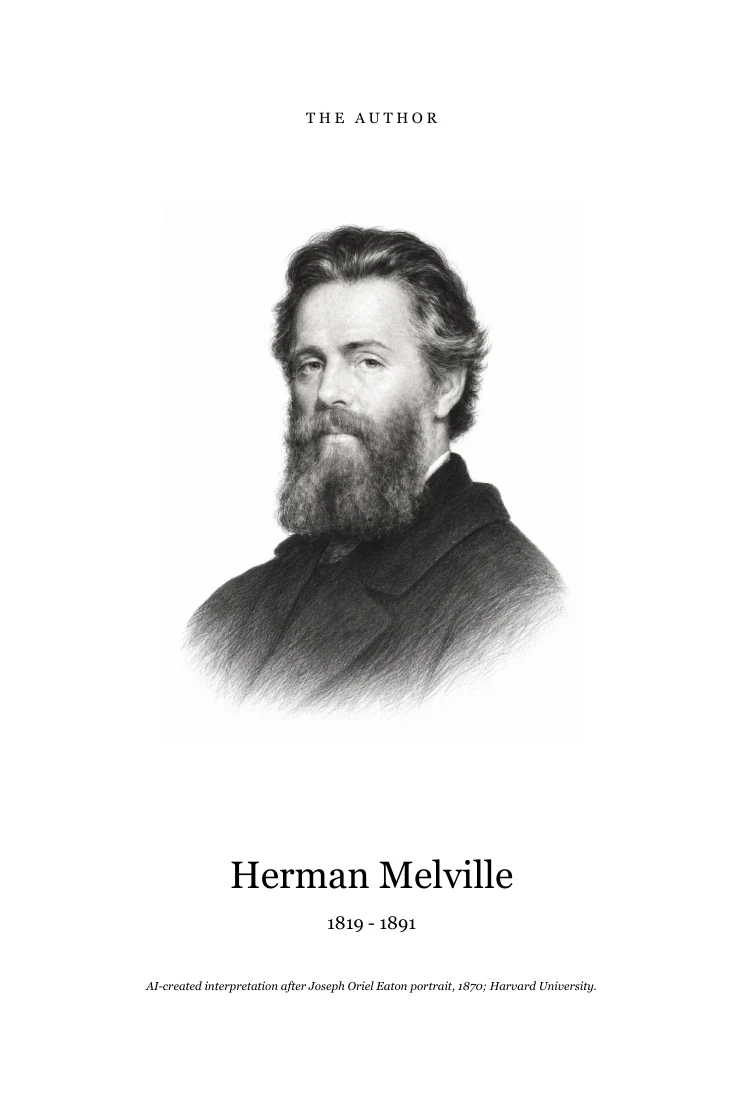
Herman Melville was an American novelist, storyteller and poet, born in New York City in 1819. Financial difficulties after his father's death interrupted his education. Work at sea brought him into contact with whaling, shipboard hierarchies and the peoples of the Pacific, experiences that became material for his early books.
Typee , published in 1846, and Omoo , published the following year, attracted readers through their accounts of travel and adventure. Melville increasingly pushed beyond the expectations those books created. His fiction began to combine narrative with philosophical argument, satire, symbolism and experiments in form.
Moby-Dick , published in 1851, turns a whaling voyage into an inquiry into knowledge, authority, obsession and the limits of interpretation. Its changes of voice and genre make the act of telling as important as the pursuit that drives the plot. The book did not achieve its later reputation during Melville's lifetime.
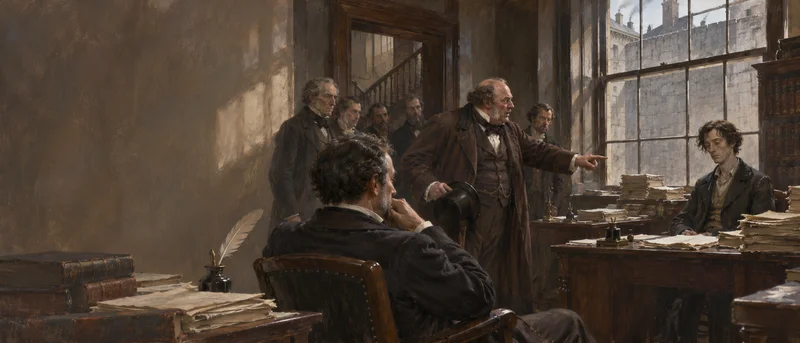
He also wrote short fiction, including Bartleby, the Scrivener , and devoted much of his later creative work to poetry while earning a living as a customs inspector. He died in 1891. Renewed interest in the twentieth century brought his demanding, inventive writing to a much wider readership.
Biographical references: Academy of American Poets; Smithsonian portrait catalogue. Portrait source: Joseph Oriel Eaton portrait, 1870; Harvard University. Full source records retained in the edition archive.